The Korea Automobile & Mobility Association (KAMA) has emphasized the need to expand the adoption of PBVs (Purpose-Built Vehicles) in the global light commercial electric vehicle market, and has requested various incentives to attract domestic PBV manufacturing facilities and to promote PBV adoption in Korea.
On July 15, KAMA Chairman Kang Namhoon stated, "Incentives are necessary for domestically produced vehicles in order to maintain the domestic manufacturing base for PBVs," adding, "To revitalize the market, support should be provided for the installation of charging infrastructure at major demand points such as logistics centers, welfare facilities, kindergartens, and private academies."
On the same day, KAMA released its report on "Global Light Commercial Electric Vehicle and PBV Market Trends." According to the report, global sales of light commercial electric vehicles reached approximately 660,000 units in 2024, an increase of over 40% compared to the previous year, accounting for about 7% of all light commercial vehicles.
In particular, China led the market with 450,000 units sold, a 90% increase from the previous year, while Europe saw a decrease of 10% year-on-year with 117,000 units sold. In the domestic market, 21,000 light commercial electric vehicles were sold last year, a 52% decrease from the previous year.
One-ton electric trucks initially recorded strong sales, but demand shifted to LPG trucks due to short driving ranges and a lack of charging infrastructure. In contrast, Chinese electric vans have been increasing their market share based on a wide variety of models and price competitiveness.
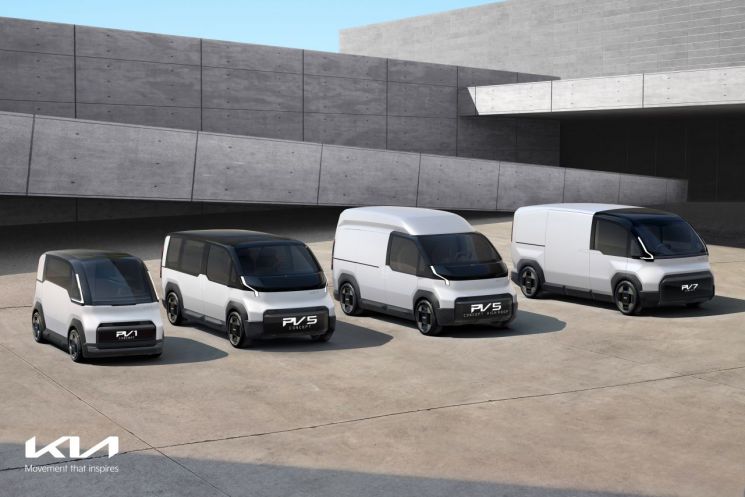
Hyundai Motor launched the modular commercial vehicle platform ST1 in 2024, KGM introduced the Musso EV pickup truck, and Kia recently unveiled the PV5, a PBV-dedicated platform.
In Europe, to respond to growing PBV demand, Flexis?a joint venture specializing in electric vans established by Renault, Volvo, and logistics company CMA?is set to launch next year. Meanwhile, China's CATL has unveiled its own light commercial electric vehicle platform, Kunshi, equipped with its proprietary batteries.
KAMA highlighted the need for PBV market expansion from environmental, economic, and demand perspectives. From an environmental perspective, light commercial vehicles account for only 7% of the total automobile market, but are responsible for 10% of carbon emissions. Therefore, KAMA argues that prioritizing electrification of light commercial vehicles, which have a significant impact on air quality, is necessary.
From an economic perspective, electric commercial vehicles are becoming increasingly competitive compared to internal combustion engine vehicles in terms of total cost of ownership (TCO), including purchase price, operating costs, and fuel expenses. In addition, global logistics companies are expanding their adoption of electric vans due to corporate carbon reduction efforts and the expansion of last-mile delivery. Demand for PBVs is also increasing as customized mobility solutions for transportation-vulnerable groups such as children, the elderly, and people with disabilities.
Chairman Kang stated, "PBVs are next-generation platforms that can be utilized for unmanned delivery and unmanned shuttles when combined with autonomous driving technology in the future," adding, "Expanding the adoption of PBVs will contribute to reducing greenhouse gas emissions, improving air quality, and boosting exports of commercial vehicles by domestic manufacturers."
© The Asia Business Daily(www.asiae.co.kr). All rights reserved.
![Clutching a Stolen Dior Bag, Saying "I Hate Being Poor but Real"... The Grotesque Con of a "Human Knockoff" [Slate]](https://cwcontent.asiae.co.kr/asiaresize/183/2026021902243444107_1771435474.jpg)















