Gwangju Teachers' Association Operates Office in Private Building
Rental Fees Covered by Education Office Budget Since 2023
Association Pays Rent with Tax Money Despite Owning Assets
Fairness Issues Raised Compared to Other Teachers' Organizations
Why are rental fees paid with tax money when land is available? It has been confirmed that the Gwangju Teachers' Association (Gwangju Gyocheong) rents a private building for its office and receives support for these costs from the budget of the Gwangju Metropolitan Office of Education, raising concerns over fairness.
The 'Citizens' Coalition for a Society Without Academic Background' announced on July 15, after analyzing the special account budget statement for education expenses of the Gwangju Metropolitan Office of Education, that "rental fees for the Gwangju Gyocheong office have been allocated and executed as follows: 7.2 million won (600,000 won per month) in 2023, 8.04 million won (670,000 won per month) in 2024, and 8.64 million won (720,000 won per month) in 2025."
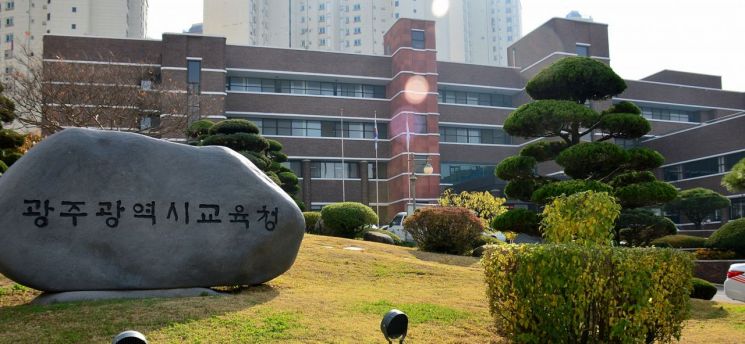
Currently, teachers' unions, school non-regular workers' unions, and education office civil servants' unions in the Gwangju area are only provided with limited office space within affiliated agencies of the Gwangju Metropolitan Office of Education, based on collective agreements under the Trade Union Act. In contrast, since 2009, the Gwangju Gyocheong has maintained its office on the 7th floor of a private building on Jukbong-daero in Seo-gu, Gwangju, and since 2023, its rent has been supported by the education office's budget.
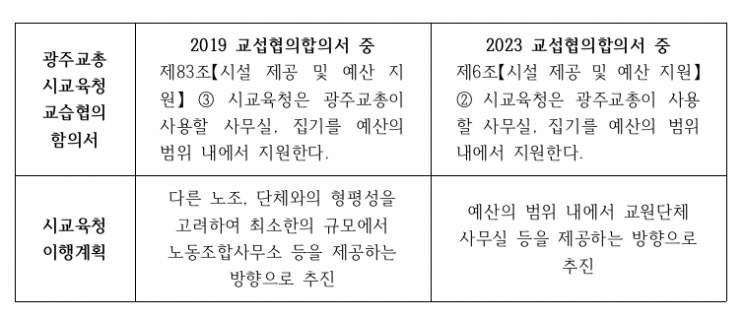
The city education office maintains that the rent support is legitimate based on the 'Gwangju Metropolitan Office of Education - Gwangju Gyocheong Negotiation and Consultation Agreement' signed in 2023, in accordance with the Framework Act on Education and the Act on the Status of Teachers. However, the citizens' coalition argued, "Although similar provisions existed in the 2019 agreement, rent support was not provided at that time in consideration of fairness with other organizations. Given that support began after Superintendent Lee Jeongseon's inauguration, it raises suspicions of political intervention."
The Gwangju Gyocheong currently owns real estate with a publicly announced value of approximately 2 billion won. Some of these assets reportedly generate rental income with the approval of the education support office. Nevertheless, the association rents a separate private building for its office and covers the rent with city funds, leading to criticism that this constitutes "preferential treatment."
In response, the city education office stated, "The Gwangju Gyocheong also requested office space within an affiliated agency, but we could not provide it due to a lack of available space. In the future, we will consider securing office space for the Gwangju Gyocheong during relocation or space reorganization." The office added, "The level of support provided does not differ significantly from that offered to other teachers' organizations."
The citizens' coalition emphasized, "The Gwangju Metropolitan Office of Education should reconsider whether to pay rent on behalf of the association and must establish clear criteria for providing office space that consider fairness among organizations. As a public institution, it is necessary to execute the budget in a manner that meets the trust of citizens."
© The Asia Business Daily(www.asiae.co.kr). All rights reserved.


















