Seoul Education Office Selects Five Key Initiatives to Pursue Under New Administration
Superintendent Chung: "Guaranteeing Basic Academic Proficiency Is the Top Priority"
"Relationship Recovery Reflection Program" to Launch in September
New "AI Education Center" to Support Personalized AI-Based Learning
The Seoul Metropolitan Office of Education has announced plans to expand and establish the "Seoul Learning Diagnosis and Growth Center" in all 11 education support offices by the end of this year to ensure basic academic proficiency. The Learning Diagnosis Center was the first official approval signed by Superintendent Chung Geunsik upon taking office. Superintendent Chung has consistently emphasized that guaranteeing basic academic skills for "slow learners" is a fundamental right of students. The Seoul education office has stated its commitment to continue supporting education that ensures basic academic proficiency under the new administration.
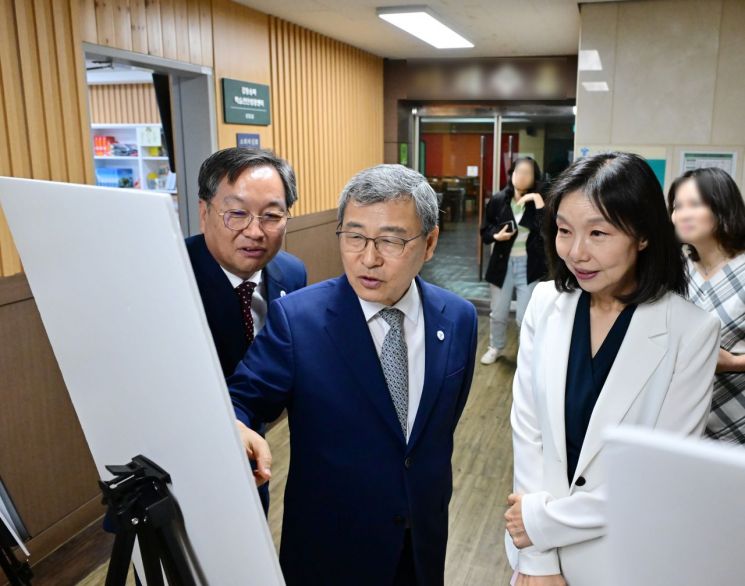
On July 15, Superintendent Chung held a press conference at the Seoul Metropolitan Office of Education headquarters to present the "Core Policy Report and Pledges for Seoul Education," where he announced these plans. Among the projects promoted by the office, Superintendent Chung selected five key policy initiatives: guaranteeing basic academic proficiency, protecting educational activities, supporting students' mental health, AI education, and revitalizing rural study programs.
First, Superintendent Chung announced that the four Learning Diagnosis Centers established in the southern, central, Gangdong-Songpa, and Seongbuk-Gangbuk regions in the first half of this year would be joined by seven additional centers by the end of the year, making them available at all education support offices in Seoul. He shared, "One parent said, 'My child, who could only write their name, made friends and achieved good grades after participating in a dyslexia program,'" adding, "This case demonstrates that basic academic proficiency is not just about grades but is a human rights issue related to restoring students' self-esteem and social relationships." He further stated, "To ensure that no student is left behind in learning, we will make guaranteeing basic academic proficiency the top priority for Seoul education."
In addition, the office will pursue innovations in teaching and assessment methods. Plans include expanding essay-type assessments, introducing AI-based evaluation systems, and establishing a "Curriculum and Assessment Support Center" to implement a fair assessment system that evaluates creativity and critical thinking skills.
To protect teachers' educational activities, the office will provide support through the "100 Lawyers Accompanying Teachers" initiative. In addition, each education support office will operate an "Educational Activity Protection Emergency Support Team SEM119," and effective, practical guidelines will be developed, such as revising the Seoul-style teacher rights protection manual.
The system to support students' mental health will also be strengthened. Currently, the office is piloting "Mental Health Schools" staffed with mental health specialists at six schools. Starting in September, a "Relationship Recovery Reflection Program" will be introduced for first to third graders in elementary schools, focusing on healing rather than punishment in addressing school violence issues.
In response to the AI era, the office will establish an "AI Education Center" to enable AI-based personalized education in public schools.
Superintendent Chung stated, "There has been debate over the legal status of AI digital textbooks, but now the task is to end controversy and conflict and ensure that AI-based personalized education becomes established in the educational field. We will work together by gathering the wisdom of the Seoul educational community."
He also announced plans to further promote "rural study programs" to foster encounters with nature and ecological sensitivity. The number of participants in rural study programs increased from 81 in 2021 to 376 in the first semester of this year. To date, a total of 2,227 students have experienced rural study programs in Gangwon, Jeonnam, and Jeonbuk, and the program will expand to Jeju in the second semester of this year.
Superintendent Chung commented, "These five policy initiatives are closely interconnected," adding, "While perspectives may differ slightly, I will engage in closer dialogue with everyone who shares the common goal of a brighter future for our children."
© The Asia Business Daily(www.asiae.co.kr). All rights reserved.
![Clutching a Stolen Dior Bag, Saying "I Hate Being Poor but Real"... The Grotesque Con of a "Human Knockoff" [Slate]](https://cwcontent.asiae.co.kr/asiaresize/183/2026021902243444107_1771435474.jpg)















