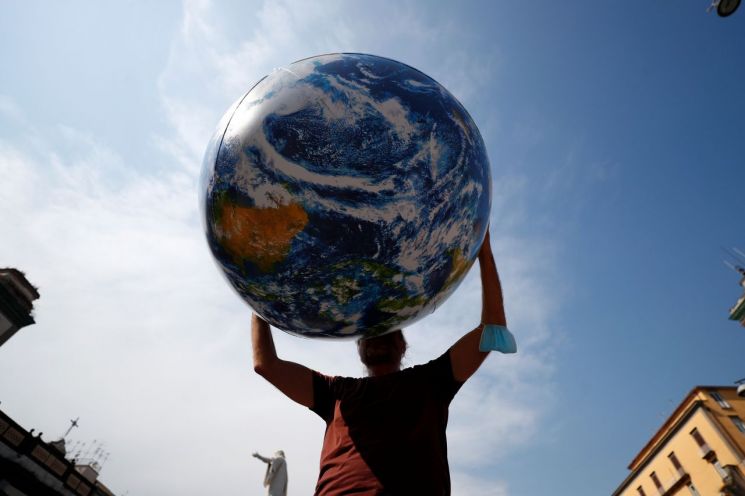
The global economy has plunged into turmoil due to factors such as the Trump administration's tariff policies in the United States and China's deflation containment measures. As the once overwhelming U.S. hegemony continues to weaken, the question arises: how should global asset investment strategies be set?
On July 15, Samsung Securities released a "Geopolitical Analysis Report," diagnosing that the world is shifting from a U.S.-China bipolar era to a multipolar era, and predicting that European bonds and gold will increasingly emerge as alternative options to U.S. Treasuries.
From the fall of the Berlin Wall in 1989 until the global financial crisis in 2008, the world experienced about two decades of a unipolar era dominated by the United States. During this period, the "anarchy" of international power distribution was at its lowest, resulting in what is known as the "great moderation," a time of low volatility in both economic growth and inflation. However, this era has already come to an end.
Samsung Securities stated, "Contrary to popular belief, China is unlikely to be interested in a U.S.-China bipolar system," and forecasted, "A multipolar system is likely to dominate the world after the tariff war." To become a bipolar counterpart to the United States, a country must serve as both the "final consumer" and a "safe financial investment destination" for the world. However, for China, taking on these roles would entail far greater costs and sacrifices than merely surviving under U.S. pressure.
Now, countries around the world have no choice but to compete to strengthen their own physical capabilities for survival. In the West, including the United States and Europe, it is urgent to "restore domestic manufacturing capacity" and "reorganize supply chains for key minerals and other raw materials." In contrast, China is prioritizing the "strengthening of a self-sufficient, domestic demand-driven economy."
In this era of geopolitical multipolarization, it is necessary to strengthen portfolio diversification. As current account surpluses outside the United States shrink, financial investment inflows into the U.S. will decrease, ultimately reducing demand for U.S. Treasuries. Samsung Securities analyzed, "European bonds and gold will gradually emerge as alternative options," but also noted, "Due to higher inflation levels compared to the past, the 'real yield' across global bond markets is likely to remain subdued."
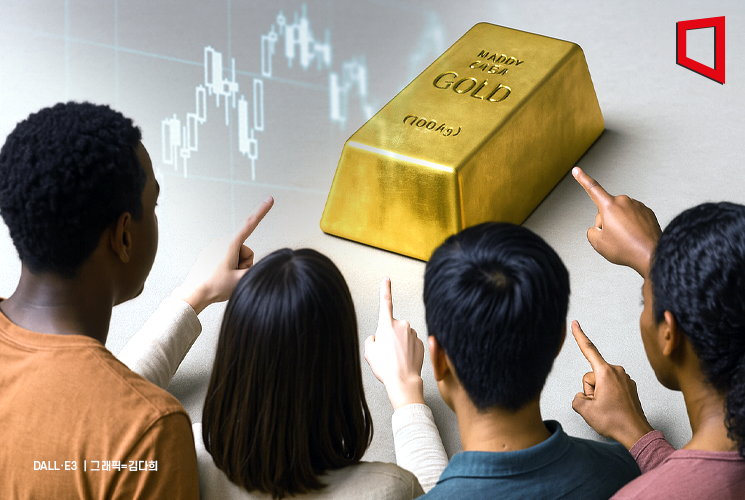
The dollar is expected to face prolonged downward pressure. While a reduction in the U.S. current account deficit is favorable for the dollar's value, the weakening demand for U.S. assets will be a more significant factor in sustaining dollar weakness. The dollar will maintain its status as the most powerful reserve currency, but the proportion of dollar-denominated reserve assets held by countries will decrease.
There are high expectations for a renewed commodity supercycle in the market. This is due to anticipated large-scale demand for raw materials driven by increased investment in the European Union (EU) and the expansion of the U.S. manufacturing base. However, the scale is expected to be smaller than the commodity supercycle of the early 2000s.
In equities, attention should be paid to potential shifts in leadership by country and sector. The discount on stock markets outside the United States is expected to gradually improve. EU and Chinese domestic companies are anticipated to benefit. In both regions, increased capital expenditures will boost corporate sales and productivity, but a worsening export environment will be a negative factor. It is advisable to increase exposure to sectors linked to the real economy, such as raw materials, energy, infrastructure, strategic investments (deglobalization and reshoring), and defense-related capital goods. Of course, the technology sector, which is key to driving the necessary industrial innovation in the short term, is also expected to occupy a promising position in the future.
© The Asia Business Daily(www.asiae.co.kr). All rights reserved.
![Clutching a Stolen Dior Bag, Saying "I Hate Being Poor but Real"... The Grotesque Con of a "Human Knockoff" [Slate]](https://cwcontent.asiae.co.kr/asiaresize/183/2026021902243444107_1771435474.jpg)
















