Skewed Distribution by Major and Middle-Aged Workforce Concentration
"Institutional Support Needed to Attract Diverse Talent"
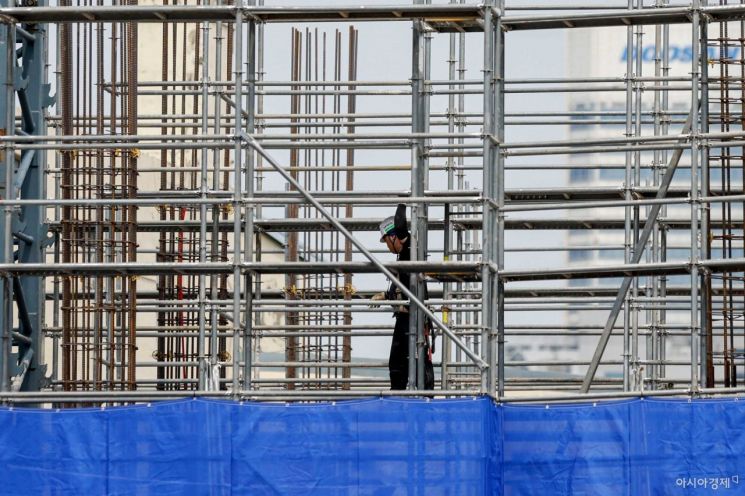
There are claims that the imbalance in workforce replenishment?marked by a decline in the influx of young people and a rise in middle-aged and older workers in South Korea's construction industry?is becoming a structural issue.
According to the "Strategies and Action Plans for Securing Technical Personnel at Construction Sites" report released by the Construction and Economy Research Institute of Korea (CERIK) on July 14, the average age of construction technicians increased from 37.5 years in 2004 to 51.4 years as of June last year, a rise of 13.9 years on average.
Over the past 10 years, from 2014 to last year, the proportion of those aged 40 and above among new holders of construction-related engineer certifications rose from 13% to 41%, an increase of 28 percentage points. In contrast, the proportion of those in their 20s dropped from 71% in 2013 to 45% last year, a decrease of 26 percentage points.
The popularity of construction-related majors at universities has also declined. By specific major, the number of incoming students in civil engineering fell by 22%, and in architectural engineering and facility engineering by 10%. In contrast, the number of incoming students in urban engineering and architecture increased by 44% and 3%, respectively.
The total number of students admitted to architecture-related departments at universities decreased by 6%, from 9,396 in 2014 to 8,789 last year. During the same period, the total number of students admitted to engineering departments as a whole increased by 8%.
At construction sites, employment in the design and engineering sector increased from approximately 230,000 in the second half of 2014 to about 340,000 in the second half of 2024, a 47.8% increase, indicating a continued expansion in labor demand. CERIK reported that, along with the increase in employment, the shortage of personnel has also intensified, with the number of unfilled positions rising from 4,911 in the second half of 2014 to 7,507 in the second half of last year, an increase of about 53%. Poor working conditions, lack of welfare, and excessive workloads have been identified as factors deterring young people from entering the industry.
In response, CERIK stated that institutional and policy support is needed, including measures to attract and retain diverse talent, support growth by talent type, design growth paths by job function, and establish a technology-centered performance system.
Sung Yukyung, a research fellow at CERIK, stated, "Construction technical personnel are not just simple workers?they are 'leaders at construction sites' who drive projects to success amid complex interests and institutional and policy frameworks," adding, "It is time for industry, government, and academia to collaborate to build a sustainable talent ecosystem."
© The Asia Business Daily(www.asiae.co.kr). All rights reserved.
![Clutching a Stolen Dior Bag, Saying "I Hate Being Poor but Real"... The Grotesque Con of a "Human Knockoff" [Slate]](https://cwcontent.asiae.co.kr/asiaresize/183/2026021902243444107_1771435474.jpg)
















