Number of Construction Workers Drops by 19,000 for 23rd Consecutive Month
Job-Seeking Benefit Applicants Rise 2.4% to 86,000
Job Openings-to-Applicants Ratio Falls 0.10 Points to 0.39
Last month, the number of manufacturing workers enrolled in employment insurance decreased by 1,000 compared to the same month last year, marking the first decline in 54 months. Employment indicators regressed due to increased uncertainty, including the impact of U.S. tariffs, as well as concerns over sluggish exports in the second half of the year.
According to the "June 2025 Labor Market Trends Based on Employment Administration Statistics" released by the Ministry of Employment and Labor on July 14, the number of regular employment insurance enrollees at the end of last month stood at 15.59 million, an increase of 181,000 (1.2%) from the same month last year. The increase in enrollees has remained in the 180,000 range for three consecutive months since April (184,000).
By industry, the number of employment insurance enrollees in the service sector reached 10.843 million, an increase of 201,000. The increase has remained in the 200,000 range since May (203,000). The rise was mainly driven by health and welfare, business services, professional and scientific services, accommodation and food, and transportation and warehousing, while wholesale and retail and information and communications continued to decline.
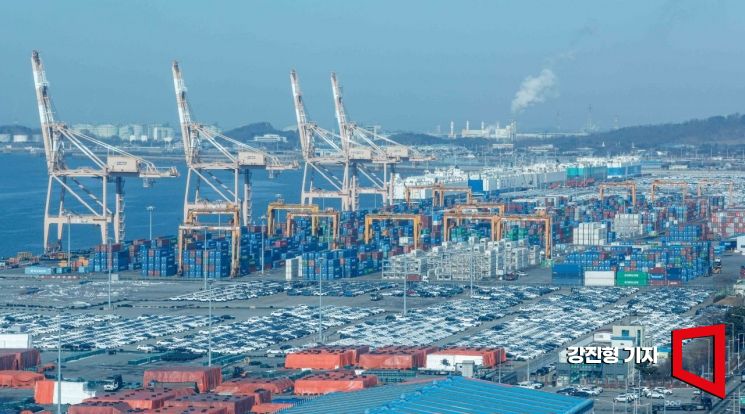
The number of manufacturing workers enrolled in employment insurance was 3.848 million, a decrease of 1,000. This is the first decline in manufacturing enrollees since December 2020 (-21,000), or in 54 months. Although there were increases in automobiles, other transportation equipment, food, and pharmaceuticals, the decline in enrollees in textiles, fabricated metals, machinery and equipment, rubber and plastics, and electrical equipment contributed to the overall decrease. While the number of foreign workers enrolled in employment insurance under the Employment Permit System (E9, H2) continued to rise, the decrease in domestic workers' employment insurance enrollment widened, making the overall decline unavoidable.
Chun Kyunggi, Director of Future Employment Analysis at the Ministry of Employment and Labor, explained, "Manufacturing saw negative growth in the first quarter, and growth in the first half of the year remained at around 0%. Manufacturing performance indicators are reflected in exports, and since exports were negative in the first half and are expected to worsen in the second half, the employment situation in manufacturing is facing difficult conditions." He added, "There are also uncertainties such as U.S. tariff policies, which seem to have made companies more cautious in hiring."
The number of construction workers enrolled in employment insurance decreased by 19,000 to 752,000. The decline continued for 23 consecutive months, with decreases not only in general construction but also in specialized construction sectors. However, since May (-19,000), the rate of decline has slowed from the 20,000 range to the 10,000 range. Although construction progress remains on a downward trend, the Ministry of Employment and Labor explained that construction orders have shown some recovery since the beginning of this year, which could lead to improved construction progress in the future.
By age group, the number of employment insurance enrollees increased among those in their 30s (72,000), 50s (49,000), and those aged 60 and over (186,000), but decreased among those under 29 (-93,000) and those in their 40s (-34,000). Both the under-29 and 40s age groups were affected by population decline, with decreases in enrollees mainly in manufacturing and wholesale and retail. For those under 29, the decrease in information and communications was also notable.
Last month, the number of new applicants for job-seeking benefits (unemployment benefits) was 86,000, an increase of 2.4% (2,000). The number of applicants had decreased by 3,000 the previous month, but turned upward again within a month. This was due to increases in applicants mainly in construction (11.1%) and manufacturing (7.2%). The number of job-seeking benefit recipients was 654,000, up 5.0% (31,000), and the total amount paid was 1.0516 trillion won, an increase of 10.9% (103.6 billion won).
Last month, the number of new job openings posted through Employment24 was 151,000, a decrease of 11.2% (19,000). This downward trend has continued for 28 consecutive months. The decline persisted not only in manufacturing but also in wholesale and retail and construction. The number of new job seekers was 387,000, an increase of 11.9% (41,000). The job openings-to-applicants ratio, which represents the number of job openings per job seeker, was 0.39, down 0.10 points.
© The Asia Business Daily(www.asiae.co.kr). All rights reserved.
![Clutching a Stolen Dior Bag, Saying "I Hate Being Poor but Real"... The Grotesque Con of a "Human Knockoff" [Slate]](https://cwcontent.asiae.co.kr/asiaresize/183/2026021902243444107_1771435474.jpg)
















