Supreme Court Rules That Selling Medicines Outside Pharmacies Violates the Pharmaceutical Affairs Act
Phone Orders and Courier Delivery of Herbal Medicine Deemed Illegal
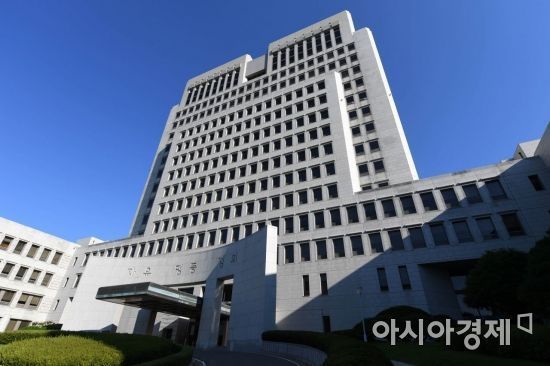
The Supreme Court has ruled that it is a violation of the Pharmaceutical Affairs Act for an oriental pharmacist to accept orders for herbal medicine by phone and send them via courier.
According to the legal community on July 14, the First Division of the Supreme Court (Presiding Justice Shin Sookhee) recently overturned the lower court's acquittal of an oriental pharmacist charged with violating the Pharmaceutical Affairs Act, and remanded the case to the Seoul Eastern District Court with instructions to convict.
This oriental pharmacist, in September 2019, conducted a medical interview with a customer who visited the herbal pharmacy she operated, sold diet herbal medicine, and delivered it by courier. Two months later, in November, when the customer expressed a desire to purchase more by phone, the pharmacist sent the same herbal medicine again via courier.
The prosecution argued that this violated the Pharmaceutical Affairs Act, which stipulates that pharmacy operators and pharmaceutical sellers must not sell medicines outside their pharmacies or stores, and brought the case to trial.
The first and second trial courts reached different conclusions. The first trial court determined that the pharmacist's actions constituted a violation of the Pharmaceutical Affairs Act and imposed a fine of 1 million won. In contrast, the second trial court acquitted the pharmacist.
The appellate court reasoned, "It is reasonable to view that the major parts of the series of acts constituting the sale of medicines?such as ordering, preparing, dispensing, and providing medication guidance?were carried out in a manner equivalent to having been conducted within the herbal pharmacy."
The court also explained that it should be taken into account that after the customer took the previously sold herbal medicine, there were no unusual side effects, and that the pharmacist judged there was no need for an additional face-to-face medical interview before reselling the same herbal medicine.
However, the Supreme Court's view differed. The Supreme Court stated, "The order for the herbal medicine was not made within the herbal pharmacy but by phone. As a result, the pharmacist did not properly carry out the series of actions such as checking for physical changes after the customer took the medicine face-to-face, then receiving an order for herbal medicine suitable for the customer's current physical condition, preparing it, and providing thorough medication guidance." The court added, "It cannot be considered that ordering, dispensing, and providing medication guidance were conducted within the herbal pharmacy or in a manner equivalent to that."
The Supreme Court concluded, "Such sales activities are in violation of the Pharmaceutical Affairs Act," and stated, "The lower court made an error in its legal interpretation."
© The Asia Business Daily(www.asiae.co.kr). All rights reserved.
![Clutching a Stolen Dior Bag, Saying "I Hate Being Poor but Real"... The Grotesque Con of a "Human Knockoff" [Slate]](https://cwcontent.asiae.co.kr/asiaresize/183/2026021902243444107_1771435474.jpg)















