Farmers in Uiseong, Mungyeong, Cheongsong, and Other Major Production Regions
"Is the Government Using Farmers as a Negotiation Card?" Anger Grows
"The moment apple imports are mentioned as a trade negotiation card, we will fight with our lives on the line."
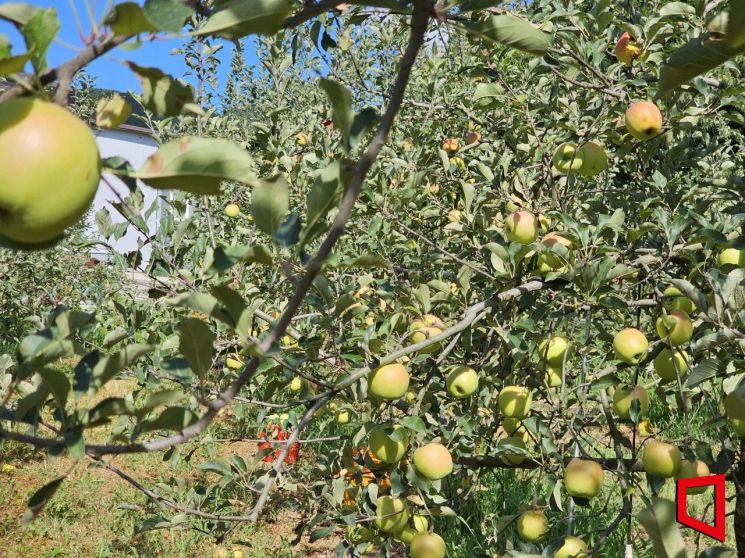
Apple farmers in Gyeongbuk, the main production region, are taking a strong stance and collectively voicing opposition in response to the government's move to consider importing apples from the United States.
Farmers in Cheongsong, Uiseong, Andong, Mungyeong, Yeongju, and Bonghwa?regions that together account for over 40% of the nation's apple production?emphasized that "allowing imports is not simply an economic issue, but a matter of survival." They raised their voices, saying, "The government is putting farmers on the negotiation table with the United States."
The reasons apple farmers are reacting so sensitively are clear. They are already suffering from a triple crisis: climate disasters, soaring agricultural material prices, and rising labor costs. There is a widespread sense of crisis that if the 'direct blow' of imported apples hits, they will no longer be able to endure.
Lee (70), who has been growing apples in Cheongsong for 20 years, said, "Last year, my harvest was cut in half by frost and hail, and this year, wildfires and heat waves have struck." He expressed his frustration, saying, "For the government to consider importing American apples under these circumstances is no different from handing down a death sentence to farmers."
Park (64) from Uiseong also said, "Whenever apple prices plummeted, the government just stood by and did nothing, and now they want to allow imports?" He warned, "Farmers in the main apple-producing regions and producer associations will stage a united protest and launch an all-out struggle against the government."
In fact, as of last year, Gyeongbuk apple farms saw fertilizer prices soar by 134%, labor costs surge due to worker shortages, and production costs skyrocket, while harvest volumes declined, pushing them into a severe management crisis. In this situation, if American apple imports are allowed, some analyses suggest the scale of the damage would be astronomical.
The Korea Rural Economic Institute warned in a 2016 report that "if American apples are imported, the annual damage would reach 408 billion won," and the National Assembly Research Service raised this figure to 598 billion won in a 2022 report. This amounts to about one-third of the domestic apple production value of 1.3 trillion won in 2021.
Farmer organizations point out that even discussing American apple imports is fundamentally misguided.
A representative of a farmer organization stated, "The United States maintains various subsidies and trade barriers to protect its own agricultural products, yet demands that Korea open its markets." He argued, "If the government sacrifices apples in trade negotiations, regional agriculture and rural economies will collapse beyond recovery."
Meanwhile, Gyeongbuk Province and local governments have reportedly begun relaying farmers' concerns to the government and preparing countermeasures to block the possibility of imports. Lawmakers representing major apple-producing regions are also pushing to explicitly exclude American apples from trade negotiations.
The government has stated that no official decision on imports has been made yet, but farmers are already expressing a sense of crisis, feeling cornered. The fight to protect 'apple sovereignty' is heading into turbulent waters.
© The Asia Business Daily(www.asiae.co.kr). All rights reserved.
![Clutching a Stolen Dior Bag, Saying "I Hate Being Poor but Real"... The Grotesque Con of a "Human Knockoff" [Slate]](https://cwcontent.asiae.co.kr/asiaresize/183/2026021902243444107_1771435474.jpg)















