Focus on Youth Employment Recovery and Household Debt Regulation Effectiveness
Assessment of Export-Import Prices and Supplementary Budget Impact
Next week (July 14?18), key domestic employment and inflation indicators will be released, and a series of major confirmation hearings and meetings are scheduled that will provide insight into the new government's economic policy direction. As sluggish employment among young people and in the manufacturing sector persists, the government plans to closely examine the effectiveness of household debt regulations and market responses, as well as analyze the impact of the supplementary budget (extra budget) aimed at stimulating the economy.
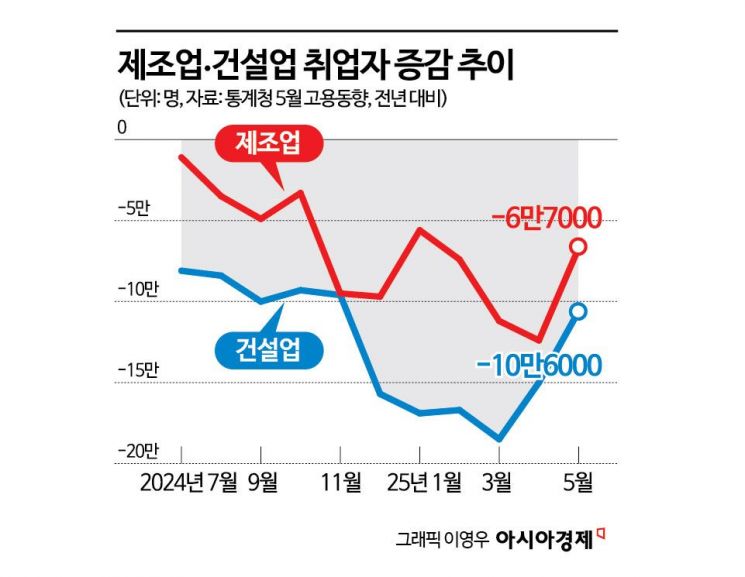
The National Statistical Office will announce the “June Employment Trends” on July 16. In May, the number of employed people increased by 255,000, rebounding to the 200,000 level for the first time in three months. However, employment improvements have been concentrated among older adults, while employment among young people and in the manufacturing sector remains stagnant. The government’s response strategy is drawing attention as the employment gap widens by age group and industry.
On the same day, the Bank of Korea will release the “June Export and Import Price Index and Trade Index (provisional).” In May, export and import prices posted the largest drop in a year and a half, driven by falling international oil prices and exchange rates. For June, the key point of interest is how instability in the Middle East and exchange rate volatility have affected the indices.
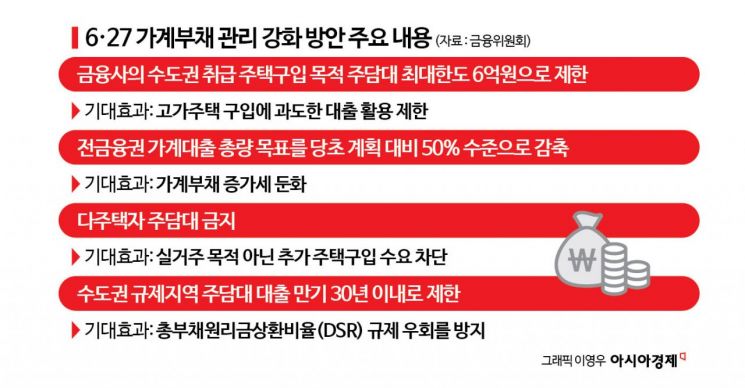
The state of household debt management will also be reviewed. The Financial Services Commission will hold a “Household Debt Review Meeting” on July 18, focusing on cases of circumventing mortgage loan regulations and the use of business loans for purposes other than intended. The commission will assess the current situation and discuss supplementary measures. Recently, there have been increasing concerns about the rise in transactions that seek to bypass loan limit regulations through loopholes.
Meanwhile, on July 17, the Financial Services Commission will host a roundtable discussion to address financial difficulties faced by small business owners. Around 50 to 60 participants?including government officials, related institutions, small business owners, and experts?will gather to collect on-the-ground feedback. This follows President Lee Jaemyung’s directive to “directly reflect the voices of indebted small business owners.”
The Ministry of Economy and Finance will hold the first meeting of the “MSCI Developed Markets Index Inclusion Task Force” on July 15, officially launching efforts to establish a public-private joint roadmap. On July 18, the ministry will also release the “Green Book” (Recent Economic Trends), which will include an assessment of the effectiveness of the supplementary budget executed in May and June, as well as strategies to respond to shocks from external variables.
The lineup of key policy leaders will also be revealed. On July 17, the National Assembly’s Strategy and Finance Committee will hold a confirmation hearing for Koo Yooncheol, the nominee for Deputy Prime Minister for Economic Affairs and Minister of Economy and Finance. As the first chief economic policymaker of the Lee Jaemyung administration, Koo’s crisis response strategy and economic philosophy are expected to be key topics of inquiry. The confirmation hearing for Lim Gwanghyeon, the nominee for Commissioner of the National Tax Service, is scheduled for July 15.
© The Asia Business Daily(www.asiae.co.kr). All rights reserved.
![Clutching a Stolen Dior Bag, Saying "I Hate Being Poor but Real"... The Grotesque Con of a "Human Knockoff" [Slate]](https://cwcontent.asiae.co.kr/asiaresize/183/2026021902243444107_1771435474.jpg)
















