Nineteen Ministerial Nominees Named Just 37 Days After Inauguration... Confirmation Hearings Begin Next Week
Stability, Speed, and Efficiency: Eight Incumbent Democratic Lawmakers Join the Cabinet... Four Business Leaders with Field Experience Boldly Appointed
Former Administration Minister Retained, Appointments Transcend Political Factions... Song Miryung and Kwon Oeul
Female Minister Nominees Fall Short of 30%... Only 5 Out of 19 Ministries
President Lee Jaemyung completed the formation of his first-term Cabinet 37 days after taking office, with the final nominations for the Minister of Land, Infrastructure and Transport and the Minister of Culture, Sports and Tourism. The 19 ministerial nominees, including Song Miryung, who will remain as Minister of Agriculture, Food and Rural Affairs, will officially take office after undergoing parliamentary confirmation hearings starting next week, and will then begin carrying out their assigned duties in earnest.
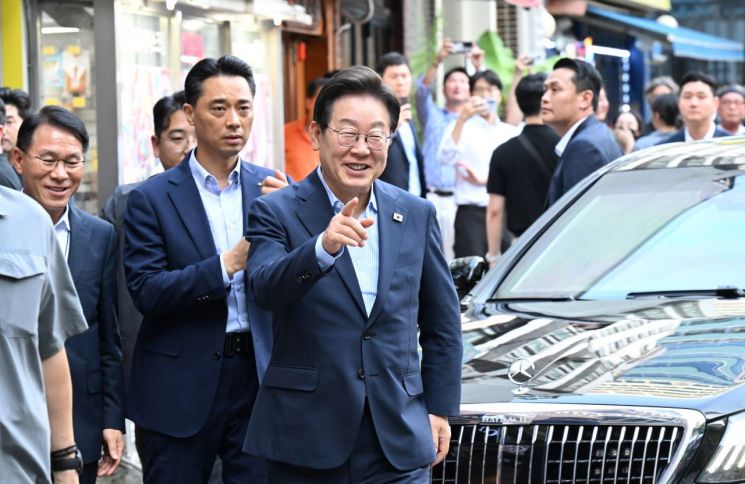
The key characteristics of President Lee Jaemyung’s first Cabinet include the appointment of a large number of current lawmakers, the inclusion of business leaders, a balance between the Yeongnam and Honam regions, and appointments that transcend political factions. President Lee included eight current Democratic Party lawmakers in his first Cabinet: Chung Dongyoung (Unification), Chung Sungho (Justice), Ahn Kyubaek (Defense), Yoon Hojoong (Interior and Safety), Kim Sunghwan (Environment), Kang Sunwoo (Gender Equality and Family), Kim Yoonduk (Land, Infrastructure and Transport), and Jun Jaesoo (Oceans and Fisheries). Kwon Oeul, the nominee for Minister of Patriots and Veterans Affairs, is a former three-term lawmaker from the Grand National Party, and Kim Minseok, the Prime Minister and head of the Cabinet, is also a current ruling party lawmaker.
Since President Lee took office without a transition committee, he sought both speed and stability by appointing a large number of current ruling party lawmakers. These lawmakers have already undergone a certain level of public scrutiny and were elected by the people, which means there is relatively less risk during confirmation hearings. Additionally, they can help establish an effective relationship between the administration and the legislature, especially on issues requiring new legislation. This number is significantly higher than the four current lawmakers in President Yoon Sukyeol’s first Cabinet and the five in President Moon Jaein’s first Cabinet.
Four Business Leaders Appointed to Head Science, SMEs, Industry, and Culture Ministries
For ministries responsible for driving economic growth, President Lee boldly selected four business leaders with extensive private sector experience. This move is intended to leverage their expertise in rapidly and efficiently allocating limited resources where they are needed most. President Lee has consistently emphasized overcoming the economic downturn and fostering new industries. Reflecting this, the titles of senior aides in the presidential office were changed from Senior Secretary for Economic Affairs to Senior Secretary for Economic Growth, and from Secretary for Economic Affairs to Secretary for Economic Growth. New positions such as Senior Secretary for AI Future Planning and Secretary for National AI Policy were also created.
President Lee nominated Bae Kyunghoon, former head of LG AI Research, as Minister of Science and ICT, and Han Seongsook, former CEO of Naver, as Minister of SMEs and Startups. They will be responsible for fostering advanced industries such as artificial intelligence (AI), semiconductors, and biotechnology, and for identifying future growth engines.
Kim Junggwan, president and head of marketing at Doosan Enerbility, was nominated as Minister of Trade, Industry and Energy. Although he is a former bureaucrat who managed macroeconomic policy at the Ministry of Economy and Finance and the Bank of Korea, he moved to the private sector in 2018 and contributed to winning the contract for the new Dukovany nuclear power plant in the Czech Republic. On July 11, President Lee also nominated Choi Hwiyoung, CEO of Nol Universe, as Minister of Culture, Sports and Tourism. President Lee has previously stated his intention to actively promote the so-called K-culture industry and expand it into a 300 trillion won market by 2030.
Pro-Lee Senior Lawmakers to Lead Prosecutorial, Defense, and Real Estate Policy Reforms: Justice, Interior, Defense, and Land Ministries
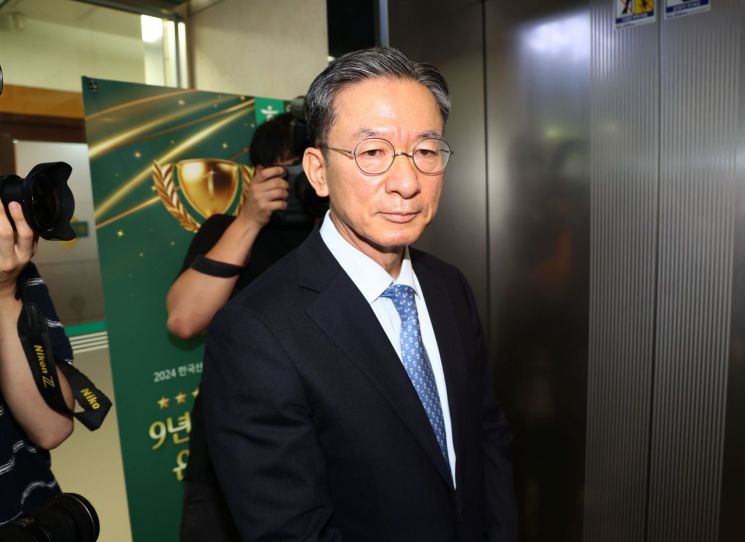
Senior lawmakers close to President Lee were placed in ministries that require strong reform initiatives in the early days of the new administration. Chung Sungho (Justice), Yoon Hojoong (Interior and Safety), Ahn Kyubaek (Defense), and Kim Yoonduk (Land, Infrastructure and Transport) are all prominent pro-Lee senior lawmakers within the Democratic Party. Chung and Yoon are five-term lawmakers, while Yoon is a three-term lawmaker, and all have a deep understanding of President Lee’s policy direction.
Chung Sungho and Yoon Hojoong must immediately push forward with the reform agenda of separating the prosecution’s investigative and indictment powers, overcoming resistance from the opposition and the prosecution. If these ministries fail to implement reforms swiftly, it could undermine the momentum of the new administration. Given that lawmakers Park Chandae and Jung Chungrae, who are running for Democratic Party leader, have pledged to complete prosecutorial reform before Chuseok, time is running short.
Ahn Kyubaek is the first civilian nominee for Minister of National Defense and must lead reforms to fundamentally address issues within the military, as revealed by the 12·3 Martial Law Incident. After much deliberation, President Lee selected Kim Yoonduk, who has long served on the National Assembly’s Land, Infrastructure and Transport Committee, to take charge of the administration’s “Achilles’ heel”?real estate policy.
Appointments Transcending Political Factions and Regional Balance Between Yeongnam and Honam
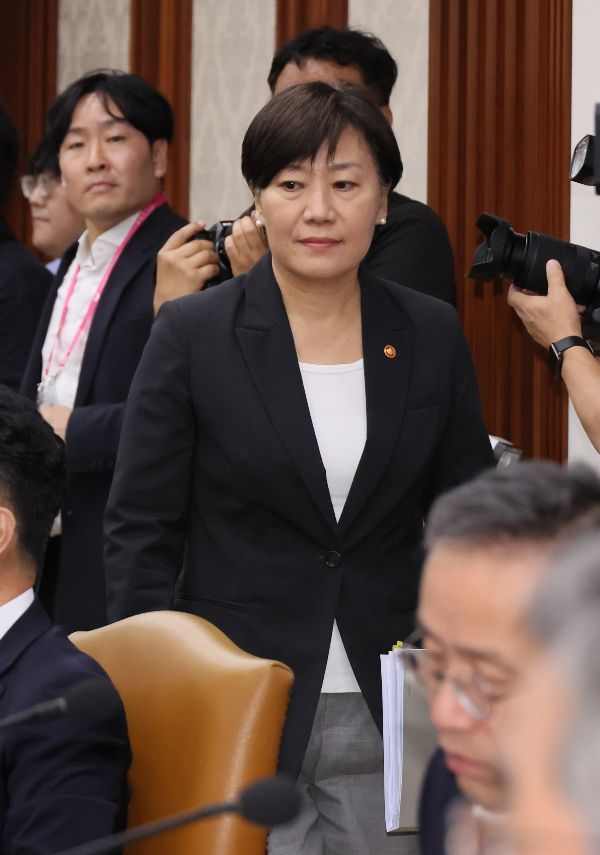
President Lee Jaemyung’s first Cabinet is seen as a symbol of appointments that transcend political factions. President Lee made a surprise decision to retain Song Miryung, who was appointed by former President Yoon Sukyeol, as Minister of Agriculture, Food and Rural Affairs. This is only the second time a Cabinet member from a previous administration has been retained after a change in government, the first being Lee Giho, Minister of Labor, during the Kim Daejung administration. Vice-ministerial officials such as Oh Youkyung, head of the Ministry of Food and Drug Safety, were also retained, and Kim Byunghwan, chairman of the Financial Services Commission, is also likely to remain in his post.
Kwon Oeul, nominee for Minister of Patriots and Veterans Affairs, is a former three-term lawmaker from the Grand National Party (now the People Power Party). This is a symbolic example of President Lee’s determination to look beyond political backgrounds. At his first press conference on July 3, President Lee said, “It is dangerous to keep appointing only those you like or those on your side.”
Regional balance between Yeongnam and Honam was also achieved to some extent. There are seven appointees from Honam, one more than from Yeongnam. Among them, Chung Dongyoung (Unification), Cho Hyun (Foreign Affairs), Ahn Kyubaek (Defense), and Kim Yoonduk (Land, Infrastructure and Transport) are from North Jeolla. Chung Eunkyung (Health and Welfare), Kim Junggwan (Industry), and Kim Sunghwan (Environment) are from South Jeolla.
Among those from Daegu and North Gyeongsang (TK) are Koo Yoonchul (Economy and Finance), Kang Sunwoo (Gender Equality and Family), and Kwon Oeul (Patriots and Veterans Affairs). From Busan, Ulsan, and South Gyeongsang (PK) are Choi Hwiyoung (Culture), Kim Younghoon (Labor), and Jun Jaesoo (Oceans and Fisheries). From the Seoul metropolitan area (Seoul, Gyeonggi, Incheon) are Bae Kyunghoon (Science and ICT), Yoon Hojoong (Interior and Safety), and Han Seongsook (SMEs and Startups). Song Miryung (Agriculture) and Lee Jinsook (Education) are from Chungcheong, while Chung Sungho (Justice) is from Gangwon.
Female Representation at Only 26%, Below Target
There are five female nominees in President Lee Jaemyung’s first Cabinet: Lee Jinsook (Education), Chung Eunkyung (Health and Welfare), Kang Sunwoo (Gender Equality and Family), Han Seongsook (SMEs and Startups), and Song Miryung (Agriculture, who remains in her post). This is less than 30% and similar to the first Cabinet of President Moon Jaein, which had five female ministers out of 18 ministries.
During his presidential campaign, President Lee pledged to consider gender balance in his appointments and said, “Although it is difficult to specify publicly, I will do my best to ensure that minorities exceed 30%.” In President Yoon Sukyeol’s first Cabinet, excluding Park Sunae, who resigned as Deputy Prime Minister and Minister of Education 34 days after inauguration, there were three female ministers: Kim Hyunsook (Gender Equality and Family), Han Hwajin (Environment), and Lee Young (SMEs and Startups).
© The Asia Business Daily(www.asiae.co.kr). All rights reserved.
![Clutching a Stolen Dior Bag, Saying "I Hate Being Poor but Real"... The Grotesque Con of a "Human Knockoff" [Slate]](https://cwcontent.asiae.co.kr/asiaresize/183/2026021902243444107_1771435474.jpg)


















