Job seeker Na Mo (29) recently left for Europe to work as a marketing intern at a German startup. Frustrated by the difficulties of finding a job in Korea, he wanted to fill the gap in his resume while gaining meaningful experience. He said, "While I am here on a one-year visa, I plan to use my local internship experience to get a job at a German company and continue living here."
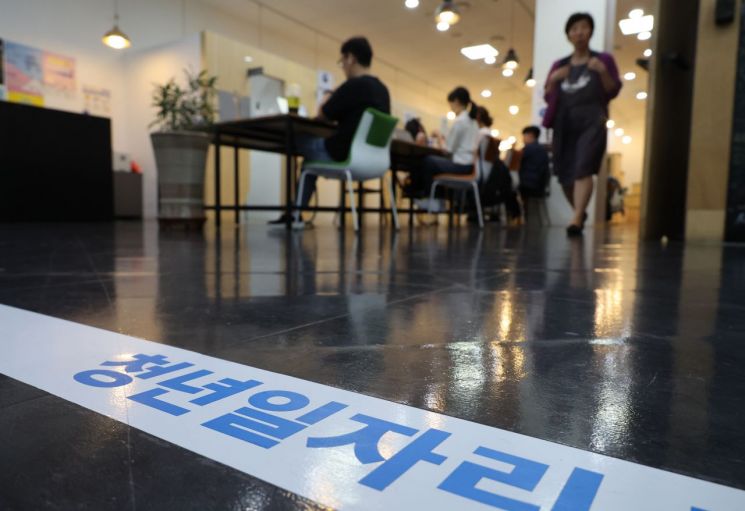
As the domestic job market becomes more challenging, more young people are turning their attention to overseas employment. Many start with overseas training programs or internships, with plans to eventually settle abroad.
According to the Human Resources Development Service of Korea on July 12, the number of people registering for overseas job searches has been increasing over the past three years: 21,733 in 2022, 22,323 in 2023, and 35,326 in 2024.
However, it is not easy for overseas training or internships to actually lead to employment abroad. The number of people who found jobs overseas increased from 5,024 in 2022 to 5,720 in 2024, but the number of those who succeeded in getting a job abroad after completing training decreased from 1,700 in 2022 to 1,605 in 2024.
Young people cite the difficulty of overcoming the challenges of living in a foreign country and cultural barriers as reasons. The lack of stable status and living conditions, such as visa issues, is a realistic obstacle. Lee Sangjin (27), a job seeker currently interning in an office position in Australia, said, "I had to apply for a working holiday visa myself, and since my status is not stable due to visa issues, settling down here seems realistically difficult. The language barrier is also a major issue. I heard that having overseas internship experience helps you get into foreign or startup companies in Korea, so I plan to aim for that path."
Not only are migrants not in a favorable position in the labor market, but some also discover the poor employment conditions at local companies only after arriving. Job seeker Son Mo (26) interned for six months at KOTRA in Austria last year but gave up on working abroad. Son said, "Local companies prefer people who graduated from universities in the country, and since they do not support visas, I would need to get a working holiday visa. The opportunity cost is high if I apply but do not get hired. After taxes, the salary is lower than in Korea, and I felt it would be difficult to cover initial settlement expenses with just my monthly pay."
Kim Yubin, head of the Employment Policy Research Division at the Korea Labor Institute, said, "Because the domestic market is saturated with quality jobs, people are looking abroad for opportunities. However, many overseas jobs do not offer the wages, benefits, or working conditions that people expect, so they end up returning to Korea. When matching jobs through overseas employment programs, it is necessary to provide not only information on wages and benefits, but also details about working conditions that can be expected in three to five years."
© The Asia Business Daily(www.asiae.co.kr). All rights reserved.
![Clutching a Stolen Dior Bag, Saying "I Hate Being Poor but Real"... The Grotesque Con of a "Human Knockoff" [Slate]](https://cwcontent.asiae.co.kr/asiaresize/183/2026021902243444107_1771435474.jpg)















