HRW publishes report on age-based discrimination in South Korea
Mandatory retirement and wage peak system criticized as discriminatory against older workers
International human rights organizations have pointed out that South Korea's age-based employment policies, such as the mandatory retirement system and wage peak system, constitute discrimination against older workers. In particular, the wage peak system has been analyzed as contributing to elderly poverty rather than increasing youth employment.
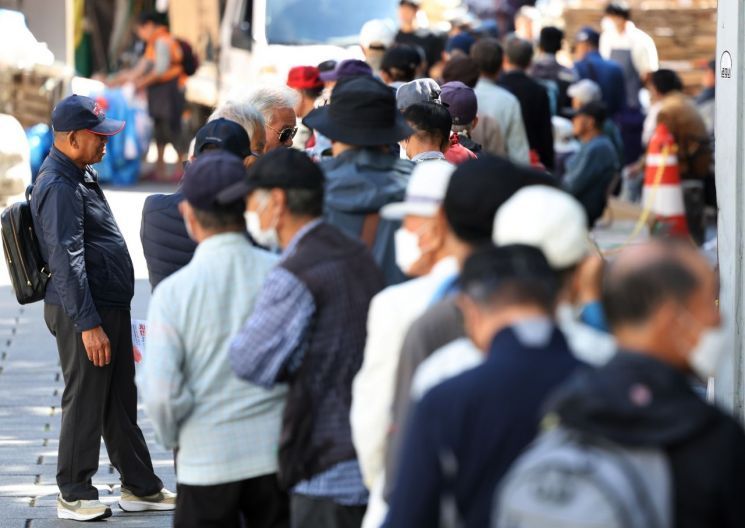
On July 10, Human Rights Watch (HRW) published a report assessing the impact of South Korea's age-based employment laws and related policies on older workers. The report was based on interviews with 34 workers aged 42 to 72 from both the public and private sectors.
The organization identified the mandatory retirement at age 60, the wage peak system, and reemployment policies as laws and policies that discriminate against older workers.
According to the report, South Korean employment law allows employers to enforce a mandatory retirement age of 60 or older, regardless of a worker's job performance. While companies can choose whether to set a retirement age, 95% of companies with 300 or more employees have adopted the mandatory retirement at age 60. The report pointed out that this retirement system forces millions of older workers into retirement every year.
The wage peak system, which allows employers to reduce wages during the three to five years before mandatory retirement, was also found to cause both psychological and economic harm to older workers.
One interviewee, who had worked at an insurance company for over 30 years since the age of 23 and had been promoted to branch manager, began to see his wages reduced under the wage peak system as he approached age 60. At age 56, his wages were cut by 20%, and after that, they were reduced by an additional 10% each year. Next year, as he faces retirement at age 60, he will receive only 52% of the salary he earned at age 55, despite having the same workload and working hours. He stated, "It is unfair discrimination for my wages to be cut simply because of my age."
The wage peak system was originally introduced with the aim of improving productivity by reducing the wages of older workers and using the savings to hire younger employees. However, HRW pointed out that this goal has not been achieved, and the harm to older workers has been even greater.
Finally, the report noted that reemployment programs are pushing older workers into unstable, low-wage jobs. Older workers who are forced out of their jobs due to the mandatory retirement system and the wage peak system have no choice but to seek reemployment, but their options are limited to unstable, low-wage jobs through programs for senior employment. Furthermore, the situation of older workers is made worse by an inadequate social security system.
The organization stated, "A combination of three policies?forced retirement due to age, reduced pay, and transfer to lower-paid, more unstable, and harder jobs?violates the rights of older people to work and to be free from discrimination. Disadvantages imposed on workers simply because they are older must stop."
© The Asia Business Daily(www.asiae.co.kr). All rights reserved.
![Clutching a Stolen Dior Bag, Saying "I Hate Being Poor but Real"... The Grotesque Con of a "Human Knockoff" [Slate]](https://cwcontent.asiae.co.kr/asiaresize/183/2026021902243444107_1771435474.jpg)















