A 'National, Tertiary General Hospital' Inspiring Trust and Hope
Benchmarking Future-Oriented Wards, Focusing on Patient Safety and Treatment Environment
Paradigm Shift Toward a 'Quality-Driven Advanced-Country Model'
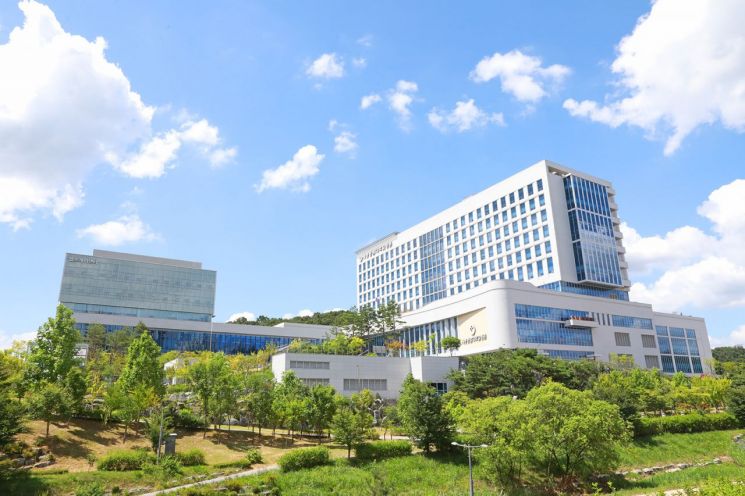
"This ICU is evaluated as a future-oriented intensive care unit that is rarely seen even in advanced countries, enhancing patient safety, environment, and quality of care."
Kwon Gyecheol, Director of Sejong Chungnam National University Hospital, made this statement ahead of the hospital's fifth anniversary.
According to the hospital on July 10, there has been a series of benchmarking cases of ICU facilities by medical institutions and various organizations nationwide. This is because the ICU was built as a quality-centered, advanced-country model that prioritizes patient safety and treatment environment over simply increasing the number of beds, drawing attention from the medical community.
◆From tertiary general hospitals to nursing colleges... 'Continuous on-site visits'
Over the past five years since opening, key hospital executives and stakeholders, including those from tertiary general hospitals pursuing remodeling or new construction, have visited the ICU facilities more than 10 times. More than 20 nursing colleges in the region have also made official visits, indicating that there are active efforts to benchmark the ICU facilities and operations in both clinical and educational settings.
Officials from medical societies, regional medical associations, and hospital associations also list ICU facility tours as a major part of their official hospital visits. In 2022, international organizations such as the International University Sports Federation (FISU) inspection team and public officials from 10 ASEAN countries, as well as relevant departments from central and local government agencies, have visited the site several times each year.
◆A structure rarely seen even in some advanced countries... 'Future-oriented ICU draws attention'
Visitors are particularly interested in the following features: ▲a structure in which all ICU beds are designed as single-patient independent rooms ▲dedicated pediatric ICU rooms equipped with in-room bathrooms so that parents can stay with their children ▲a pendant system at every bed and spacious rooms of 23 square meters ▲perfect negative-pressure anterooms and independent air conditioning for negative-pressure isolation rooms within the ICU ▲a patient room environment that maximizes natural light for comfort ▲a space design that allows for ambulatory rehabilitation therapy within the ICU.
A hospital official said, "Visitors have highly praised the ICU, saying it is a future-oriented facility that is rarely seen even in some advanced countries."
Professor Moon Jaeyoung, who participated in the ICU design at the time of opening and currently works as a dedicated specialist, said, "Even after five years since opening, our hospital's ICU still meets all the criteria of the 2024 Society of Critical Care Medicine's ICU Design Guidelines." He emphasized, "There needs to be a paradigm shift away from viewing the ICU simply as a space for critically ill patients, toward a patient- and environment-centered concept where both patients and medical staff can focus on treatment in a more comfortable and specialized setting than general wards."
◆Encouraging investment in advanced facilities... 'Urgent need for government and local support measures'
Recently, a significant number of newly opened general hospitals are designing their ICUs as single-patient independent rooms. However, this requires tens of billions of won in additional construction costs for each ICU (typically 10 to 20 beds). In particular, negative-pressure isolation rooms require installation costs of up to 300 million won per bed, along with separate maintenance costs, which experts say is a significant financial burden for hospitals.
Even after building advanced-country ICUs, there is no separate compensation under the current medical fee system, so this has remained a persistent issue. It is pointed out as a structural limitation that even large hospitals with sufficient financial resources are inevitably passive about facility improvements.
Professor Moon Jaeyoung said, "The government also needs to go beyond simply increasing the number of critical care beds and prepare measures to encourage and support medical institutions to create ICU environments that enhance patient safety and quality of care." He added, "Ultimately, this is about considering and preparing for the kind of medical environment in which our people will receive treatment in the future."
© The Asia Business Daily(www.asiae.co.kr). All rights reserved.
![Clutching a Stolen Dior Bag, Saying "I Hate Being Poor but Real"... The Grotesque Con of a "Human Knockoff" [Slate]](https://cwcontent.asiae.co.kr/asiaresize/183/2026021902243444107_1771435474.jpg)















