Euromonitor Releases Foodservice Market Report
Dine-in Share Declines, Delivery and Takeout on the Rise
There is a forecast that, by 2029, the proportion of dine-in and delivery in the domestic foodservice market will become nearly equal. While delivery and takeout continue to rise steadily, the share of dine-in consumption is consistently decreasing, narrowing the gap between the two.
On July 9, global data analytics firm Euromonitor International announced the results and outlook of its 2024 consumer foodservice market survey, along with major trends in the global foodservice market. According to Euromonitor, the size of the Korean foodservice industry last year reached 110.8 trillion won, a 3.4% increase from the previous year's 107.16 trillion won.
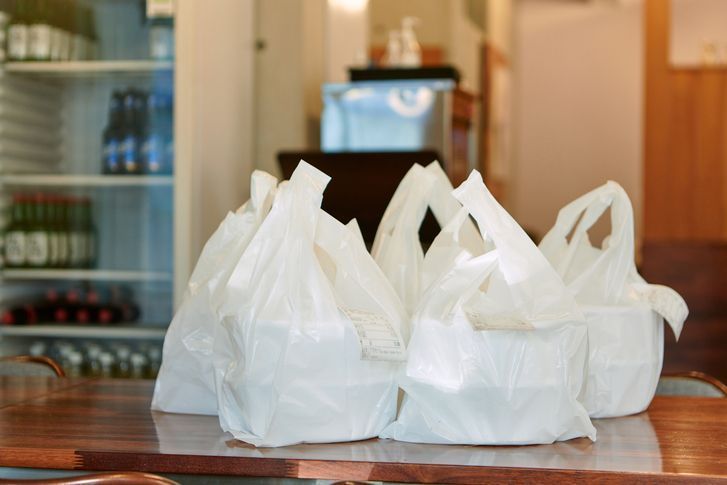
Looking at last year's consumer usage, dine-in accounted for 45%, delivery for 35%, and takeout for 19%. The share of delivery, which was around 18% in 2019, temporarily soared to 40% during the COVID-19 pandemic in 2021, but has remained in the 30% range since 2022. The takeout foodservice market is also gradually expanding in scale. In contrast, the proportion of dine-in consumption has continued to decline since 2023.
Accordingly, Euromonitor predicts that, by 2029, the share of delivery will grow to 37%, making it nearly equal to dine-in. In addition, as takeout becomes established as a new alternative for dining out, the domestic takeout market is expected to account for 24% of the total foodservice market in 2029.
Euromonitor also noted that the growth of the takeout market could lead to competition with home meal replacement (HMR) products. Han Seungwoo, head researcher of food and foodservice at Euromonitor, explained, "HMR products, which are rapidly evolving in terms of taste and quality, also have price competitiveness, creating a structure in which they directly compete with dining out." He added, "It will become commonplace for consumers seeking a simple meal to choose between HMR products and takeout."
Furthermore, there is an analysis that domestic dining culture is rapidly shifting from traditional table settings to single-bowl meal formats. As meals for two to four people, such as those at barbecue or sashimi restaurants, decrease, there is a movement toward simplifying menus or transforming into establishments specializing in simple yet satisfying dishes such as gukbap (rice soup), jjigae (stew), rice bowls, and noodles. Pizza and chicken specialty restaurants are also working to improve their menu and pricing structures, for example, by introducing single-serving menu items. These changes are attributed to the increase in single-person households, a consumer trend that prioritizes convenience, and the rising cost of dining out.
© The Asia Business Daily(www.asiae.co.kr). All rights reserved.
![Clutching a Stolen Dior Bag, Saying "I Hate Being Poor but Real"... The Grotesque Con of a "Human Knockoff" [Slate]](https://cwcontent.asiae.co.kr/asiaresize/183/2026021902243444107_1771435474.jpg)















