Increase in Antioxidant Enzymes and Reduction in Triglycerides
35% Lower Negative Emotions Compared to the City, Promoting Psychological Recovery
A study has found that walking on forest trails reduces negative emotions and increases antioxidant effects compared to being in the city.
According to the Korea Forest Service's National Institute of Forest Science on July 9, an analysis of the representative health benefits of walking on forest trails showed that walking approximately 2 kilometers for 30 minutes resulted in an average 35.0% reduction in negative emotional states compared to walking the same distance in an urban setting.
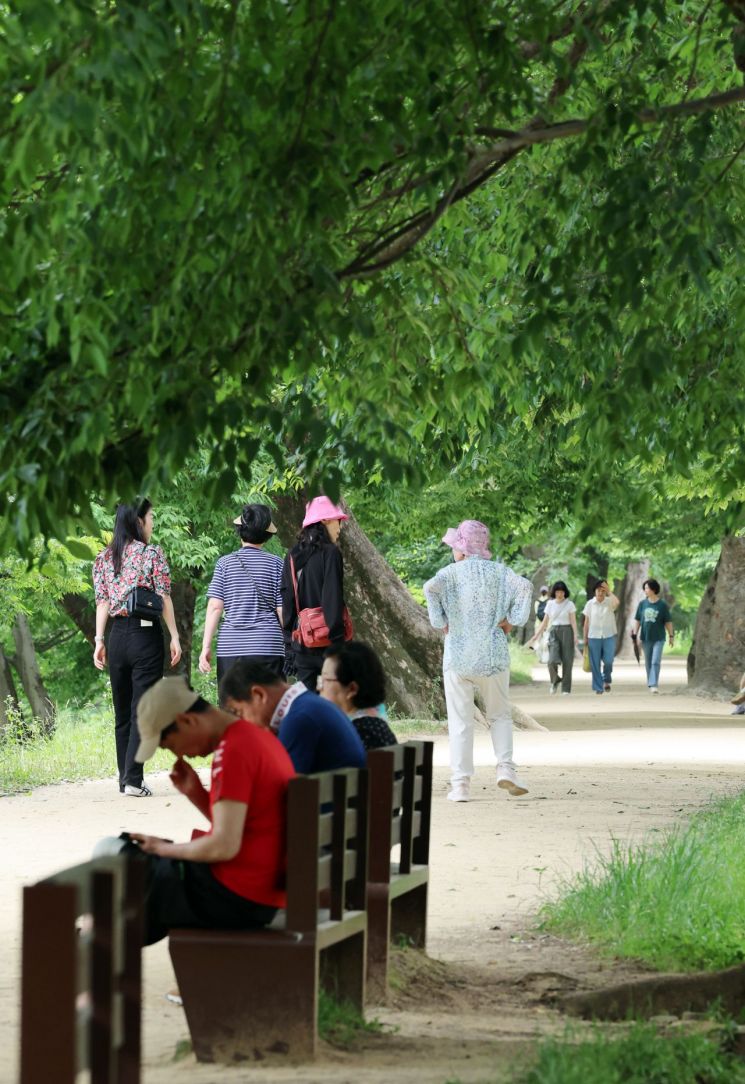 Citizens are taking a walk and resting at Gwanbangjerim in Damyang-eup, Damyang-gun, Jeollanam-do. Photo by Yonhap News
In addition, when middle-aged women in their 40s to 60s engaged in exercise of the same intensity either on forest trails or indoors for 10 weeks, the level of SOD (SuperOxide Dismutase)?an antioxidant enzyme that suppresses aging?increased significantly more after exercising on forest trails than after indoor exercise. This enzyme plays a key role in removing reactive oxygen species from the body, thereby helping to prevent aging and strengthen the immune system.
Furthermore, the level of triglycerides, which is considered one of the main causes of adult diseases, decreased by 15.7% after exercising on forest trails, while it decreased by only 14.8% after indoor exercise. This confirms that exercising on forest trails is more effective for health.
In Korea, forest trails are classified into five levels of difficulty, ranging from "very easy" to "very difficult," based on criteria such as slope, distance, trail width, and the presence of guide signs. The World Health Organization (WHO) recommends more than 150 minutes of aerobic exercise and two sessions of strength training per week. Analysis shows that simply walking for about three hours a week on sections of forest trails rated as "difficult" or "very difficult" in Korea is sufficient to meet these standards.
Currently, there are approximately 8,400 routes and about 40,000 kilometers of forest trails established nationwide. The Korea Forest Service designates and manages certain trails as National Forest Trails, Premium Forest Trails, and East-West Trails, taking into account regional characteristics and ecological value.
The results of this study are available for anyone to view and download free of charge from the "Publications" section under "Research Publications" on the National Institute of Forest Science Library website.
Lee Hyunjin, a researcher at the Forest Human Services Research Division of the National Institute of Forest Science, stated, "We analyzed this study to promote the health benefits of walking on forest trails," and added, "We will continue our research so that walking on forest trails can become a healthy habit in people's daily lives."
© The Asia Business Daily(www.asiae.co.kr). All rights reserved.
![Clutching a Stolen Dior Bag, Saying "I Hate Being Poor but Real"... The Grotesque Con of a "Human Knockoff" [Slate]](https://cwcontent.asiae.co.kr/asiaresize/183/2026021902243444107_1771435474.jpg)















