Household Loans in the Financial Sector Increase by KRW 6.5 Trillion in June, Largest Rise in Eight Months
Loans Approved Before Regulations Reflected in Statistics After One or Two Months
Additional Regulations Expected, Including Ban on Jeonse Loans for Multiple Homeowners
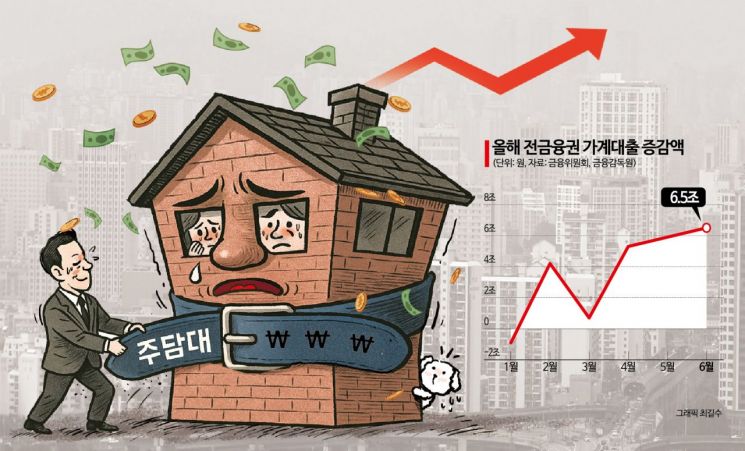
Despite the government's implementation of strict regulations limiting mortgage loans (ju-dam-dae) to curb overheating in the Seoul real estate market, household lending surged significantly last month. The increase in household loans was driven by loans that were approved before the new regulations took effect but were still counted in the statistics. This trend is expected to continue for some time. The government plans to introduce additional measures to prevent the housing market from overheating before the effects of the current mortgage loan regulations wear off.
Household Loans in the Financial Sector Increase by KRW 6.5 Trillion in June, Largest Rise in Eight Months
According to the Financial Services Commission and the Financial Supervisory Service on July 10, the total outstanding household loans in the financial sector increased by KRW 6.5 trillion compared to the previous month. This is the largest increase in eight months since the KRW 6.5 trillion rise recorded in October last year. The growth in household loans was mainly led by mortgage loans. The increase in mortgage loans last month was KRW 6.2 trillion, the largest in nine months since September last year. Of the KRW 6.2 trillion, KRW 5.1 trillion came from bank mortgage loans, which is identified as the main driver of the household loan increase.
The government believes that the upward trend in household lending could continue in July and August. Even though a plan to strengthen household debt management, including limiting mortgage loans in the Seoul metropolitan area to KRW 600 million, was announced on June 27, and the third phase of the stress-based Debt Service Ratio (DSR) regulation has been implemented this month, the increase in household loans is expected to persist. An official from the Financial Services Commission explained, "It is true that the amount of mortgage loan applications at banks has decreased since the announcement of the strengthened household debt management plan last month." However, the official added, "Given the already completed housing transactions and the amount of loan approvals, the upward trend in household loans could continue for the time being."
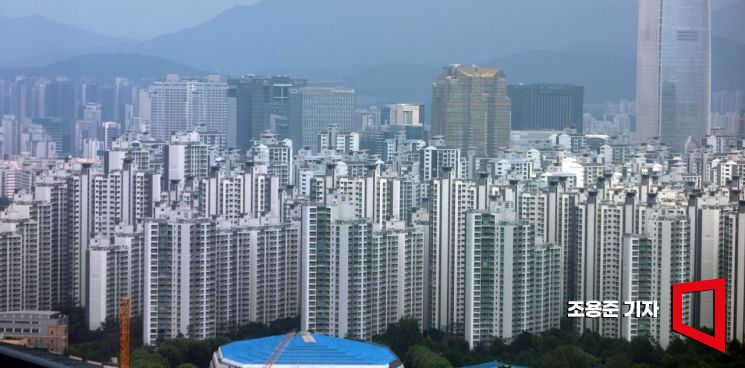
According to the Ministry of Land, Infrastructure and Transport, the number of housing sales transactions nationwide increased from 38,000 units in January to 63,000 units in May. In particular, apartment sales transactions in the Seoul metropolitan area surged from 13,000 units to 24,000 units over the same period. There are concerns that the increase in household loans could continue throughout the summer, as it takes at least a month or more for people who took out bank loans when concluding housing sales transactions in May and June to be reflected in the statistics.
Additional Regulations Likely, Including Ban on Jeonse Loans for Multiple Homeowners
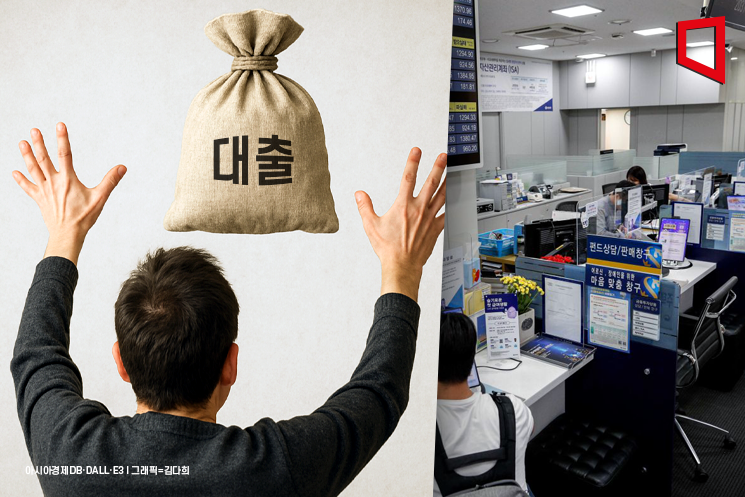
The government maintains that additional regulations are always possible if the upward trend in household loans does not clearly subside. For now, the Financial Supervisory Service has requested all financial institutions to resubmit their household loan targets for the second half of the year this week. The supply of household loans in the second half will be reduced to 50% of the original plan, and financial institutions have been asked to prepare figures based on the new criteria. Banks are already implementing their own loan suppression measures, including blocking mortgage loan applications through loan brokers and raising lending rates.
The Financial Supervisory Service also plans to conduct a thorough investigation of business loans to determine whether they have been used for home purchases. If business loans have been used for home purchases in violation of regulations, the agency will actively enforce measures such as loan recall and restrictions on new loans. The Ministry of Land, Infrastructure and Transport will monitor suspicious sources of funds and false contract reports, and will respond to any illegal activities with a zero-tolerance policy.
If these various measures fail to resolve the overheating of the housing market, additional regulations are expected. The market views regulations on jeonse loans as a strong measure to curb speculation. According to the Ministry of Land, Infrastructure and Transport, about 40% of apartment sales in Seoul through May this year were so-called gap investments involving jeonse tenants. Gap investment is cited as a major factor undermining the effectiveness of government real estate regulations.
The government is reportedly considering applying the DSR to jeonse loans to lower loan amounts, or even banning jeonse loans entirely for those who own more than one home. An official from the Financial Services Commission explained, "We are considering various additional regulatory measures to address the household debt problem."
© The Asia Business Daily(www.asiae.co.kr). All rights reserved.
![Clutching a Stolen Dior Bag, Saying "I Hate Being Poor but Real"... The Grotesque Con of a "Human Knockoff" [Slate]](https://cwcontent.asiae.co.kr/asiaresize/183/2026021902243444107_1771435474.jpg)


















