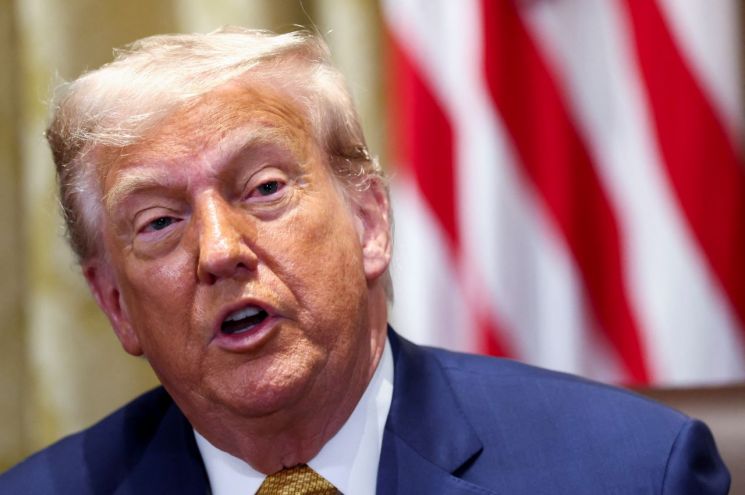
Donald Trump, President of the United States, has been married three times and divorced twice. He is well known for signing a prenuptial agreement (commonly referred to as a "prenup," a contract that stipulates the division of assets and other matters in the event of divorce before marriage) before each of his marriages.
In a 2016 interview with the media, he said, "Melania really didn't want a prenuptial agreement," adding, "But I felt it was necessary, and I thought it was one way to keep the marriage going." Trump also stated, "Thanks to the prenuptial agreement, the divorce was much easier and the entire process was much simpler." In his 1997 book, "The Art of the Comeback," he wrote that while he can fully understand a "good woman" refusing to sign a prenup, a man should walk away and find someone else in such a case.
United States and United Kingdom: Broad Recognition Through Case Law
There are many cases overseas where prenuptial agreements are recognized. In the United States, most states currently acknowledge the validity of prenups. In the past, the U.S. did not recognize the validity of marital property agreements, arguing that such agreements encouraged divorce and undermined the value of marriage. However, following a 1970 court ruling in Florida, the trend shifted toward recognizing the validity of marital property agreements. The perception spread that prenups help prevent disputes between spouses and adjust property rights, thus contributing to the protection of marriage and family happiness.
In the United Kingdom, a 2010 Supreme Court decision marked a turning point, leading to broader recognition of prenuptial agreements for marital property. At that time, the UK Supreme Court ruled that "significant weight should be given to prenuptial agreements if certain conditions are met." While such agreements are not legally binding in themselves, the court stated that if they are deemed fair and properly executed, they may be upheld.
In Canada, family law varies by province, but prenuptial agreements are generally recognized. However, enforcement is possible only if the agreement is fair and protects the rights of both parties.
Australia and Japan: Recognition Through Statute
In Australia, prenuptial agreements, known as Binding Financial Agreements (BFA), are legally recognized under the Family Law Act. For a BFA to be valid and enforceable, it must be a written contract. Both parties must sign voluntarily, without coercion or undue influence, and each must receive independent legal advice from different lawyers. Full disclosure of financial status is also required. If assets are hidden or understated, the court may invalidate the agreement. Han Myungchul, an Australian attorney at MH Partners, stated, "If these requirements are met, and the BFA does not cause unfair or excessive disadvantage to one party, it can be validly enforced." However, he noted that the number of BFAs actually signed in Australia remains low.
In Japan, under the Civil Code, couples can enter into a "marital property agreement" before marriage to set rules in advance regarding the ownership and management of property, as well as criteria for division of assets in the event of divorce. Couples must draft the agreement before registering their marriage and have it notarized and registered. If the agreement is not registered, its terms cannot be asserted against third parties such as heirs. After marriage, entering into or amending a marital property agreement is generally not allowed, but it can be changed with the approval of the family court. Choi Hyunyun, head of the Japan team at Gaon Law Firm, explained, "In Japan, if the scope of separate property is clearly defined in a marital property agreement, it can be excluded from division. However, inheritance distribution cannot be determined by a marital property agreement, and renunciation of statutory inheritance shares (reserved portion) cannot be pre-agreed without the approval of the family court."
Germany also recognizes prenuptial agreements certified by a notary. In 2017, the Federal Court of Justice ruled that if a prenuptial agreement contains provisions for mutual renunciation of inheritance and reserved portions, and such provisions cause objectively unfair disadvantage to one spouse, the entire agreement can be deemed invalid.
"Korea Needs Legal Reform and Attitudinal Change"
In Korea, prenups are not yet widely recognized as they are in other countries, so their effectiveness remains limited. Some practitioners believe that prenups should be actively considered. Kim Sungwoo (age 56, Judicial Research and Training Institute class 31), a lawyer at Yulchon LLC and former presiding judge at the family court, said, "Recently, many couples keep their assets separate and pool only their living expenses in a joint account. Given the possibility of future disputes or asset division, legal reforms and a change in attitude are needed to allow for consideration of prenups."
A judge who previously presided over family court cases said, "There are still few cases, so it is unclear how to interpret the relevant statutes, or what the scope and effect of prenups would be. However, just as there are now cases allowing asset division for de facto marriages, as more cases involving prenups accumulate, their scope and effectiveness will become established in practice."
Kim Sanghoon (age 51, class 33), managing partner at Trinity Law Firm, stated, "There is academic debate over whether prenups are effective in actual divorce proceedings. I believe that their effectiveness should be recognized in divorce cases, and that this is possible under current law." He added, "The effectiveness of marital property agreements only becomes meaningful at the time of divorce. If they are not effective at divorce, the regulations on marital property agreements become essentially meaningless."
Jeon Anna (age 51, class 34), managing partner at Pyeongsan Law Firm and former family law judge, noted, "Although the Korean Civil Code contains provisions for marital property agreements, in judicial divorces, the court divides assets at its discretion, so prenuptial agreements are not common and have become nearly obsolete." She cautioned, "If prenups are introduced, there is a risk that a party with significantly fewer assets could be forced into an unfavorable agreement and receive nothing upon divorce, so a cautious approach is necessary."
Park Suyeon, Legal Times Reporter
Hong Yoonji, Legal Times Reporter
※This article is based on content supplied by Law Times.
© The Asia Business Daily(www.asiae.co.kr). All rights reserved.
![Clutching a Stolen Dior Bag, Saying "I Hate Being Poor but Real"... The Grotesque Con of a "Human Knockoff" [Slate]](https://cwcontent.asiae.co.kr/asiaresize/183/2026021902243444107_1771435474.jpg)















