Tariff Negotiations Deferred Until August 1
Trump Immediately Pressures South Korea on "US Forces Korea Defense Costs"
National Security Advisor Wi Sunglak Returns Today... Expected to Report US Visit Results to President Lee
Trade Minister Yeo Hankoo Requests Favorable Tariff Treatment for Automobiles and Steel
Policy Chief Kim Yongbum Convenes Strategy Meeting
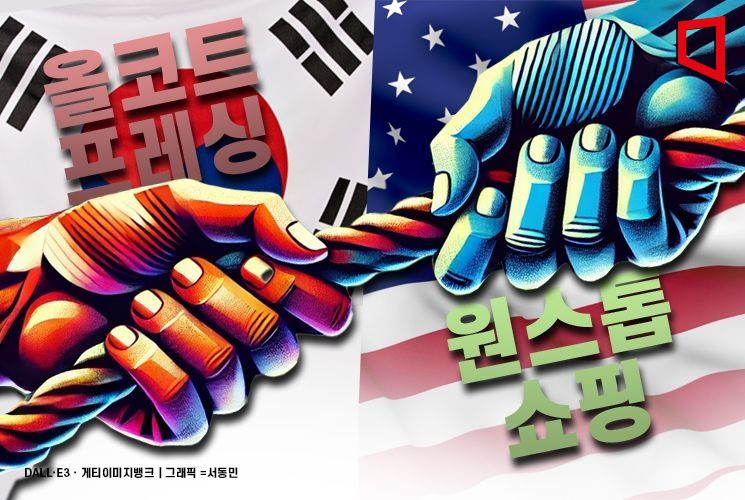
The so-called "all-court pressing" strategy of the South Korean government, which has been mobilized on all fronts to resolve major issues with the United States such as trade and security, is increasingly likely to develop into a tense tug-of-war with the "one-stop shopping" strategy of the Donald Trump administration. The situation became even clearer when President Trump sent a "tariff letter" to President Lee Jaemyung on July 7 (local time), notifying him of the application of a 25% reciprocal tariff starting August 1, and then mentioned the issue of defense cost-sharing for U.S. Forces Korea just one day later. The presidential office plans to focus on formulating specific negotiation strategies with relevant ministries over the next three weeks to uphold the national interest, while avoiding any sense of haste.
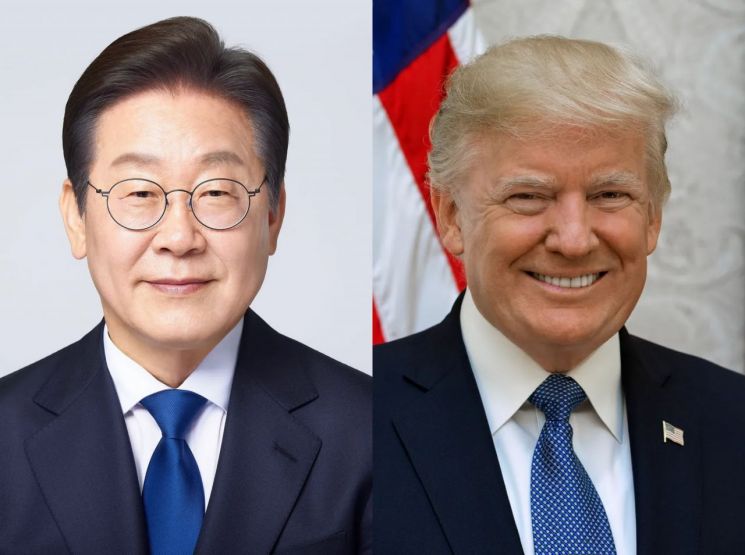
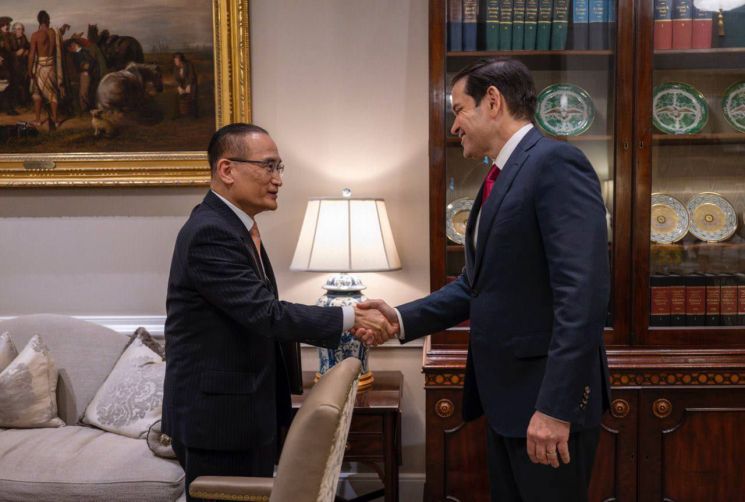
President Lee, ahead of the originally scheduled tariff negotiation deadline of July 8, dispatched National Security Advisor Wi Sunglak and Trade Minister Yeo Hankoo of the Ministry of Trade, Industry and Energy to the United States to conduct security-level talks and working-level trade negotiations. During the negotiations, Minister Yeo leveraged South Korea's advanced industry and manufacturing capabilities to request more favorable treatment for South Korea's main export items to the U.S., such as automobiles and steel, compared to competing countries in terms of item-specific tariffs. National Security Advisor Wi, who is returning to Korea on July 9, also held talks with Secretary of State and National Security Advisor Marco Rubio, discussing tariff negotiations and the upcoming South Korea-U.S. summit as key agenda items. Upon his return, Wi plans to immediately report the negotiation results to President Lee.
President Trump also increased the pressure on the South Korean government. After officially notifying South Korea of the 25% reciprocal tariff to be applied from August 1, President Trump, on July 8 (local time), reiterated his demand for a substantial increase in South Korea's contribution to the cost of stationing U.S. troops, stating, "South Korea is paying too little for the cost of U.S. Forces Korea," and calling for an annual increase of $10 billion. This amount is nine times the current level of South Korea's defense cost-sharing. President Trump also announced during a cabinet meeting at the White House that he plans to impose tariffs on pharmaceuticals, semiconductors, and copper. These items are being considered for tariffs under Section 232 of the Trade Expansion Act. President Trump's remarks are interpreted as part of a "one-stop shopping" strategy, linking trade and security issues together as a means of exerting pressure.
The negotiation strategies put forward by both South Korea and the United States are likely to clash repeatedly over the next three weeks. The "all-court pressing" strategy pursued by the South Korean government separates trade and security negotiations to leverage expertise in each area, whereas President Trump is employing a strategy that seeks to resolve trade and security issues as a single package. While there is hope that a South Korea-U.S. summit could provide a breakthrough in the negotiations, there are also concerns that the August 1 deadline, set as the negotiation cutoff, could serve as an additional pressure point for South Korea.
The South Korean government is reportedly formulating its strategy with an emphasis on avoiding excessive concessions ahead of the remaining negotiation period, while also considering a swift "top-down" solution through a summit meeting. National Security Advisor Wi's request to Secretary Rubio for an early South Korea-U.S. summit is in line with this approach. According to the presidential office, "The U.S. side also expressed its understanding."
Internally, on July 8, Policy Chief Kim Yongbum of the presidential office convened an emergency response meeting to discuss countermeasures. At the meeting, Kim stated, "Since the launch of the new administration just over a month ago, we have done our utmost to achieve mutually beneficial outcomes through bilateral and multilateral meetings, including South Korea-U.S. trade ministers' and security advisors' consultations and NATO meetings. However, there was not enough time to reach a final agreement encompassing all the various issues." He continued, "While prompt negotiations are important, upholding the national interest is an even greater value." Kim also emphasized, "We have avoided an immediate tariff hike and have secured time to respond until the end of July, so please make every effort to prioritize the national interest in negotiations with the United States."
Experts point out that the success of the negotiations between the two countries depends on whether a summit meeting is held and whether trade and security issues are addressed together or separately. They also advise that this negotiation is not simply about adjusting tariff rates, but is a critical opportunity to redefine the economic and political relationship between South Korea and the United States. Therefore, it is important to monitor the negotiation situations of other countries closely and approach the matter with caution. Presidential spokesperson Kang Yujeong stated in a briefing, "While there are some disappointing aspects, considering the very limited time since the launch of the new administration, we have avoided the worst-case scenario of a tariff hike," adding, "We are negotiating in hopes of achieving a better outcome."
© The Asia Business Daily(www.asiae.co.kr). All rights reserved.
![Clutching a Stolen Dior Bag, Saying "I Hate Being Poor but Real"... The Grotesque Con of a "Human Knockoff" [Slate]](https://cwcontent.asiae.co.kr/asiaresize/183/2026021902243444107_1771435474.jpg)

















