European Countries Bordering Russia Withdraw from Mine Ban Treaty
Ukraine Installs Mines... Responding to Russia's Infantry Tactics
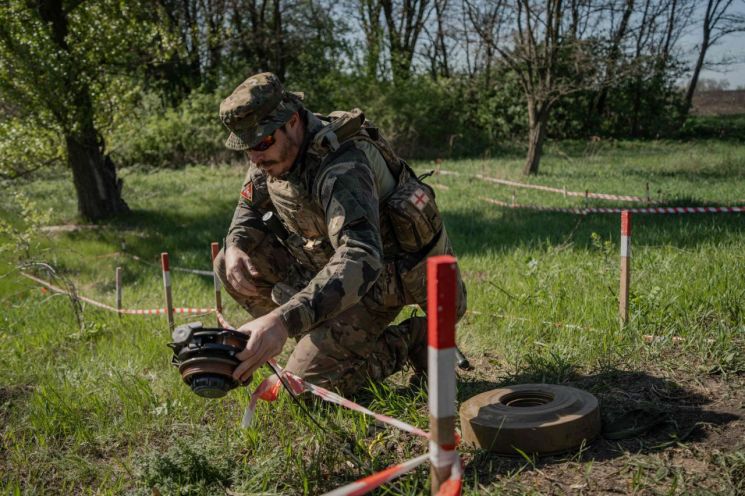 An image of a Ukrainian explosive ordnance disposal technician locating and removing mines planted by Russia. Photo by AFP
European countries bordering Russia have simultaneously withdrawn from the Anti-Personnel Mine Ban Convention (MBT, also known as the Ottawa Treaty) and decided to reinstall minefields along their borders. This decision comes amid a sharp increase in the perceived threat of Russian invasion following the war in Ukraine. These countries have determined that minefields are necessary to slow the advance of Russian forces in the event of hostilities. Mines have emerged as an effective defensive weapon to counter Russian troops, whose operations have increasingly focused on infantry due to the prolonged conflict.
Countries bordering Russia collectively withdraw from the Anti-Personnel Mine Ban Treaty... Minefields to be reinstalled
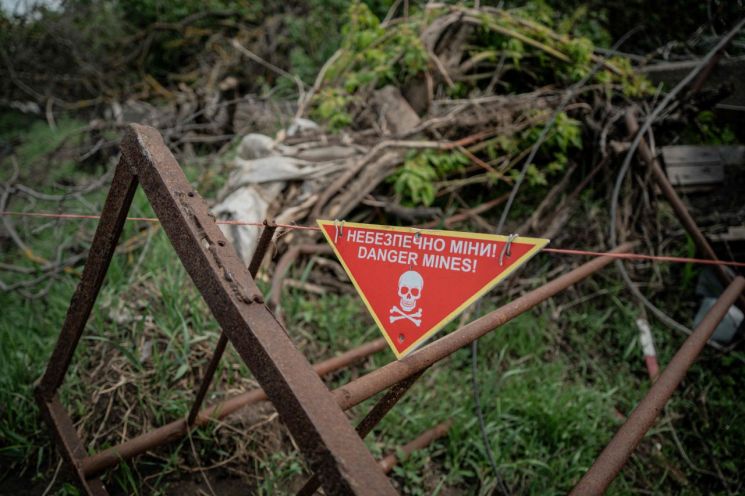
The New York Times recently reported that Poland, Finland, and the three Baltic states?Lithuania, Estonia, and Latvia?which all share borders with Russia, along with Ukraine, declared their withdrawal from the MBT at the end of last month and are currently proceeding with the necessary steps. Once the withdrawal process, which takes about six months, is completed, these countries plan to install large-scale anti-personnel minefields along their borders with Russia.
The MBT is an international treaty signed in 1997 that bans the use, stockpiling, and production of anti-personnel mines, which cause death and injury, and requires the destruction of existing mines. A total of 165 countries have joined the treaty, but major powers such as the United States, Russia, and China, as well as countries in conflict zones such as South Korea, North Korea, India, and Pakistan, have not joined. European countries have previously led efforts to encourage other nations to join the MBT and have been proactive in mine disposal.
The UK’s Telegraph reported, "Countries bordering Russia have decided that measures once considered unimaginable are now necessary to deter a Russian invasion," adding, "These countries will scatter millions of mines in the quiet forests along their borders if needed." Germany’s public broadcaster Deutsche Welle also predicted, "Countries bordering Russia will not only install mines but also set up fences and barriers, deploy drone defense systems, and build trenches and surveillance systems."
Russia’s shift to infantry tactics increases the effectiveness of mines
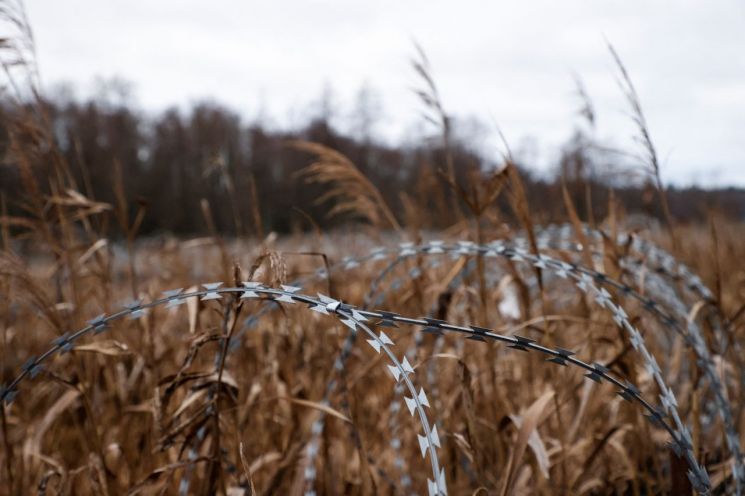 The barbed wire fence installed by the Polish military along the border area with Belarus. Photo by Reuters and Yonhap News Agency
The reason why Russia’s neighboring countries are now moving in unison to install mines is due to a shift in Russian military strategy. As the war has dragged on, Russia has suffered significant losses in armored units and heavy weaponry, prompting a transition to large-scale infantry operations and thereby increasing the effectiveness of mines.
According to the Ukrainian media outlet Kyiv Independent, the Ukrainian military began actively using anti-personnel mines?which had not been used in the early stages of the war?to block the advance of Russian infantry. Ukraine had joined the MBT in 2005 and had not been using anti-personnel mines, but it is now producing its own mines and receiving support from the United States and Western countries to deploy them along the front lines.
After suffering massive losses in the early stages of the war?including 10,000 tanks and 23,000 combat vehicles?Russia shifted to a strategy of mass infantry assaults. As a result, Russian military casualties have increased significantly. According to data compiled by the Ukrainian General Staff as of the end of last month, Russian military deaths have reached 1,028,610, with more than 1,070 soldiers killed per day on average.
Russia has also reportedly used mines extensively to block Ukrainian counterattacks. CNN reported that since the outbreak of the war, Russia has produced about 26 million anti-personnel mines and deployed them in the front-line areas of occupied Ukrainian territory. These mines played a key role in stopping Ukrainian forces when they launched a large-scale counteroffensive against Russian troops in July 2023. Ukrainian President Volodymyr Zelensky also criticized Russia at a press conference on June 29, stating, "Russia, which is not even a party to the MBT, is using anti-personnel mines indiscriminately in the war and is employing every means to take lives."
© The Asia Business Daily(www.asiae.co.kr). All rights reserved.
![Clutching a Stolen Dior Bag, Saying "I Hate Being Poor but Real"... The Grotesque Con of a "Human Knockoff" [Slate]](https://cwcontent.asiae.co.kr/asiaresize/183/2026021902243444107_1771435474.jpg)













