Samsung Electronics announced a large-scale share buyback and cancellation plan alongside its second-quarter earnings report. This measure was introduced immediately after the company disclosed an operating profit that fell far short of market expectations, reaching the level of an "earnings shock." The move is interpreted as an effort to defend the share price and maintain shareholder confidence.
On July 8, Samsung Electronics disclosed that, in addition to the previously completed first and second rounds of share buybacks (totaling 6.1 trillion won), it plans to conduct a third round of buybacks worth approximately 3.9 trillion won by October. The combined total amounts to 10 trillion won. Of this, about 8.4 trillion won will be used to directly enhance shareholder value through cancellation, while approximately 1.6 trillion won will be allocated for internal incentives such as employee compensation. Share cancellation reduces the number of outstanding shares, thereby increasing the value of remaining shareholders' stakes, and is regarded as a representative means of shareholder return alongside dividends.
The first buyback, worth about 3.05 trillion won, has already been completed and was fully cancelled in February. The second buyback, totaling 3.04 trillion won, has also been completed. Of this, 2.54 trillion won is scheduled for future cancellation, while 500 billion won will be distributed to employees in the form of stock compensation. Shares allocated for compensation are used for core talent incentives and long-term executive performance rewards. Most of these shares are subject to sale restrictions for a certain period, so they do not immediately affect the actual number of shares in circulation.
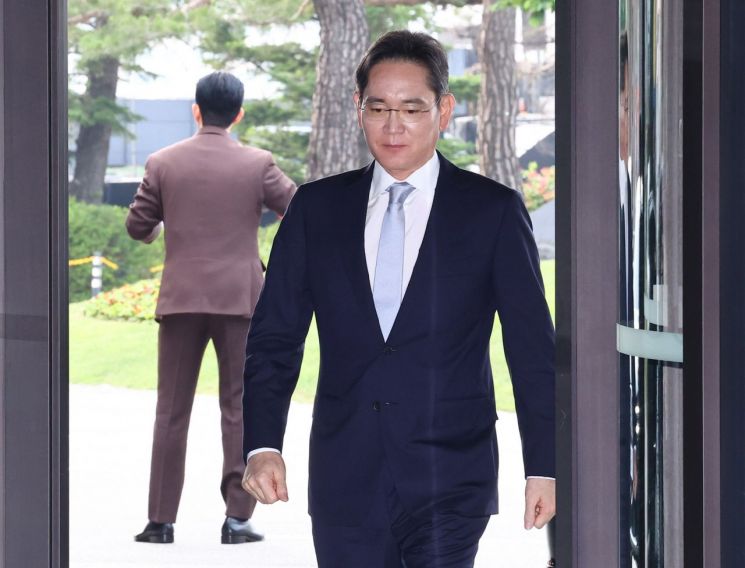
Samsung Electronics is also proceeding with the third round of share buybacks. From July 9 to October 8, the company plans to purchase approximately 3.9 trillion won worth of its own shares on the open market. Of this amount, 2.8 trillion won will be cancelled and 1.1 trillion won will be used for employee performance incentives. Out of the total 10 trillion won, 8.4 trillion won will disappear from the market, and in fact, more than half has already been cancelled or will soon enter the cancellation process.
This combined approach of share buybacks and cancellation sends a positive signal to the market, as it can help counter subdued investor sentiment due to poor performance and contribute to stabilizing the share price over the long term. In particular, at a time of significant external uncertainty?such as competition in AI semiconductors and export restrictions to China?Samsung Electronics' unwavering commitment to shareholder return policies is seen as a reassuring measure for both institutional and individual investors.
A market official stated, "By announcing a strong shareholder value enhancement plan centered on share cancellation despite short-term underperformance, Samsung Electronics has reaffirmed its consistent return policy. If profitability recovers in earnest going forward, the effect of this measure could become even more pronounced."
© The Asia Business Daily(www.asiae.co.kr). All rights reserved.
![Clutching a Stolen Dior Bag, Saying "I Hate Being Poor but Real"... The Grotesque Con of a "Human Knockoff" [Slate]](https://cwcontent.asiae.co.kr/asiaresize/183/2026021902243444107_1771435474.jpg)















