From Cost Reduction to Supply Chain Diversification
Food Industry Turns to Overseas Production
In the domestic food industry, there is a growing trend of 'reverse imports,' where flagship brand products are produced overseas and then brought into Korea. The core drivers are cost efficiency and supply chain stabilization achieved by leveraging global production bases. Analysts note that the industry is moving away from the traditional model of producing domestically and exporting, and is instead establishing a strategy of 'overseas production followed by domestic sales.'
From Global Production Bases to Neighboring Countries, Korea as a Test Market
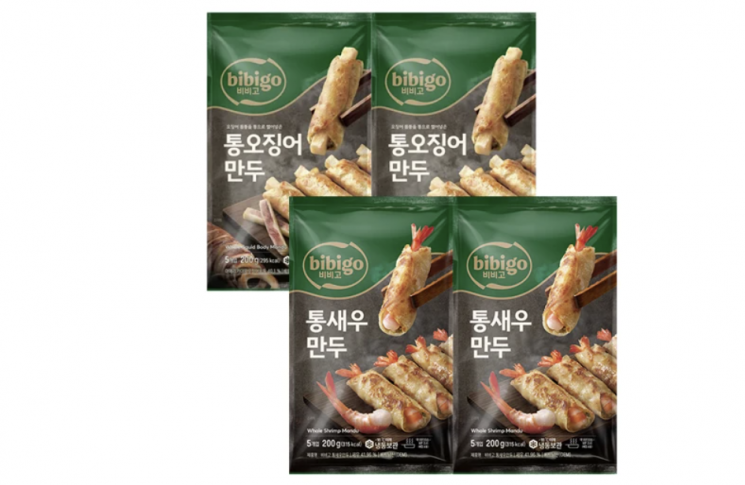
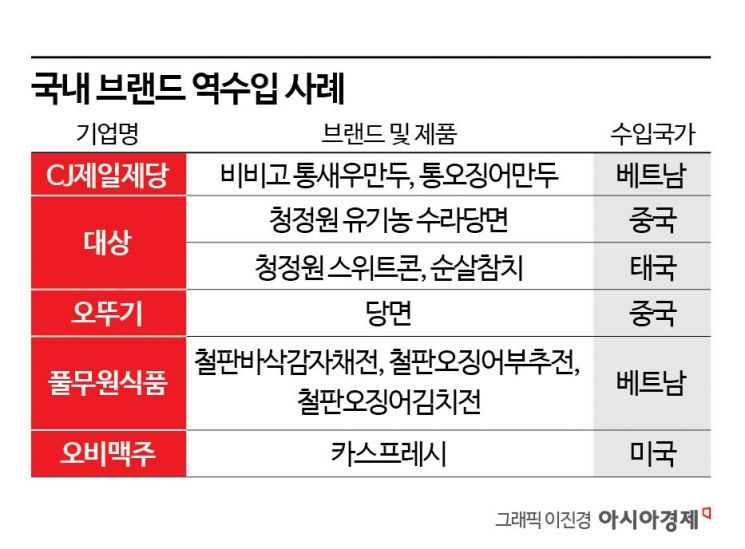
According to the food industry on July 8, CJ CheilJedang is producing 'Bibigo Whole Shrimp Dumplings' and 'Whole Squid Dumplings' at its Kizuna plant in Vietnam and distributing them in the Korean market. This is not just about reducing manufacturing costs; it is part of a 'C2C (Country to Country)' strategy, which involves exporting from global production bases to neighboring countries.
CJ CheilJedang operates production facilities in major locations such as the United States, Japan, Vietnam, Germany, and China. Among its products, dumplings are a representative global strategic item for the company. The 'Bibigo Whole Shrimp Dumplings' were planned from the outset with the Korean market as a test bed. The company aimed to gradually expand exports to other countries based on domestic consumer response.
These products are exported not only to Korea but also to the United States, Australia, and Singapore. 'Bibigo Whole Shrimp Dumplings' were launched in November 2023, and 'Whole Squid Dumplings' in November 2024. As of last month, cumulative sales of these products exceeded 9 million units, with cumulative revenue surpassing 50 billion won based on consumer prices. Spring rolls from Cau Tre, a frozen food company acquired by CJ CheilJedang in 2016, are also produced in Vietnam and sold in Korea. Dumplings produced at the MeinFrost plant in Germany are supplied to various European countries, including the United Kingdom, the Netherlands, and Belgium.
Raw Material and Labor Costs: Overseas Production Is More Advantageous
Pulmuone Foods and Daesang are utilizing overseas production bases to reduce manufacturing costs and ensure supply stability. Pulmuone Foods manufactures products such as 'Crispy Potato Pancake' and 'Squid and Chive Pancake' in Vietnam. Daesang produces some Cheongjeongwon brand products overseas: 'Organic Sura Glass Noodles' are made in China, and 'Boneless Tuna' is produced in Thailand.
For Pulmuone Foods, the high proportion of manual labor required for pancake products means that domestic labor costs are a significant burden. A Pulmuone Foods representative explained, "This is a strategic decision that considers not only simple manufacturing cost reduction, but also logistics efficiency and production flexibility," adding, "It serves as a foundation for expanding our global supply chain." The products sold over 1 million packs in just eight months after launch.
Daesang shifted the production of 'Cheongjeongwon Organic Sura Glass Noodles' overseas because domestically grown organic sweet potatoes are in high demand as raw materials, making it difficult to secure them for processing. Additionally, producing domestically would result in higher tariffs and labor costs, undermining price competitiveness. A Daesang representative stated, "If we produced them in Korea, it would be difficult to maintain competitive consumer prices."
OB Beer is also producing some of its flagship 'Cass' products in the United States and importing them into Korea. This move is intended to supplement packaging options that cannot be achieved with domestic facilities. An OB Beer representative said, "This is part of our strategy to expand consumer-tailored products for various drinking environments." The products currently produced in the United States are Cass Fresh in large size (740ml) and the Alubottle (473ml) variant.
An industry insider commented, "Production and distribution structures utilizing global supply chains are becoming increasingly sophisticated," adding, "Although these are Korean brands, the number of products with foreign origins is rising, in part due to changing consumer acceptance."
© The Asia Business Daily(www.asiae.co.kr). All rights reserved.


















