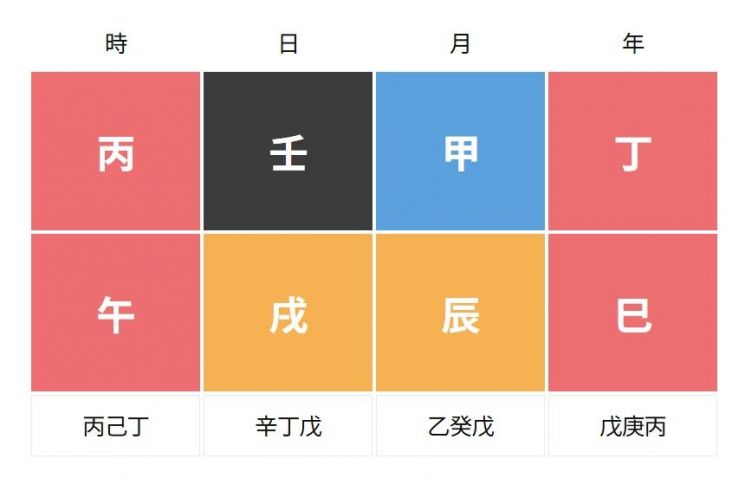
Based on the birth date registered on Namuwiki, we have analyzed the Four Pillars of Destiny (Saju Palja) of Choi Kanghee, who gained popularity for her quirky and unique charm.
What is the Day Master (Ilgan) that Choi Kanghee was born with?
The Day Master is [Imsu (Ren Water)].
Imsu (Ren Water) represents clear and clean water that people drink.
It can also symbolize the sea.
It signifies wisdom and intelligence.
People with this sign are wise and intelligent.
Because of their intelligence, they tend to resist conventional norms and regulations.
They have a wandering spirit and often enjoy traveling.
If their nature becomes cold and detached, they may exhibit impulsive behavior.
Once they set a goal, they charge ahead,
and they are naturally gifted at accomplishing any task assigned to them.
Is Choi Kanghee's Day Master strong (Shin-gang) or weak (Shin-yak)?
The Day Master is [on the weaker side].
A weak Day Master is similar to having a physically weak body in real life.
Such individuals often have weak constitutions, or even if not, tend to have less stamina than others or are likely to experience at least one significant illness in their lifetime.
People with a weak Day Master are usually witty and quick-witted.
They are often introverted, hardworking, and strive to handle matters in a planned manner.
They dislike both hurting and being hurt.
Although they may be suspicious, they can be devoted to those who recognize them.
They are well-suited for work related to education or religion,
and have an exceptional ability to understand philosophies or ideas that are somewhat detached from reality.
Many people who succeed in educational, child-rearing, or religious fields have this trait.
What is Choi Kanghee's Day Pillar (Ilju)?
It is [Imsul (Ren Dog)] Day Pillar.
They are eloquent and skillful in handling matters.
They have a cheerful, frank, and straightforward personality.
They are proud and highly sensitive.
They think quickly and have leadership qualities, making them well-suited to lead groups.
They dislike interference from others and value freedom.
Their marital luck is generally unfavorable.
Marriage life tends to be turbulent, with a risk of separation.
For women, it is better to choose a spouse with a significant age difference,
and it is advisable to marry later in life.
What is Choi Kanghee's Structure (Gyeokguk)?
It is Pyeongwan-gyeok (Partial Authority Structure).
Depending on the situation, Pyeongwan-gyeok is also called Chilsal-gyeok (Seven Killings Structure).
Chilsal (Seven Killings), seven types of destruction...
As the name suggests, it is characterized by dramatic changes in fate.
Below are general characteristics of people with this structure.
In a word, it symbolizes wildness.
They are like a rough, unpolished gemstone that, if refined, can become a jewel.
They have a basic sense of chivalry that does not yield to injustice and tend to confront others head-on.
They are quick-tempered but have a boss-like leadership style, being strong against the strong and weak against the weak.
Sometimes, this personality can go too far, leading to a tendency to look down on others.
A well-controlled Pyeongwan-gyeok is suitable for careers such as judges, soldiers, or police officers, where one decides matters of life and death.
If not well-controlled, it is usually called Chilsal-gyeok, and such individuals may become problematic, so caution is needed.
They are versatile and have a strong competitive spirit in everything they do.
They are combative and may resort to any means to achieve their goals, sometimes displaying unscrupulousness.
Their independence and drive are second to none.
If the Four Pillars have strong Inseong (Resource Star),
they will have dignified conduct and authority, but it is important to cultivate patience.
If there is a strong Bigyeop (Peer Star),
they tend to work in roles that require the support of siblings or colleagues, but for men, relationships with their wives are generally poor, and greed for wealth can lead to misfortune, so caution is advised.
People with this structure often lead very contrasting lives depending on the composition of the other elements. Some rise to positions of great authority and prestige, while others may live in poverty or even die young.
Their character may be highly respectful of etiquette and order, or, conversely, may be despised for a lack of manners and integrity.
If the use of Sik-sang (Expression Star) is appropriate,
they support the weak, subdue the strong, and enhance their value through quick thinking and adaptability. This is why they are well-suited for careers in prosecution or police work.
If the Four Pillars use Gwan (Authority Star),
they become goal-oriented individuals who mostly lead successful lives.
Pride is the root of misfortune, so caution is necessary.
Next, let's discuss the phenomena that appear when the composition of this Pyeongwan-gyeok is poor.
This is only an introduction to the possible issues when the structure is poorly composed, and does not mean this particular Four Pillars has these problems.
If the Day Pillar is too weak,
there is a lack of confidence in everything, frequent minor illnesses, or in severe cases, chronic disease or disability. They may also possess a spiritual energy stronger than others.
They may be prone to exaggeration, lack perseverance, and have difficulty bringing matters to a conclusion.
Their ideals may be lofty, but they lack the means to overcome reality, so they often feel tired and are prone to health issues.
On the other hand, a well-controlled Pyeongwan-gyeok
can produce leaders in various fields such as the military, police, judiciary, medicine, pharmacy, journalism, writing, or academia.
Choi Kanghee's Four Pillars has transformed from Pyeongwan-gyeok (Partial Authority Structure) to Jeongjae-gyeok (Proper Wealth Structure).
Such people are diligent, clever, and accumulate wealth through excellent financial sense.
They value honor and trust, and possess a strong sense of chivalry.
If Sik-sang (Expression Star) is also strong in the Four Pillars,
they demonstrate outstanding financial acumen and accumulate wealth, becoming practical and substantial rich people.
If Gwan (Authority Star) is also strong,
they are recognized for their abilities in management roles such as finance or administration.
If Inseong (Resource Star) is also strong,
they may demonstrate their abilities in the field of education.
They are often humane and exemplary individuals.
Now, let's discuss the phenomena that appear when the composition of this Jeongjae-gyeok is poor.
This is only an introduction to the possible issues when the structure is poorly composed, and does not mean this particular Four Pillars has these problems.
They may have poor financial sense and find it difficult to benefit from their parents.
Men may tend to meet overly strong-willed wives.
If Sik-sang (Expression Star) is completely absent,
they may be lazy, appear flashy on the outside but are empty inside, and tend toward extravagance and wastefulness.
For men, complicated relationships with women and a lack of academic fortune may result in shallow learning,
while for women, there may be severe conflicts with their mothers-in-law.
They may be slow and indecisive in their actions.
If there is too much Jaeseong (Wealth Star) and the Day Master is weak with Pyeongwan present,
they will experience many difficulties due to money, and may also suffer misfortune related to sexual matters in their youth.
If there is too much Bigyeop (Peer Star), they often suffer losses in all matters and find it difficult to achieve success, leading to much frustration.
▶ Visit "Asia Economy Saju·Fortune" for more fortune readings
What is the lacking element in Choi Kanghee's Four Pillars?
The lacking element is [Inseong (Resource Star)].
The lacking element is the power of Inseong (Resource Star).
The role (meaning) of this element is as follows.
For both men and women, Inseong represents status, honor, and the deity of learning.
For both men and women, Inseong also represents the mother.
For both men and women, Inseong signifies documents or literary works.
If there is no Inseong in the Four Pillars, problems are likely to arise in the above areas.
If Inseong is strong, the relationship with the mother is good.
People with strong and robust Inseong usually do well academically and have literary talent.
If Inseong is weak in the original Four Pillars, unless a favorable Inseong period arrives, it is difficult to enjoy these benefits.
Inseong is the deity that helps me,
and serves as a support during difficult times.
If Inseong is absent, one may often feel lonely and isolated.
Without Inseong, one is likely to be considered stingy.
Which element acts strongly in Choi Kanghee's Four Pillars?
The energy of Sik-sang (Expression Star) acts strongly.
When we say something is "siksang" (tedious or boring) in Korean, it has no relation to this term.
This power symbolizes activity, blessings of food, and creativity.
Being active naturally brings abundance, and seeing and hearing much leads to exceptional creativity.
While everyone has some talent, those influenced by Sik-sang are said to possess particularly unique skills.
However,
excessive talent may manifest as laziness or as a personality that only enjoys leisure and entertainment.
In any case, this power is the source of wealth.
With a creative mind, talent, and activity, wealth naturally follows.
Therefore, there is no special need to worry about making a living, as there is a fortune of abundance.
For women, if this power is excessively strong, it may mean a lack of marital luck, or that they support their family through their own efforts.
Being intelligent and clever, they also enjoy decorating themselves,
and have a strong desire to showcase their talents.
Although their words may seem harmless to themselves, they may often hurt others.
They may succeed or fail through speech or writing.
Many possess exceptional eloquence.
If they rely only on their own talents and turn others into enemies, misfortune is inevitable.
In any case,
having the power to determine one's fate through outstanding talent is a blessing.
If they find an outlet for their talents in life, it guarantees a happy life.
The power of Bigyeop (Peer Star) also acts strongly.
This is different from the word "bigyeop" meaning cowardly in Korean.
When this power is present, one's sense of self becomes very strong.
With a strong sense of self comes clear opinions and strong independence.
Despite their strong self, they are also sociable.
Therefore, they have many people around them and enjoy popularity,
and there is always someone to help in difficult times.
However,
this can manifest as unnecessary pride or a tendency to force others to submit, leading to trouble and loss.
If this power is excessive, the relationship with the father may not be good, as the desire for independence is strong. For women, relationships with mothers-in-law may be strained.
Both men and women tend to have unfavorable relationships with the opposite sex.
Especially for women, this power makes it easy to have conflicts with their spouse even after marriage.
They have a strong spirit to overcome adversity and tend to rise to the occasion in difficult times.
They may have a penchant for taking risks, and may have tendencies toward jealousy or suspicion, so marrying a trustworthy partner is key to success.
They often achieve great success when the time is right, but their fortunes fluctuate greatly, so they should never become arrogant. Just as they can rise quickly, their decline can be equally steep.
When Bigyeop is the dominant force in determining fate, harmony with those around them is the key to success in all matters.
If they can blend in with those around them rather than standing out, they can expect great success.
Are there any clashes (Chung) or combinations (Hap) in Choi Kanghee's Four Pillars?
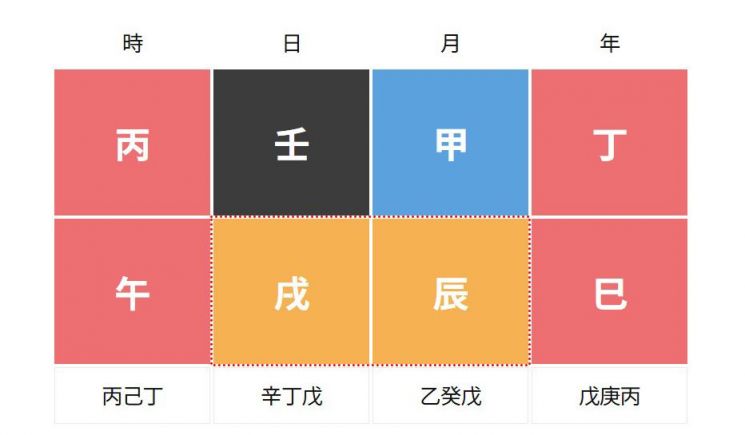
There are changes due to clashes (Chung) or combinations (Hap).
Not all aspects of life are affected, but [Jinsulchung] is currently in effect.
Clashes (Chung) and combinations (Hap) can be interpreted as follows:
The connection with the father is not deep.
For men, this can manifest as a weak relationship with the wife.
They experience significant hardship related to wealth at least once in their lifetime.
They are prone to passionate or violent temperaments.
They may betray or be betrayed by others.
They may suffer from chronic illness for extended periods.
They may experience discord with their spouse and tend to live apart from their parents.
There is a tendency for living away from their hometown.
They often feel lonely and isolated.
They may struggle with issues related to the opposite sex.
They may experience lawsuits related to real estate (mainly land).
They need to be cautious of gossip and rumors.
They may have skin problems.
They may face difficulties in advancing to higher education.
There is a tendency for instability in maintaining a stable job or career.
For women, there may be issues related to the opposite sex or unfavorable marital luck.
For men, there may be concerns related to children.
When is Choi Kanghee's period of great fortune (Daewoon)?
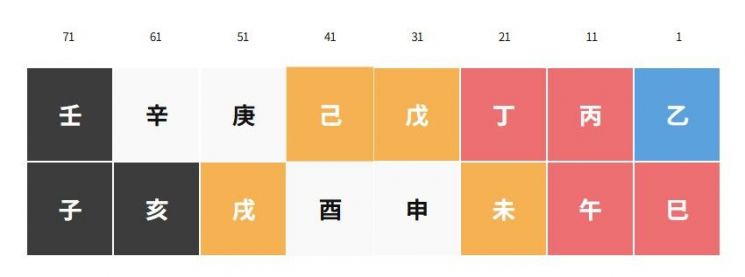
The period when strong financial luck enters the Daewoon (major fortune) is between the ages of 61 and 70.
The period when strong romantic luck enters the Daewoon is between the ages of 21 and 60.
This Four Pillars does not show a period in Daewoon where career luck (government luck) strongly shapes the environment.
What occupations are suitable for Choi Kanghee's Four Pillars?
- There is a strong affinity with the judiciary, military, police, and other martial professions.
- Careers related to medicine, sports, stunt work, or other fields involving medical or physical activity are also suitable.
- In business, many succeed in construction, and many rise through technical fields.
- Many succeed as artists, though their lives may be somewhat turbulent as a result (such as writers or entertainers).
- Running a business that involves meeting many people is also a good fit.
- Many people with this type of Four Pillars occupy high positions in corporations, government offices, or the military.
- However, if the Day Master is too weak, they may instead take up professions that go against social order or suffer from illness and physical difficulties.
- For women, if the composition of the Four Pillars is poor, they may work in the entertainment or shamanic fields.
- This is a type where physical effort directly translates into wealth.
What are the notable Shinsal (special stars) in Choi Kanghee's Four Pillars?
- Cheondeok-gwiin (Heavenly Virtue Nobleman)
Cheondeok-gwiin is an auspicious star that dissolves negative influences and prevents disasters. In times of hardship, one may receive heavenly help through the virtue of ancestors. It brings good government luck and a good-natured character.
- Woldeok-gwiin (Monthly Virtue Nobleman)
Woldeok-gwiin brings prosperity through virtue in wealth and enables one to meet many good people, resulting in lifelong wealth and honor.
- Cheoneul-gwiin (Heavenly Grace Nobleman)
Also known as Okdang-gwiin or Cheoneun-gwiin.
People with Cheoneul-gwiin in their Four Pillars
have an upright and fair character, experience few disasters in life, and are often saved by benefactors even in dire situations.
Depending on the composition of the Four Pillars, they may become renowned for their writing or become revered teachers due to their outstanding talents.
They enjoy blessings of food and achieve both wealth and honor, making this one of the most auspicious stars.
- Gwaegang-sal (Extreme Star)
This star is extreme in nature.
It is a case of "all or nothing"?either a millionaire or a pauper.
For strong Four Pillars, it becomes stronger; for weak Four Pillars, it becomes weaker.
Men are intelligent, enjoy debate, are eloquent, and have integrity.
Women are beautiful but have strong energy, making it easy to disregard their spouses, resulting in frequent separations.
- Baekho-daesal (White Tiger Star)
This is the most inauspicious of the special stars, indicating the possibility of bloodshed for oneself or close relatives.
Literally meaning "meeting a tiger," in modern terms, it suggests a tendency toward accidents such as traffic accidents or fires, or suffering from incurable diseases.
People with this star often have extreme lives, experiencing great highs and lows, and may encounter unexpected accidents.
They have a fiery temperament and formidable drive, and may experience unusual good fortune.
- Hyeonchim-sal (Hanging Needle Star)
If this star acts positively, it brings success in medicine, the military, or garment manufacturing.
If negative, it leads to frequent injuries, and in severe cases, gunshot or stabbing wounds, or accidents.
- Gokgak-sal (Bent Leg Star)
This star indicates a likelihood of experiencing bone fractures or skeletal issues due to accidents or illness at least once in life. It may also bring suffering from neuralgia.
Summary
- The presence of clashes (Chung) and combinations (Hap) may lead to the issues mentioned above.
- There is much wealth in the Four Pillars, but it is not all fully received.
▶ Visit "Asia Economy Saju·Fortune" for more fortune readings
* This analysis is based on traditional Ten Thousand Year Calendar algorithms using the birth date and time found online. If the birth date and time differ, the interpretation may not be accurate.
* The interpretation of Choi Kanghee's Four Pillars is not precise due to uncertainty in the time of birth. Many variables, such as Heavenly Stem combinations (including non-combinations, disharmonious combinations, transformative combinations, etc.), Heavenly Stem conflicts, Earthly Branch combinations, Earthly Branch clashes, and element analysis, can alter the interpretation.
© The Asia Business Daily(www.asiae.co.kr). All rights reserved.
![Clutching a Stolen Dior Bag, Saying "I Hate Being Poor but Real"... The Grotesque Con of a "Human Knockoff" [Slate]](https://cwcontent.asiae.co.kr/asiaresize/183/2026021902243444107_1771435474.jpg)

















