- Dramatic Improvement in Seoul Accessibility with GTX-C, Line 7 Extension, and the Seoul-Yangju Expressway
- Areas Around Deokgye and Deokjeong Stations Emerge as Key Beneficiaries... Mixed-Use Development of Former Seoul Milk Factory Site Accelerates
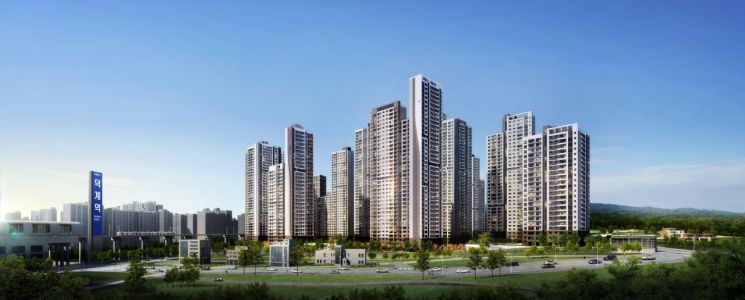
Yangju City in Gyeonggi Province is experiencing rapid growth. Multiple large-scale metropolitan transportation projects are overlapping, leading to a dramatic improvement in accessibility to Seoul. In particular, transportation is acting as a game changer, attracting population inflows, spurring the creation of new residential complexes, and expanding various living infrastructure. As a result, the status of the region is changing significantly.
At the center of this transformation is the GTX-C line (Metropolitan Express Railway). This line runs vertically through the north and south of the Seoul metropolitan area, starting from Deokjeong Station (Subway Line 1) in Yangju and extending to Suwon Station. Once it opens, it will be possible to travel from Yangju to Samseong Station in about 20 minutes, making it a game changer that is expected to dramatically improve commuting conditions in the Yangju area.
In particular, the government has made the expansion and early completion of the GTX lines a core transportation policy, which is expected to accelerate the development of the GTX-C line. In connection with this, Yangju City has also announced plans to ensure the smooth opening of the C line, as well as plans for direct connection and increased train frequency centered on Yangju Station on Subway Line 1.
Additionally, there is the benefit of the extension of Subway Line 7. Construction is currently underway on the Dobongsan?Okjeong section, with the goal of opening in 2027. Furthermore, at the end of last month, the Metropolitan Transportation Committee of the Ministry of Land, Infrastructure and Transport approved the business plan for the additional extension from Okjeong to Pocheon. These developments are raising expectations for greatly improved convenience in traveling to Seoul's Gangnam area and the northeastern part of the metropolitan area.
Other positive factors include the planned Seoul?Yangju Expressway, the Second Metropolitan Ring Expressway, and the National Route 3 bypass road. These projects are strengthening connections between the northern part of Seoul?including Nowon, Dobong, and Gangbuk?and the Yangju living area, making them important points to note.
A real estate expert explained, "Yangju City is experiencing a series of large-scale transportation benefits that are rarely seen in other regions, greatly enhancing its value as a major residential area in the metropolitan area. Areas such as Hoecheon New Town, where Deokjeong Station and Deokgye Station on the GTX-C line are located, which already had excellent living infrastructure, are especially emerging as beneficiary locations."
In fact, the areas around Deokjeong Station and Deokgye Station are considered to have some of the best residential conditions in Yangju City. A central commercial district has formed near Deokgye Station, and Yangju's main educational district is also located there. Major convenience facilities such as Emart and LF Square are present, along with abundant cultural and sports facilities including the Gyeonggi Northern Early Childhood Education Center, the planned Yangju Art Center, and local museums, galleries, and libraries.
Furthermore, expectations are rising as development of the site formerly occupied by the Seoul Milk factory?considered a prime location right in front of Deokgye Station?is set to begin in earnest. Shinyoung, a leading developer in mixed-use projects such as the Brighton Yeouido and Cheongju Gwell City developments, will supply a large apartment complex with 1,595 units in a building ranging from four basement floors to 39 above-ground floors. The complex is scheduled for pre-sale next month, with construction to be carried out by Daebang Industrial Development under the 'Elium' brand.
The redevelopment of the former Seoul Milk factory site has attracted significant attention both inside and outside the region, thanks to its differentiated location value as a prime site near Deokgye Station and high expectations for Shinyoung, a leader in mixed-use developments. Shinyoung has been credited with redefining both the residential and business paradigms, as well as the commercial landscape of Yeouido, through the mixed-use development of the former MBC site?comprising Brighton Yeouido (residential), Anchor One (office), and Brighton Square (commercial). In Cheongju, the 'Gwell City Mall,' supplied through the mixed-use development of the Daenong District, has also become a landmark representing not only Cheongju but the entire Chungcheong region. Since the Yangju Seoul Milk factory site will also be developed as a mixed-use complex, high interest and expectations from both inside and outside the region are expected to continue.
© The Asia Business Daily(www.asiae.co.kr). All rights reserved.
![Clutching a Stolen Dior Bag, Saying "I Hate Being Poor but Real"... The Grotesque Con of a "Human Knockoff" [Slate]](https://cwcontent.asiae.co.kr/asiaresize/183/2026021902243444107_1771435474.jpg)















