Ministry of the Interior and Safety: "Boosting Consumption Is the Top Priority"
Cash Payments May Be Used for Savings or Debt Repayment
In 2020, When Low-Income Households Received Cash Support,
95.9% Responded "It Was Spent on Consumption"
As the nationwide Livelihood Recovery Consumption Coupons are set to be distributed on July 21, there are calls to add "cash" as an additional payment method, limited to low-income households.
According to the Ministry of the Interior and Safety and other sources on July 7, the Livelihood Recovery Consumption Coupons can be received via credit/debit cards, prepaid cards, or local gift certificates. In contrast, during the 2020 Emergency Disaster Relief Fund distribution, households receiving livelihood benefits, basic pensions, or disability pensions were provided with cash directly into their registered bank accounts on Haengbok-eum without a separate application.
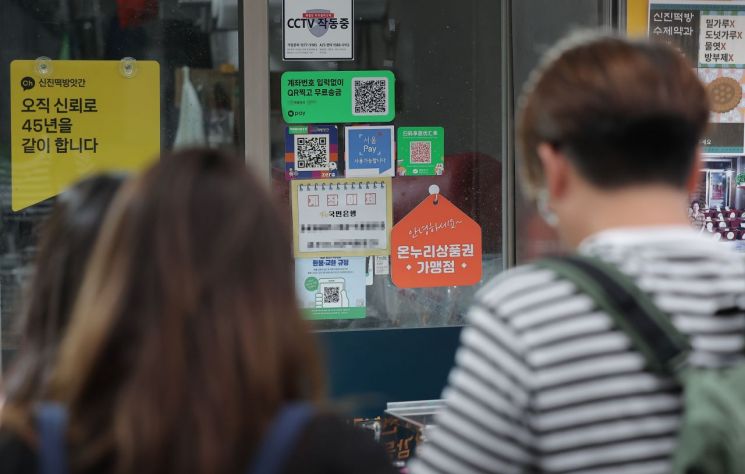
The reason cash payments were made exclusively to low-income households was that it allowed for rapid support to those in immediate need and reduced administrative costs associated with issuance and management. At that time, replacing paper-based local gift certificates with cash could save up to 25 billion KRW, and substituting prepaid cards with cash could save 5.9 billion KRW in budget. Additionally, by utilizing accounts already registered in the existing system without requiring applications, it prevented vulnerable groups from missing out on support due to lack of knowledge about the application process.
This time, cash has been excluded as a payment method for the consumption coupons. An official from the Ministry of the Interior and Safety explained, "The main purpose of issuing consumption coupons is to stimulate consumption, which is why cash was excluded as a payment method," adding that there is no possibility of cash being reconsidered for the second round of distribution. The official also noted that for those without or not using credit/debit cards, prepaid cards effectively serve the same function as cash.
Concerns about the consumption-boosting effect of cash have existed under the previous administration as well. Critics argue that cash payments may not lead to increased local consumption and could instead be used for savings or debt repayment. According to a report by the Peter G. Peterson Foundation in the United States, during the COVID-19 pandemic, 25% of households used the first round of relief payments for savings or debt repayment, while the figures were 77% for the second round and 81% for the third round.
However, in Korea in 2020, recipients of disaster relief funds in cash were more likely to spend the money rather than save it. According to the Korea Development Institute (KDI)'s report "Consumption Effects of Emergency Disaster Relief Cash Recipients," 95.9% of respondents said they spent the support funds, while only 4% used them for debt repayment. Savings accounted for 5.7%, but among these, 65.8% responded in the survey that they planned to spend the saved amount within a year.
The National Assembly Budget Office also cited this evidence in recommending the need for cash payments limited to low-income households. In its supplementary budget analysis report, the office stated, "Cases of government disaster relief funds show that cash payments to low-income households result in consumption outcomes similar to other methods, and also offer the advantages of rapid execution and reduced operating costs," adding, "For basic livelihood security recipients and similar groups, it is necessary to consider providing support in cash."
© The Asia Business Daily(www.asiae.co.kr). All rights reserved.

















