A Bird Collapses on the City Street, Barely Standing After Drinking Water
Urban Heat Soaks the City, Impacting the Entire Ecosystem
An extreme heatwave continues to affect the central Chinese region of Wuhan, with some birds reportedly collapsing from heat exhaustion.
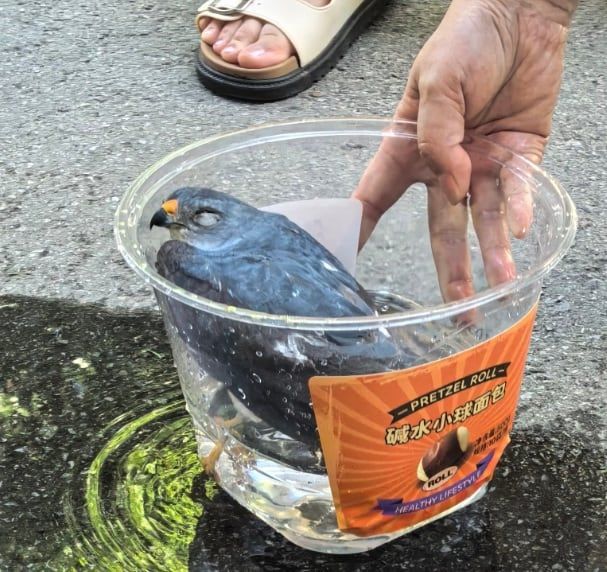
On July 5, local Chinese media outlet Xiaoxiang Morning Herald reported that birds in the area were suffering health problems due to the heat, sharing footage of a bird collapsed on an asphalt road in downtown Wuhan, Hubei Province. The video shows the bird struggling to stand after drinking water provided by a passerby, and the scene has gone viral on Chinese social media platform Weibo, being shared tens of thousands of times.
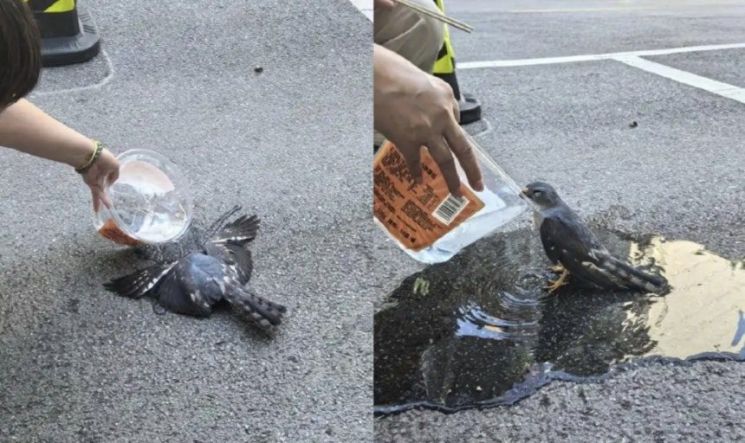
The bird was initially identified as a pigeon, but according to local experts, it was later determined to be a Chinese government-designated Class II protected species, the Eurasian Hobby.
Recently, daytime high temperatures in Wuhan have reached 38 degrees Celsius, with the perceived temperature climbing as high as 43 degrees Celsius. As a result, the Hubei provincial meteorological authorities have continuously issued heatwave warnings, including an orange alert?the second-highest level?on July 5.
This extreme heat in Wuhan is attributed to the region's characteristics and urban structure. The concrete-covered city center absorbs heat easily and does not release it efficiently, causing the urban heat island effect and further increasing the perceived temperature.
In recent years, heatwaves have reached record levels not only in Wuhan but across China. In August 2022, Hubei Province, where Wuhan is located, recorded temperatures exceeding 44 degrees Celsius, making it the hottest city at the time. In some areas of Jiangsu Province, road surface temperatures surpassed 70 degrees Celsius, posing a direct threat not only to humans but also to animals and local ecosystems.
The summer of that year is regarded as the most intense and prolonged heatwave since observations began in 1961. Sun Shao, a senior researcher at the Chinese Academy of Meteorological Sciences, stated, "Compared to the record-hot summer of 2013, the 2022 heatwave surpassed it in terms of duration, affected area, and maximum temperatures."
Experts emphasize that during periods of extreme heat, not only humans but also animals can suffer from heat stress, and that at minimum, providing shade and water is necessary to protect them.
© The Asia Business Daily(www.asiae.co.kr). All rights reserved.


















