Started in Namyangju in 2020: Korea's First Single Malt Whisky Distillery
Three Signature Lines Sweep the World's Top Three Spirits Competitions
"We Will Compete with a Distinctly Korean Whisky"
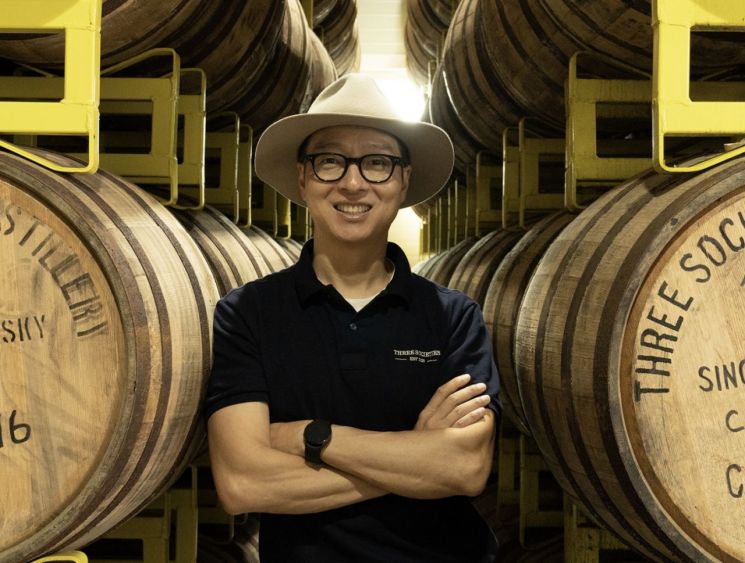
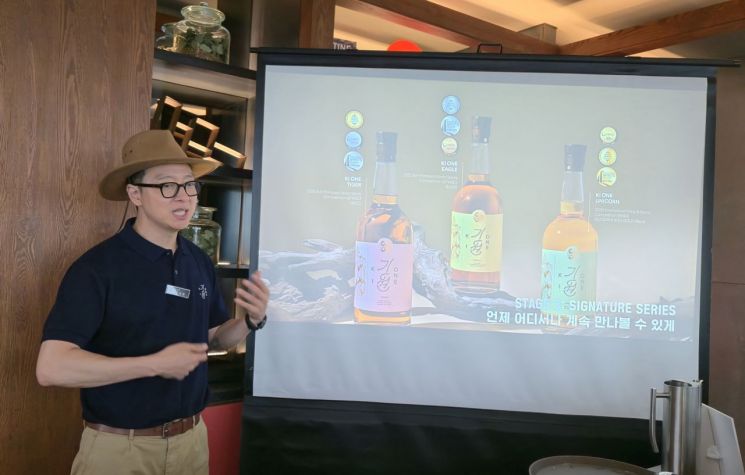 The representative of Kiwon Whiskey Distillery, which processes polished rice, is explaining about 'Kiwon (KI ONE)'.
"There is no country in the world better suited for making whisky than Korea."
'Ki One,' which holds the title of Korea's first single malt whisky, has recently raised its profile by winning awards at three of the world's most prestigious spirits competitions. Do Jung-han, CEO of Ki One Whisky Distillery, who credits the "power of Korea's climate" as the driving force behind Ki One's strong performance, plans to captivate not only the domestic market but also the global stage with a unique whisky that combines a spicy, distinctly Korean flavor profile, made possible by the harsh climate with annual temperature fluctuations exceeding 50 degrees Celsius.
'Becoming the Origin of Korean Whisky in a Whisky Wasteland'
After immigrating to the United States as a child and studying political science at the University of California, Los Angeles (UCLA), Do began his career at global companies such as Microsoft. In 2014, he entered the alcoholic beverage industry by founding the craft beer brand Hand and Malt in Korea. In 2018, he sold the brewery to AB InBev, the parent company of OB Beer and the world's largest beer company, and set his sights on whisky for his next project.
The reason for his shift from beer to whisky was the "absence of Korean whisky." Considering the size of the domestic alcoholic beverage market, the lack of a Korean whisky was both surprising and puzzling to Do and the foreigners around him. However, he saw this absence as an opportunity. The challenge of pioneering a new market motivated him, and the growth potential of the domestic market inspired his ambitions.
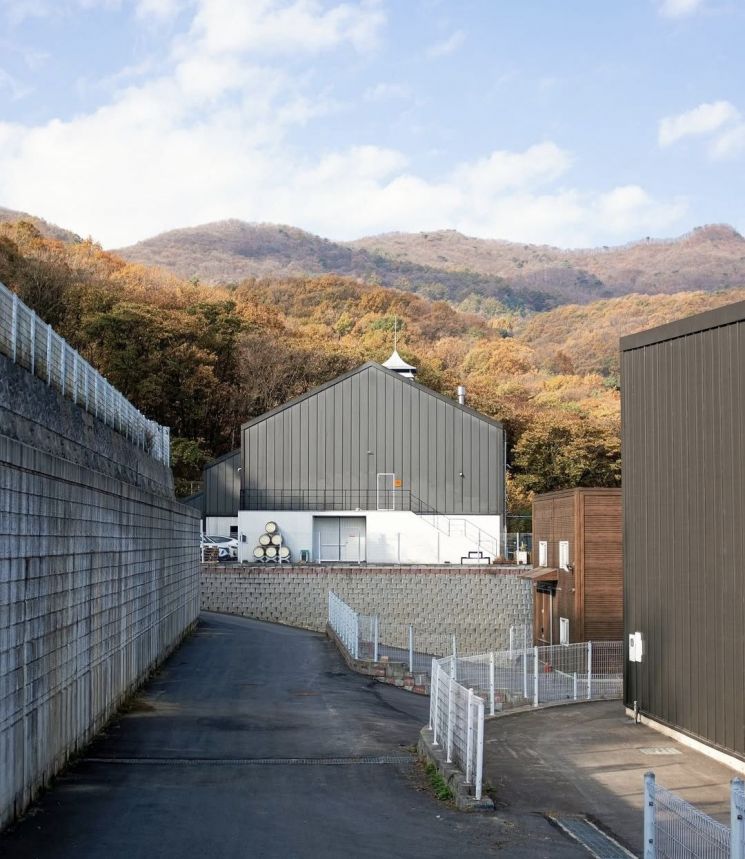
With the goal of creating whisky made in Korea, he opened the country's first craft single malt (whisky made from malt as the sole ingredient at a single distillery) distillery, Ki One Whisky Distillery, in Namyangju, Gyeonggi Province, in 2020. The name "Ki One" embodies the "beginning" and "roots" of Korean whisky, as well as the aspiration to grow into a global brand.
Annual Temperature Fluctuations of 50°C... The 'Power' That Will Make Korea a Top Whisky Producer
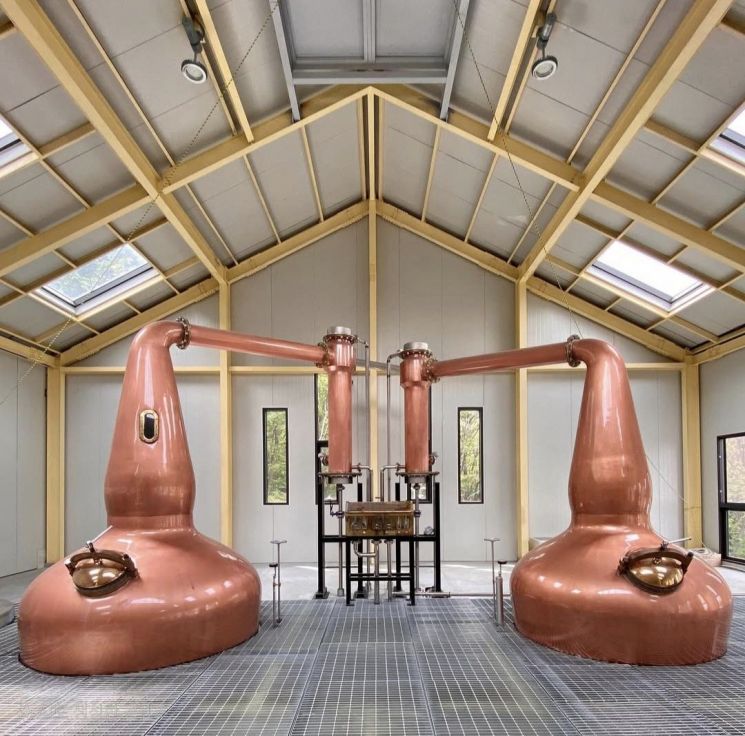
The driving force that enabled Do to boldly pursue the goal of creating "the origin of Korean whisky" lies in Korea's "climate advantage." The climate he refers to is characterized by extremely hot summers with temperatures easily exceeding 30°C and bone-chilling winters dropping to minus 20°C, resulting in dramatic annual temperature swings. While this extreme climate can be challenging for people, it creates ideal conditions for whisky maturation.
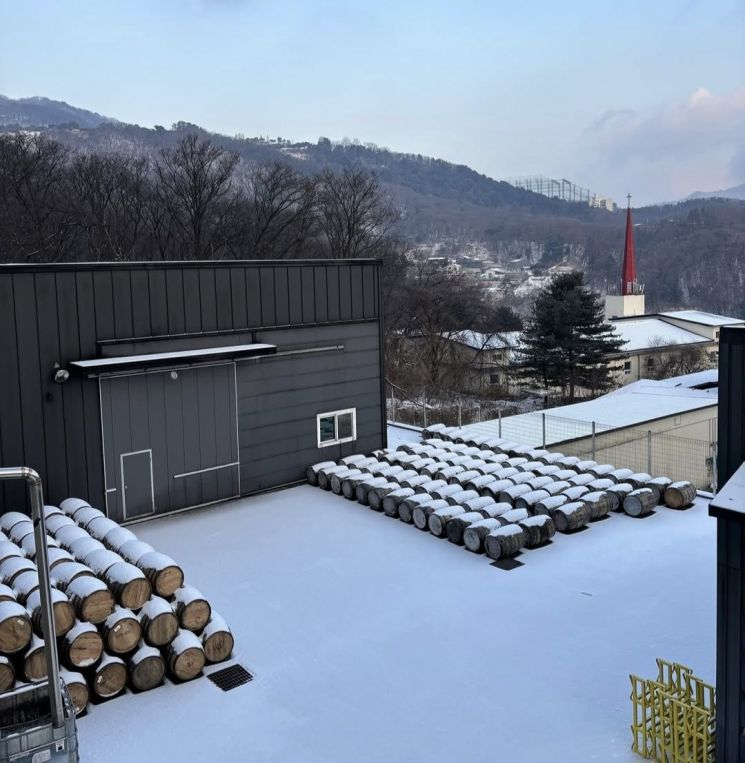
Whisky is typically aged in oak casks, where in summer, the barrels expand and absorb the whisky, while in winter, they contract and expel the absorbed spirit. This repeated expansion and contraction infuses the whisky with the character of the oak. Generally, the longer the maturation, the deeper the flavor and smoother the texture. Korea's extreme climate accelerates this maturation process, helping to build unique aromas and flavors.
Andrew Shand, the master distiller at Ki One and a native of Scotland, explained, "In Scotland, the cool climate keeps oak casks mostly contracted, while in Taiwan, famous for Kavalan, the heat keeps them expanded. But in Korea, the unique climate allows whisky to mature quickly and deliciously." He added, "One year of maturation in Namyangju is equivalent to three to five years in Scotland." He further remarked, "Having made spirits in Scotland, the United States, and Japan, I can say Korea is an exceptionally good country for making whisky."
Three Signature Lines, All Awarded at International Spirits Competitions
Last November, Ki One introduced its first official product lineup, the three signature lines: Tiger, Eagle, and Unicorn. These signature lines represent the collaboration of people from three different backgrounds?the Korean-American CEO, the master distiller from Scotland, and Korean staff?coming together with a shared vision. Each product is named after an animal symbolizing their respective countries. Do explained, "I spent a lot of time considering what a Korean whisky should taste like. Before launching the signature line, we experimented with six different 'Batch' series styles to reflect the preferences of Korean consumers, and the signature line was completed based on these insights."
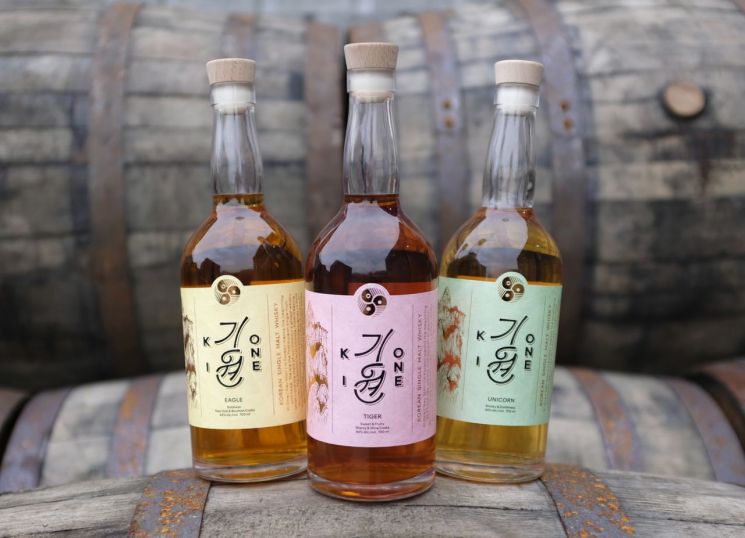
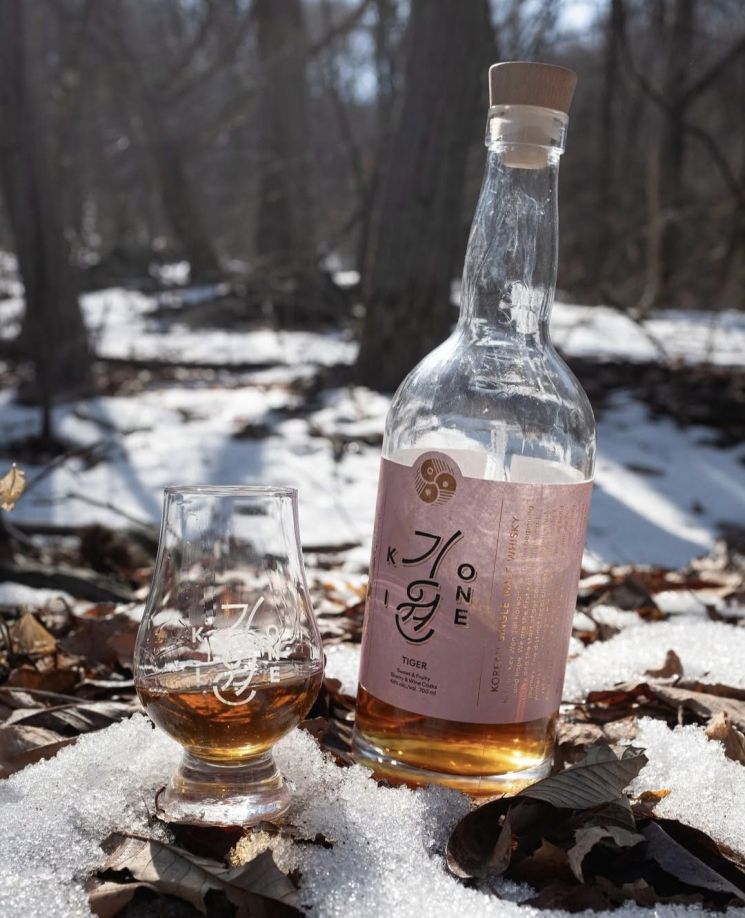
Among them, 'Ki One Tiger,' symbolizing Korea, is matured in sherry wine casks, which are the most preferred among Korean whisky enthusiasts. It is characterized by rich sweetness and abundant fruity aromas and flavors. Do explained, "This whisky was blended with inspiration from 'Ki One Batch 3 Oloroso Sherry Cask,' which won Double Gold at the 2024 San Francisco World Spirits Competition (SFWSC). It is a product with broad appeal that both first-time whisky drinkers and enthusiasts can enjoy without hesitation."
In May, all three signature lines won awards at the world's top three spirits competitions: SFWSC, International Spirits Challenge (ISC), and International Wine & Spirit Competition (IWSC). Notably, 'Ki One Unicorn' received unanimous Gold ratings from all judges at SFWSC, earning Double Gold, and became the first distillery with a single malt aged less than five years to receive a score of 98 at IWSC. Do commented, "These awards prove that Ki One is not just Korea's first whisky, but a product with quality recognized by global competitions. This marks the beginning of an era where world-class single malt whisky can be produced and enjoyed in Korea."
"Creating a Distinctly Korean Whisky... Transition to Specific Taxation Is Needed"
Do is determined to establish a global presence not by replicating Scotch or Japanese whisky, but by creating whisky that highlights Korean uniqueness. He emphasized the spiciness as a key characteristic of Korean whisky. Do explained, "We use a fermentation process that lasts 120 to 150 hours?two to three times longer than typical distilleries?to impart a bright character, and the sweet spiciness inspired by gochujang is left on the finish." During fermentation, yeast converts sugars from grains into alcohol, producing compounds called esters, which determine the fruity aromas and sweetness of the whisky.
He also mentioned ongoing efforts to create a uniquely Korean whisky. This year, he plans to launch a whisky infused with red chili peppers. Do explained, "We soaked red chili peppers in hot water in oak casks to impart spiciness, then aged the whisky in these casks for three years. The result is a whisky with a pleasant spicy finish." He added, "We are also collaborating with traditional liquor producers, such as exchanging barrels with Ilyeop Pyeonju, Cheongju, Bohae, and Bokbunja. Through various local ingredients and production methods, we will continue to expand the presence of Korean whisky in the global market."
However, he expressed disappointment with Korea's current liquor tax system. The current law imposes an ad valorem tax of 72% on the shipment price of distilled spirits such as whisky and soju. This means that higher-priced spirits are taxed more heavily, which is cited as a factor hindering the growth of the domestic whisky industry. Do pointed out, "Only a few countries, including Korea, among OECD members still use ad valorem taxation, while most countries have adopted specific taxation, which considers the social responsibility of alcohol." He continued, "As a result, Korean consumers are turning to overseas direct purchases or buying alcohol while traveling abroad, leading to a decline in domestic alcohol consumption and an outflow of foreign currency." He urged a transition to specific taxation.
He further argued that if the ad valorem system is to be maintained, the gap in tax bases between domestic and imported spirits must be narrowed. "For imported spirits, the tax base is determined at the point of customs clearance, so selling and administrative expenses of importers are not taxed. In contrast, domestic producers are taxed at the point of shipment from the factory, so selling and administrative expenses are included, resulting in a higher tax burden even at the same tax rate," he explained. "Last year, the National Tax Service tried to narrow this gap by adjusting the standard sales ratio, but it was still insufficient. Therefore, to ensure fair competition between domestic and imported spirits under the ad valorem system, either the standard sales ratio must be raised or specific taxation must be implemented," he emphasized.
© The Asia Business Daily(www.asiae.co.kr). All rights reserved.



















