150 Domestic and Foreign Journalists Attend... Town Hall Meeting Format with Questions Selected by Drawing Lots
National Unity and Cooperation Remain Tasks for the Next 4 Years and 11 Months... Additional Extra Budget Faces Fiscal Limitations
Need to Monitor the Effects of Strong Real Estate Loan Regulations
Prosecution Reform Framework Expected by Chuseok... Full Implementation Will Take Time and Face Challenges
Medical-Government Conflict Is a Major Challenge for the New Administration... "The Most Difficult Task"
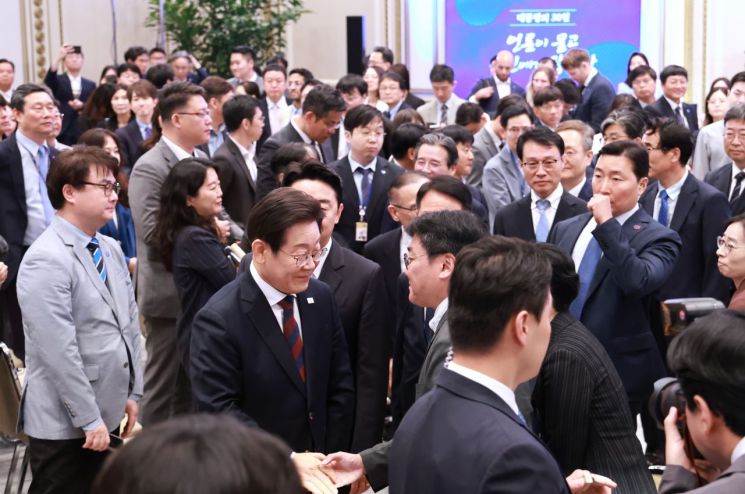
At a press conference held at the Blue House State Guest House on July 3, exactly 30 days after his inauguration, President Lee answered a barrage of questions in detail for approximately 121 minutes. The event attracted attention for its town hall meeting format, where 150 domestic and international journalists and local media representatives participated, and questioners were selected by drawing business cards for each topic, such as the people's livelihood and the economy. President Lee entered the press conference room, shaking hands with journalists in the front row one by one, and lightened the potentially heavy atmosphere by mixing jokes and analogies into his answers.
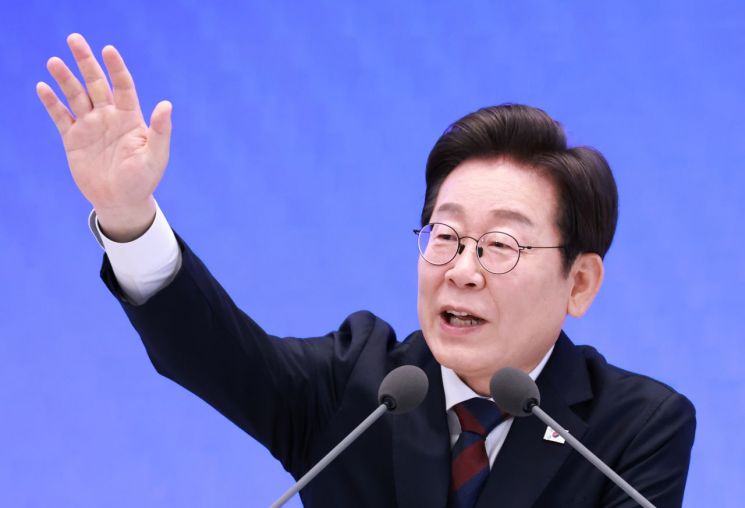
This press conference, which marked one month of the Lee Jaemyung administration and once again impressed upon the public his efforts to communicate without pretense, also revealed that there are still many ‘challenges’ to address. The questions raised included topics such as national unity and cooperation, an extra budget, real estate regulations, the 4.5-day workweek, prosecution reform, peace on the Korean Peninsula, conflicts between the medical community and the government, and normalization of Korea-Japan relations.
National unity and cooperation remain tasks to be pursued for the remaining four years and eleven months. During the conference, President Lee emphasized that "the opposition is also a representative chosen by the people," and stated he would meet with them frequently without drawing lines. He also said, "I will approach with greater humility," showing that he would remain vigilant, and promised principled cooperation by stating, "I will make concessions where possible, but will not yield on matters that should not be compromised."
In the area of the people's livelihood and economy, President Lee expressed expectations for the nationwide livelihood recovery support payment (consumption coupons) funded by the 30.5 trillion won extra budget, but also mentioned the limitations of economic stimulus through fiscal policy. He explained that, as with previous local currency payments, he expects both domestic demand stimulation and support for ordinary citizens. However, he noted that, given the state of public finances, additional payments may be difficult, and expressed hope that this support would serve as a "priming water" for economic recovery.
Regarding the real estate market, which has recently soared uncontrollably in some regions, President Lee reaffirmed his existing philosophy of curbing speculative demand and redirecting funds from real estate to the financial and industrial sectors. In particular, he emphasized that the "6·27 Measures," which limit loans for regulated areas in Seoul and the metropolitan area to 600 million won, are "just a preview," and stressed that there are many other measures to curb demand. Nevertheless, it remains uncertain whether the current household debt and real estate policies will fundamentally block speculative demand in real estate and successfully redirect funds to the financial markets.
In the labor sector, questions about the introduction of a 4.5-day workweek drew attention. President Lee responded that "it will eventually become the norm," but emphasized a cautious approach through gradual implementation and social consensus. The plan is to first implement it step by step in the public sector and large corporations to improve the culture of long working hours, and then gradually expand it overall. While reducing working hours could lead to improved quality of life and job sharing, the challenge of reducing the burden on the field and achieving national consensus remains.
On the issue of prosecution reform, President Lee reaffirmed the principle of separating investigative and prosecutorial powers, and stated that there is growing consensus on transforming the prosecution into a "public prosecution office" dedicated solely to indictments. Regarding remarks from some ruling party members about "completing reform before Chuseok," he said, "It should be possible to establish the institutional framework by then," suggesting that the outline of the reform plan could be in place before autumn.
However, he added that it would take time and involve difficulties before the system is fully established. President Lee stated, "It will take a long time for a perfect system to take root," and added, "Since this is a matter requiring legislative determination by the National Assembly, the government’s role is to minimize conflicts and side effects resulting from it." He also explained that, although there has been recent controversy over personnel appointments, he believes it would be beneficial for someone who understands the prosecution well to lead the reform for it to proceed smoothly and quickly.
Additionally, President Lee expressed strong determination to ease tensions and establish peace on the Korean Peninsula. Immediately after taking office, he ordered the suspension of loudspeaker broadcasts toward North Korea as a first step, and emphasized the need to resume inter-Korean dialogue by stating, "Even during war, dialogue is necessary." His plan is to seek practical negotiations between the two Koreas based on a solid South Korea-U.S. alliance and strong national defense, building trust through win-win solutions that benefit both sides. The remaining tasks include thawing the currently frozen inter-Korean relations and restoring a permanent communication channel. He also indicated his intention to pursue a two-track approach with Japan, combining historical issues with future cooperation through the resumption of "shuttle diplomacy," though this remains a challenging task. Trade issues with the United States, such as tariff negotiations, must also be resolved quickly to reduce economic uncertainty.
The conflict between the medical community and the government, which led to collective leave of absence by medical residents and students, is a major challenge for the new administration. President Lee described this ongoing situation, which has lasted a year and a half, as "the most difficult challenge," and stressed the importance of dialogue and restoring trust. He stated that "the government must create conditions for them to return in the second semester," signaling his intention to resolve the issue through restoring trust. Regarding demands for the enactment of an anti-discrimination law, President Lee said that urgent livelihood issues must take priority for now, and suggested that it would be preferable for the National Assembly to begin discussions on such contentious topics in advance in the future.
© The Asia Business Daily(www.asiae.co.kr). All rights reserved.


















