Since April, Two Large Drones Deployed
Over 280 Kilograms of Trash Collected in One Month
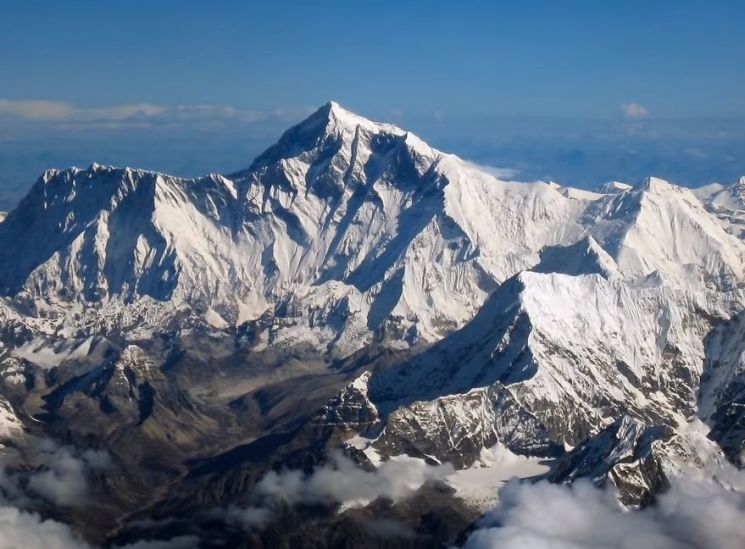
Bloomberg News reported on July 3 that large drones have been deployed to collect trash on Everest (elevation 8,848.86 meters), the world’s highest peak, which has been suffering from decades of accumulated waste.
The Sagarmatha Pollution Control Committee (SPCC), a nonprofit organization responsible for waste collection on Everest, stated that since April, Nepalese drone technology startup Airlift Technology (Airlift) has been using two large drones from Chinese drone manufacturer Shenzhen DJI Innovation (DJI) to remove trash from Everest.
First, the drones transport equipment such as ladders and ropes from Everest’s South Base Camp at 5,364 meters to Camp 1 at 6,065 meters above sea level. Then, when Sherpas attach bags filled with trash to the drones, the drones can deliver the waste back to Base Camp in just six minutes. Each drone, costing $70,000 (about 95 million won), is capable of flying in temperatures as low as minus 20 degrees Celsius and in winds exceeding 40 kilometers per hour. According to the SPCC, these two drones collected over 280 kilograms of trash in just one month.
Lhakpa Nuru (33), a Sherpa who has reached the summit of Everest 15 times, told Bloomberg News, "This year, drones handled about 70% of the trash our team usually cleans up. I am very satisfied." He added, "I hope there will be more drones capable of carrying heavier loads."
Airlift stated that it plans to work with Nepalese authorities to pilot additional types of drones on Everest and other 8,000-meter-class peaks, and noted, "Several drone manufacturers from the United States and Europe have contacted us to provide equipment for testing."
Every year, tens of thousands of people visit Everest Base Camp during the climbing season, which runs from late April to late May. As a result, the trash problem is becoming increasingly severe, and cleaning becomes more difficult at higher altitudes. Furthermore, there are concerns that, as snow and ice melt due to climate change, older waste is being exposed and could contaminate downstream glacial water and village drinking water sources.
Since 2019, the Nepalese military and Sherpas have removed more than 100 tons of trash from Everest and surrounding peaks. The Nepalese government requires climbers ascending above Base Camp to bring back at least 8 kilograms of waste. If this requirement is not met, a $4,000 deposit is forfeited. In addition, since last year, a regulation has been implemented requiring climbers to collect their excrement in waste bags and bring it back to Base Camp in order to prevent the spread of diseases such as cholera. According to data from the local environmental NGO SPCC, about 11 to 12 tons of excrement are discarded near Everest each year.
© The Asia Business Daily(www.asiae.co.kr). All rights reserved.

















