Trump Announces "Trade Agreement Reached with Vietnam" on Social Media
20% Tariff on Vietnamese Imports, 40% on Transshipped Goods
"U.S. to Export to Vietnam Tariff-Free"
Long Road Ahead for South Korea and Japan...
Key Issues: Digital Trade Barriers and Auto Tariffs
The United States has reached a trade agreement with Vietnam, marking the first such deal with an Asian country. Under the agreement, the U.S. will significantly reduce tariffs on Vietnamese imports from 46% to 20%, and American products can be exported to Vietnam tariff-free.
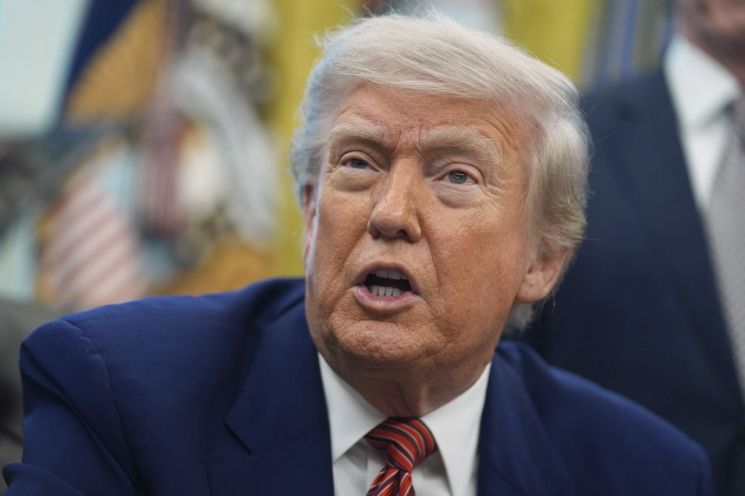
On July 2 (local time), President Donald Trump announced via his own social media platform, Truth Social, "It is an honor to announce that, after speaking with General Secretary To Lam of the Communist Party of Vietnam, we have reached a trade agreement."
With this agreement, the U.S. will impose a 20% tariff on imports from Vietnam. For goods exported to the U.S. via Vietnam from third countries, a 40% tariff will apply. The U.S. has previously pointed out that China has been circumventing high tariffs by routing goods through countries like Vietnam. This strong measure reflects a determination to block such origin laundering practices.
Accordingly, the reciprocal tariff rate imposed by the U.S. on Vietnam has been adjusted down sharply from 46%, as announced by President Trump in early April, to 20%.
President Trump stated, "In return, Vietnam will grant the U.S. comprehensive access, including opening its market," adding, "We will be able to sell products to Vietnam without tariffs." He expressed particular optimism about expanding exports of American-made sport utility vehicles (SUVs) and large-engine vehicles to Vietnam.
Vietnam is the second country, after the United Kingdom last month, with which the U.S. has reached a trade agreement. Among Asian countries, Vietnam is the first. President Trump has also hinted at the possibility of a trade deal with India.
The Trump administration is currently conducting trade negotiations with major trading partners ahead of the expiration of the reciprocal tariff suspension on July 8. Previously, on April 9, President Trump implemented reciprocal tariffs on 57 economic entities (56 countries and the European Union) and applied a 90-day suspension. This measure will end at 12:01 a.m. on July 9.
However, there is still a long way to go before reaching trade agreements with major Asian trading partners such as South Korea and Japan.
On this day, The Wall Street Journal (WSJ) reported that during high-level trade talks between South Korea and the U.S. held at the end of last month, the U.S. side highlighted "digital trade" as a key issue. Digital trade barriers, such as the online platform law promoted by the South Korean government, have drawn opposition from American companies, complicating the negotiations. In addition, on July 1, 43 Republican members of the U.S. House of Representatives sent a letter to the Trump administration's trade team urging resolution, arguing that Korea's platform law excessively regulates American tech companies. With mounting U.S. pressure, it is now inevitable that discussions on domestic platform legislation will face significant challenges going forward. Furthermore, the U.S. considers legislation imposing network usage fees (network fees) on foreign content providers and the South Korean government's restrictions on the use of foreign cloud service providers as digital trade barriers. The issue of allowing the overseas transfer of high-precision map data also appears to be on the negotiation table.
South Korea is requesting the U.S. to exempt or reduce tariffs on major export items such as automobiles (25%) and steel and aluminum (50%).
Japan is also experiencing friction in its trade negotiations with the U.S. According to the WSJ, the Japanese government made it clear from the early stages of the talks that it could not agree to maintain the 25% tariff on its key export, automobiles. This firm stance has reportedly widened the gap between the two countries. President Trump warned the previous day that the reciprocal tariff rate on Japan could be raised from the current 24% to as high as 35%.
© The Asia Business Daily(www.asiae.co.kr). All rights reserved.
![Clutching a Stolen Dior Bag, Saying "I Hate Being Poor but Real"... The Grotesque Con of a "Human Knockoff" [Slate]](https://cwcontent.asiae.co.kr/asiaresize/183/2026021902243444107_1771435474.jpg)















