Chemical Control Cited Only as a "Last Resort"
Proposal to Develop Content Inspired by "SpongeBob" Characters
As the red lovebug (Plecia nearctica), known as "Love Bug," continues to proliferate in the Seoul metropolitan area, causing increasing inconvenience and complaints among citizens, controversy has arisen over a report released ahead of summer that highlights the need to develop content promoting the environmental benefits of the lovebug. On July 1, several online communities posted articles titled "Seoul City's Love Bug Countermeasures." These posts referenced a report released around April by the Seoul Institute, an affiliate of the Seoul Metropolitan Government, titled "Status and Response Strategies for Epidemic Urban Pest Outbreaks in Seoul."
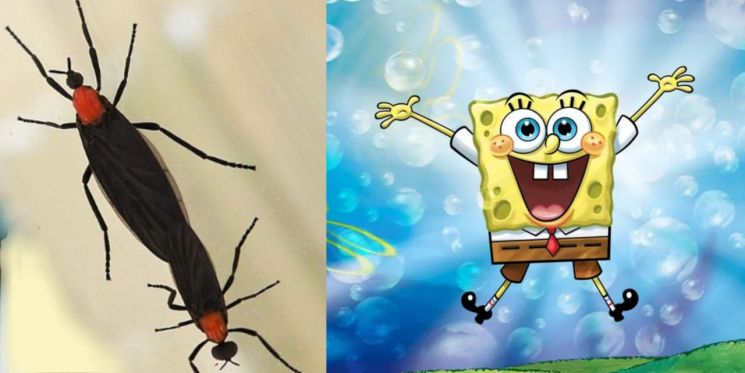
The report first explained that the institute raised the need to establish an integrated pest management system unique to Seoul. It emphasized that the existing system, which mainly targets disease-carrying pests, should be expanded to include "epidemic" species and those whose numbers increase due to overseas inflow, thus broadening the scope of pests to be managed. The report noted that there is no term that collectively refers to pests exhibiting abnormal population growth in urban areas, such as the lovebug, and introduced the term "epidemic urban pests" for this purpose.
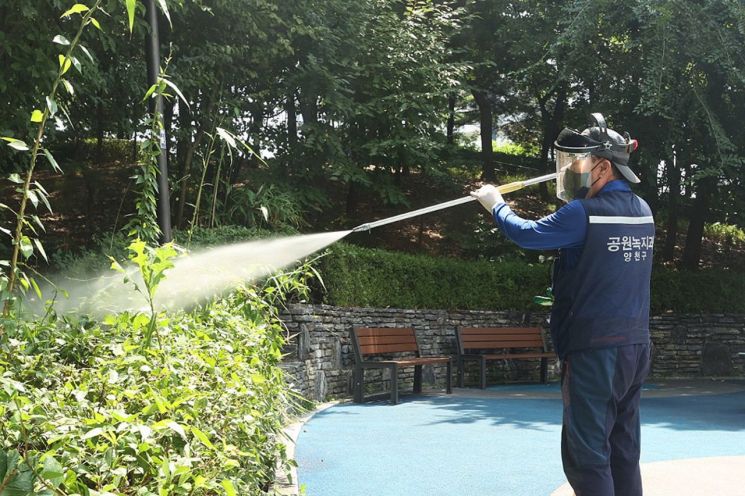
In the section on prevention-focused "proactive response," the report stated, "According to complaint analysis and survey results, epidemic urban pests tend to occur mainly in specific districts," adding, "A systematic system is needed to designate areas with high incidence as high-risk zones and monitor them intensively." The report particularly pointed out that international organizations emphasize "minimizing chemical use" as a core principle of integrated pest management, and therefore, non-chemical control methods should be prioritized. Chemical control should be considered only as a last resort. Even when chemical control is implemented, the report recommended using plant-based oils or natural ingredients, and limiting the use of insecticides to the minimum necessary amount.
Meanwhile, the report criticized the lack of a systematic pest information database on the Seoul city website, making it difficult for citizens to access information. In the section on "restructuring promotional strategies," the report stated, "If interesting storytelling and entertaining content featuring insects are developed and activated with public participation, a natural educational effect about ecosystems and insects can be expected."
As a representative example, the report cited the popular American animated series "SpongeBob SquarePants." It explained that Stephen Hillenburg, a marine biologist and animator who loved marine life, reflected the characteristics of marine organisms in the characters of SpongeBob. The argument is that by effectively combining entertainment and educational elements, viewers can naturally and easily acquire knowledge about marine life. In this context, the report mentioned the need to develop content emphasizing that lovebugs and similar species are harmless to humans.
However, there has been criticism among netizens regarding the idea of promoting characters based on lovebugs. Comments included, "I'm curious how the thought process leads from lovebugs to SpongeBob," "Citizens are stressed because of lovebugs, and now they're turning them into characters? Who is this supposed to please?" and "People keep calling lovebugs beneficial insects, but if they cause this much inconvenience, they're clearly pests." On the other hand, some netizens responded, "Like the animation 'Ladybug,' which was inspired by ladybugs, if lovebug characters or content are well made, it could be better than expected," and "It seems the content proposal was made as part of a research project on promotional strategies, so there's no need to take it too seriously."
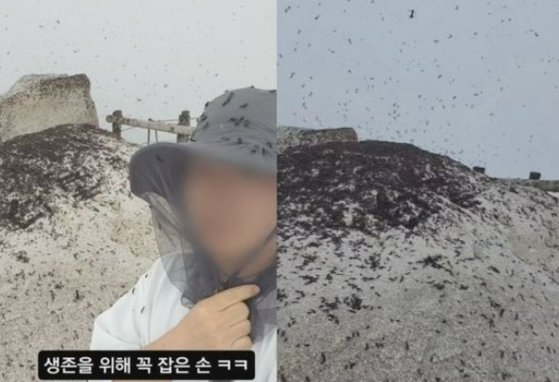 Recently, on social networking services (SNS), scenes of lovebugs almost taking over Gyeyang Mountain in Gyeyang District, Incheon Metropolitan City have become a hot topic. Online communities
Meanwhile, lovebugs, which were originally native to southeastern China and Okinawa, Japan, began to be found in large numbers in Korea, particularly in the metropolitan area, starting around 2022. They are classified as beneficial insects because they help purify soil and pollinate flowers. Their population tends to surge during early summer, particularly in June and July, but then rapidly decreases after about two weeks. Recently, on social networking services (SNS), scenes of lovebugs almost taking over Gyeyang Mountain in Gyeyang District, Incheon Metropolitan City have become a hot topic.
© The Asia Business Daily(www.asiae.co.kr). All rights reserved.
![Clutching a Stolen Dior Bag, Saying "I Hate Being Poor but Real"... The Grotesque Con of a "Human Knockoff" [Slate]](https://cwcontent.asiae.co.kr/asiaresize/183/2026021902243444107_1771435474.jpg)


















