Collaboration Among Experts, Organizations, and Citizens Yields Branding Results
Visualizing with Three Lines: "Public Transportation, Bicycles, and Walking"
Raising Awareness Through City Promotional Materials and Transportation Signboards
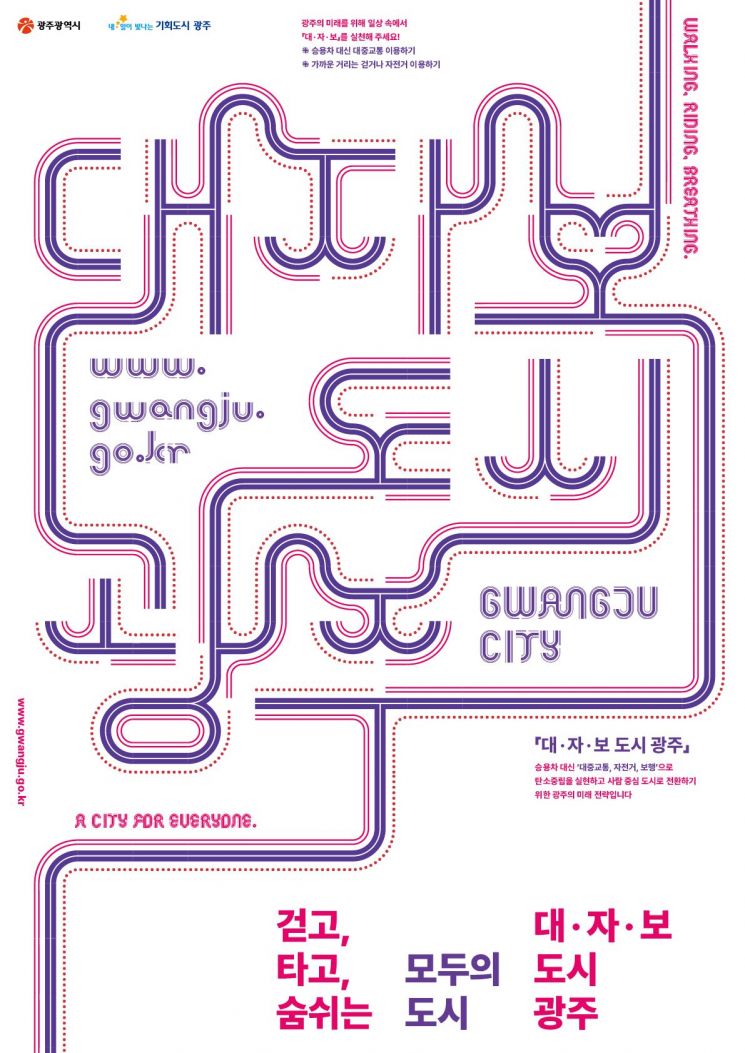
Gwangju City is branding its "Daejabo City" policy. The city plans to visualize and promote "Daejabo City Gwangju" in order to foster public understanding and support among citizens.
On July 2, Gwangju City announced the development and release of a design system to brand its core policy, "Daejabo City, Gwangju," which aims to address the climate crisis and transition toward a people-centered city. This marks the first time the city has branded a policy to intuitively and visually communicate the purpose, vision, and details of a specific initiative.
"Daejabo City" is Gwangju's flagship policy to move away from a car-centered transportation system and transition to a city structure focused on public transportation, bicycles, and walking, thereby addressing the climate crisis and building a sustainable city.
The "Daejabo City" policy brand design uses "roads" as its motif, visually representing the three modes of movement?public transportation, bicycles, and walking?as lines of different forms.
"Public transportation" is depicted as a "thick line" to emphasize stability and importance, reflecting its role as the backbone of urban mobility. "Bicycles" are illustrated with a "thin line" to convey a sense of speed and the flexibility to navigate narrow alleys. "Walking" is expressed as a "dotted line," inspired by the feeling of contact with the ground and rhythm when walking, adding a sense of friendliness and vibrancy.
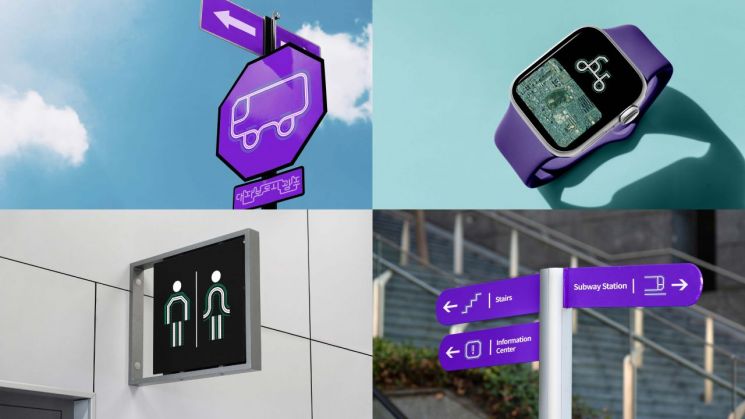
The three lines are combined according to specific rules and are reconstructed into roads in either straight or curved forms. This has been developed as a "do-able module system," allowing users to freely and creatively combine the elements as needed. The design is open and accessible, enabling citizens, city departments, and related organizations to use it freely.
The development of the policy brand involved not only Gwangju City but also the design company Seokkeojjagi Co., graduates of Gwangju Brand School, Gwangju Transportation Corporation, Gwangju Climate and Energy Agency, Gwangju Traffic Culture Research Institute, Gwangju Sustainable Development Council, and the Daejabo City Gwangju Citizens' Action Group, thereby enhancing its public value and feasibility.
Since March, the city has operated a dedicated task force (TF) involving citizens and experts to run a policy branding planning lab and establish the brand identity and usage manual. On June 26, the city held a policy brand results sharing session in the city hall's main conference room, unveiling the brand created together with citizens. The city has also prepared a usage manual for the brand, planning to flexibly apply it to policy dissemination, education, and practical initiatives.
Park Kwangseok, the city spokesperson, stated, "This policy brand will serve as an opportunity to deliver the policy as a tangible image rather than just a slogan, thereby encouraging citizen understanding and participation. We will actively utilize it in various city promotional materials, merchandise, transportation facility signboards, and forum venues to raise awareness of the policy."
© The Asia Business Daily(www.asiae.co.kr). All rights reserved.
![Clutching a Stolen Dior Bag, Saying "I Hate Being Poor but Real"... The Grotesque Con of a "Human Knockoff" [Slate]](https://cwcontent.asiae.co.kr/asiaresize/183/2026021902243444107_1771435474.jpg)
















