Hyundai Achieves Ninth Consecutive Month of Growth,
Kia’s Sales Streak Ends After Eight Months
Both Automakers Set Record First-Half Sales in the U.S.
Hybrid Models Drive Hyundai’s Performance,
Kia’s Carnival and Telluride Lead Gains
Industry Faces Uncertainty Amid Weakening Consumer Sentiment and Tariff Pressures
Hyundai Motor recorded a ninth consecutive month of sales growth in the United States last month, while Kia's sales streak ended after eight months of increases. This divergence in performance comes as consumer sentiment is weakening due to the impact of U.S. automotive tariff policies.
According to Automotive News on July 2, Hyundai Motor and Kia (including Genesis) sold a total of 893,152 vehicles in the U.S. in the first half of the year, a 9.2% increase from the same period last year (817,804 units).
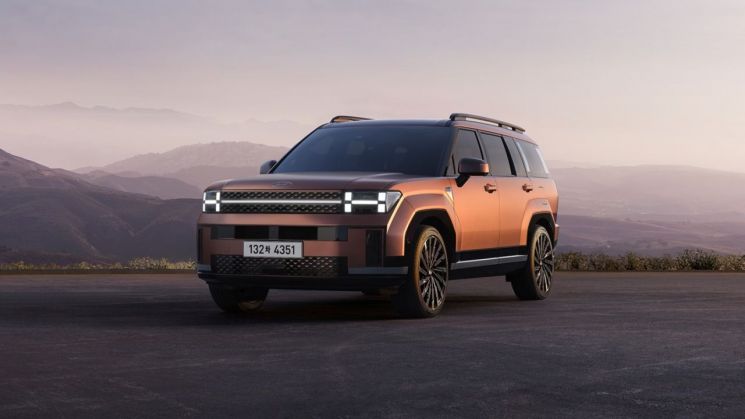
Hyundai's U.S. sales in June reached 69,702 units, up 3% from the same month last year. The Elantra N (Avante, up 33%) and the Santa Fe Hybrid (up 39%) both set new record-high sales for the month. The company also explained that sales of hybrid models rose by 3%, helping to drive overall sales performance.
Hyundai's sales for the first half of the year totaled 439,280 units, a 10% increase compared to the same period last year. This marks the company's highest-ever first-half sales in the U.S.
Kia's U.S. sales in June amounted to 63,849 units, a 3% decrease compared to the same month last year (65,929 units). Sales of electric vehicles, Seltos, and Sportage were sluggish.
However, for the first half overall, Kia achieved its best-ever performance by selling 416,511 units, an 8% increase from the same period last year. By model, Carnival (up 57%), Telluride (up 15%), Sportage (up 9%), and K4 (up 7%) all set new first-half sales records. By vehicle type, hybrid sales stood out, rising 70% compared to last year.
Genesis sold 6,823 units in June, a 21.4% increase from the same period last year (5,619 units).
Automotive News reported, "Both Hyundai and Kia signaled that the retail auto market will become even more challenging." Yoon Seungkyu, head of Kia North America and president of Kia America, stated, "We will continue to respond flexibly to market changes in the second half of the year and provide products and services that meet the expectations of U.S. consumers."
Other automakers also saw mixed results in U.S. sales. Ford sold 181,600 units in June, a 10.1% increase from the same month last year. Japan's Toyota Motor sold 193,248 units, posting only a slight increase of 0.1%. Honda Motor sold 114,486 units, a 21.5% increase compared to the same period last year.
Automotive News explained, "Toyota Motor is experiencing the industry's most severe supply shortage," adding, "Toyota increased by 0.2%, but Lexus saw its first decline of the year, dropping 0.9%."
Chris Hopson, an analyst at S&P Global Mobility, commented on the U.S. auto market, stating, "Concerns about new car purchasing power in the second half of the year are expected to intensify due to the potential for higher new car prices." He also noted, "This pressure is increasing as inventory subject to tariffs begins to replace pre-tariff vehicles."
Earlier, the Donald Trump administration imposed a 25% tariff on imported cars in early April, and from early May, a 25% tariff on foreign-made auto parts. Hyundai and Kia are reported not to have officially raised car prices since the tariffs took effect.
© The Asia Business Daily(www.asiae.co.kr). All rights reserved.
![Clutching a Stolen Dior Bag, Saying "I Hate Being Poor but Real"... The Grotesque Con of a "Human Knockoff" [Slate]](https://cwcontent.asiae.co.kr/asiaresize/183/2026021902243444107_1771435474.jpg)















