Central Asian Countries with Islamic Cultural Backgrounds
...Aiming to Prevent Terrorism
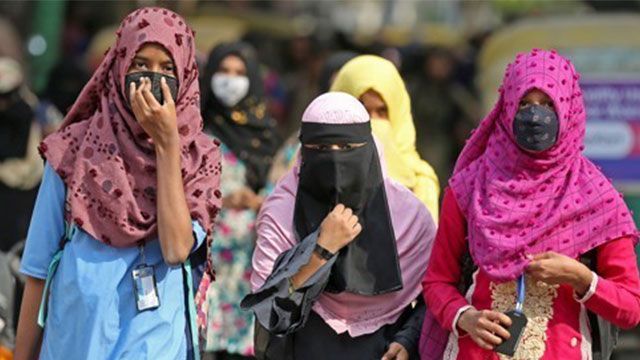
The government of Kazakhstan has banned clothing that covers the face in public places, joining a recent trend among Central Asian countries to revise regulations regarding Islamic attire that conceals most of the face.
According to Yonhap News on July 1, President Kassym-Jomart Tokayev of Kazakhstan signed a bill the previous day prohibiting the wearing of clothing in public places that interferes with facial recognition.
Under the bill, garments that obstruct facial recognition are banned in public places. The law does not specifically mention any particular religion or religious attire. However, exceptions are made for medical purposes, anticipated severe weather, and sports or cultural events.
President Tokayev described the new law as an opportunity to emphasize national identity. Earlier this year, he told local media, "It is much better to wear traditional clothing than black garments that cover the face," and added, "We should widely promote traditional attire that best represents our national identity."
In addition to Kazakhstan, most Central Asian countries with Islamic cultural backgrounds also restrict Islamic clothing that covers most of the face. This is because such attire makes it difficult to identify individuals in public places, which can increase the risk of terrorism or crime.
Last year, the government of Kyrgyzstan submitted a bill to parliament that would impose fines on those wearing niqabs and burqas in public places. The bill stipulates a fine of 20,000 soms (approximately 340,000 KRW) for wearing religious attire that completely covers the face in government offices and public places. To enforce the ban on the niqab, a face veil that covers the entire face except for the eyes, Kyrgyz police also conduct street patrols.
Uzbekistan imposes fines of over $250 for violating regulations on the niqab, and President Emomali Rahmon of Tajikistan has also signed a law prohibiting the wearing of such attire in public places if it is not related to national culture.
© The Asia Business Daily(www.asiae.co.kr). All rights reserved.