Ministry of Culture, Sports and Tourism and Financial Services Commission See Delays in Minister and Vice Minister Appointments
FSC Vice Chairman Position Remains Vacant
Organizational Restructuring Cited as the Main Cause
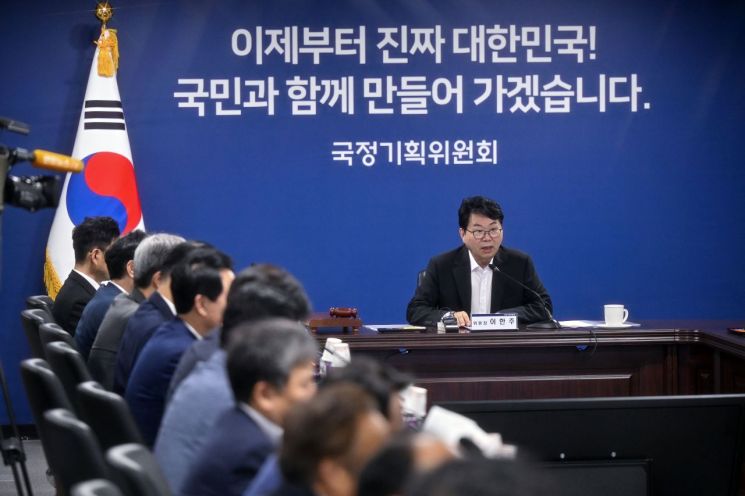
As the Lee Jaemyung administration completes its cabinet formation by nominating candidates for key ministerial positions, attention is focusing on the delayed appointment for the Financial Services Commission (FSC), which is responsible for financial policy. There is speculation both inside and outside the National Policy Planning Committee that if the first cabinet is formed without appointing a new FSC chairman, it could signal the start of an organizational restructuring of the FSC.
According to the presidential office on July 2, out of 19 government ministries and committees, only the Ministry of Culture, Sports and Tourism and the Financial Services Commission have yet to appoint both ministers and vice ministers. In particular, the FSC has faced delays in appointments even though the position of vice chairman (a vice-ministerial post) has remained vacant since the term expired in May.
The overall direction of the government's economic policy is set by the presidential office. The chief of policy, the chief secretary for growth economy, and the secretary for growth economy are responsible for this. Once the presidential office’s economic team sets the direction, officials from the Ministry of Economy and Finance, the Financial Services Commission, and the Financial Supervisory Service coordinate the details and announce specific measures.
Among the economic team, appointments for the secretary for growth economy, the chairman and vice chairman of the FSC, and the governor of the Financial Supervisory Service are being delayed. The delay in appointing top officials at the FSC is being analyzed both inside and outside the government as a result of the ongoing organizational restructuring.
Currently, the government organization restructuring task force (TF) within the National Policy Planning Committee is reported to have resolved most of the major issues related to the restructuring. Among these, the separation of the budget function from the Ministry of Economy and Finance is the top priority.
During the restructuring of the Ministry of Economy and Finance, the organizational restructuring of the FSC is also under discussion. The new administration is considering transferring the FSC’s financial policy functions to the Ministry of Economy and Finance and reorganizing the system into a Financial Supervisory Commission.
A National Policy Planning Committee official stated, "If the presidential office decides to retain the current FSC chairman, it can be interpreted as confirmation of the FSC’s organizational restructuring," and added, "Unlike the retention of officials at the Ministry of Agriculture, Food and Rural Affairs or the Ministry of Food and Drug Safety, there would be no reason to appoint a new FSC chairman."
There are also reports of heated debate within the restructuring task force over whether to dismantle the FSC. While the prevailing view is that restructuring is inevitable, there is also significant support both inside and outside the committee for the argument that it is practically difficult to separate financial policy and supervisory functions.
In particular, if the system is reorganized into a Financial Supervisory Commission, there are reportedly differences of opinion regarding the details. The leading proposal is to revive the former Financial Supervisory Commission. This would involve transferring the FSC’s domestic financial policy functions to the Ministry of Economy and Finance, and combining the FSC’s supervisory policy functions with the supervisory enforcement functions of the Financial Supervisory Service to create a new commission. The Financial Supervisory Commission was established in 1997 on the recommendation of the International Monetary Fund (IMF) during the foreign exchange crisis. In 2008, when the Lee Myungbak administration took office, the FSC was launched by merging the domestic financial policy functions of the Ministry of Finance and Economy with the supervisory functions of the Financial Supervisory Commission to improve efficiency.
Another option is the Bank of Korea?Monetary Policy Committee model. This would revive the Financial Supervisory Commission and establish an internal committee structure. Just as the governor of the Bank of Korea serves as the chair of the Monetary Policy Committee, the head of the Financial Supervisory Commission would serve as the chair of a separate committee.
However, this approach has clear legal limitations. The Financial Supervisory Service makes decisions that affect public interests, such as investigating unfair trading practices and imposing disciplinary actions. A financial industry official pointed out, "The Administrative Constitution specifies that administrative authority belongs to the executive branch," and added, "If the authority of the Financial Supervisory Service, a private organization, is exercised under the supervision of the FSC, which is part of the executive branch, transferring the FSC’s functions to the Ministry of Economy and Finance and leaving only a private organization (the Financial Supervisory Commission) would not align with the public law system."
© The Asia Business Daily(www.asiae.co.kr). All rights reserved.
![Clutching a Stolen Dior Bag, Saying "I Hate Being Poor but Real"... The Grotesque Con of a "Human Knockoff" [Slate]](https://cwcontent.asiae.co.kr/asiaresize/183/2026021902243444107_1771435474.jpg)
















