Emergency for New Apartment Owners Ahead of Move-In
Must Move In Within Six Months When Switching to Mortgage Loans
Loan Limit of 600 Million Won Restricts New Developments in Gangnam Area
#. Office worker A, who resides in Gyeonggi Province, had planned to lease out the apartment they won in the 2023 housing subscription lottery. However, the recent announcement of stricter loan regulations by financial authorities has disrupted these plans. If A cannot find a tenant who can pay the entire jeonse deposit in cash, they will be forced to live in the apartment themselves.
#. Office worker B, who won the subscription for 'Raemian One Perla'?scheduled for move-in this November?is deeply concerned about whether they will be able to find a tenant after paying the balance with a loan. Since jeonse loans that are conditional on the transfer of ownership are now impossible, B has no choice but to save up as much money as possible. B said, "I need to lower the jeonse deposit and find a tenant who can move in with cash, but it doesn't seem easy. If I can't find one, I'm also considering moving to an area with lower housing costs."
Due to the government's stringent loan regulations, apartment owners in the Seoul metropolitan area who are about to move in are now facing an emergency. Those who had planned to use loans secured by incoming tenants' jeonse deposits to pay off their remaining balances have seen their financial plans fall apart.
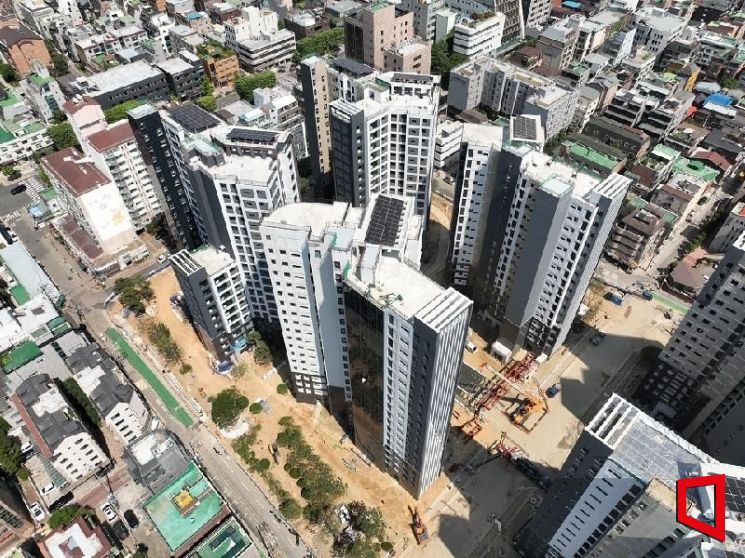
According to Zigbang on July 2, the number of households scheduled to move into apartments in the Seoul metropolitan area in the second half of this year is 52,828. Specifically, 14,043 households in Seoul, 30,379 in Gyeonggi Province, and 8,406 in Incheon must now revise their financial plans due to the new regulations.
Major new apartment complexes in Seoul include Imun IPark Xi, Jamsil Raemian IPark in Songpa District, Cheongdam Le El, and Raemian One Perla. In the greater metropolitan area, notable complexes include Gwangmyeong Xi The Sharp Foretna and Gwangmyeong Central IPark.
An official from the Ministry of Land, Infrastructure and Transport stated, "For new apartments in the Seoul metropolitan area or other regulated regions, you should interpret the policy as meaning that you should not take out a loan unless you intend to live in the property yourself."
The authorities have blocked the so-called 'jeonse loan conditional on transfer of ownership,' where landlords in the metropolitan area or other regulated regions would use funds from tenants' jeonse loans to pay off their own balances.
For landlords about to move in, paying off the balance with a tenant's deposit now requires finding a tenant who can pay the deposit in full with cash. However, in reality, it is extremely difficult to find a 'cash jeonse tenant' who can pay the entire deposit without a jeonse loan. Landlords are now forced to either lower the jeonse deposit to attract tenants for a 'banjeonse' (half-jeonse) arrangement or reconsider their financial plans by giving up moving in and selling their pre-sale rights.
After the announcement of the loan regulations at the end of last month, jeonse prices have fallen at Maple Xi in Jamwon-dong, Seocho District, where move-ins are currently underway. Some jeonse listings have dropped by more than 100 million won. For units with an exclusive area of 49 square meters, prices fell from 1 billion won to 930 million won; for 80 square meters, from 1.2 billion won to 1.1 billion won; and for 85 square meters, asking prices dropped from 1.55 billion won to 1.45 billion won.
Kim Hyosun, Chief Real Estate Specialist at NH Nonghyup Bank, explained, "When you win an apartment through the subscription system, you should plan your balance loan as conservatively as possible. If stronger loan regulations are implemented at the time of final payment, the balance loan will usually be subject to the new rules. This regulation will inevitably increase the number of landlords who actually live in their properties."
© The Asia Business Daily(www.asiae.co.kr). All rights reserved.

















