Daily Sodium Intake in 2023 Reaches 3,136 mg
Men Consume More Than Women
Sugar Intake Remains Within WHO Guidelines
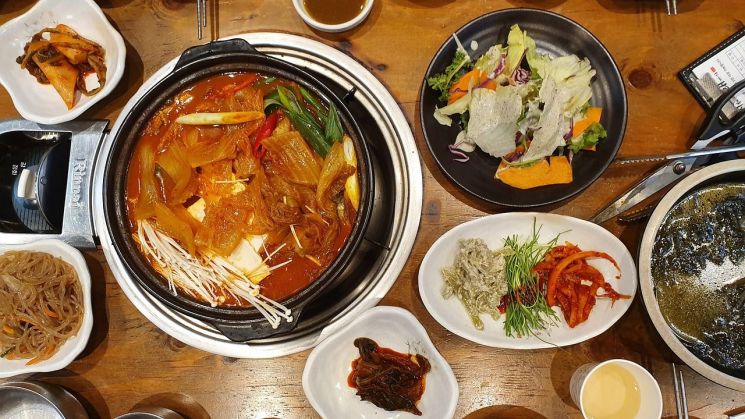 More than 50% of the sodium consumed daily by most people comes primarily from noodles and dumplings, kimchi, soups and stews, stir-fried dishes, and hot pot dishes. Reference photo to aid understanding of the article. Photo by Pixabay
The average daily sodium intake among Koreans is 1.6 times higher than the World Health Organization (WHO) recommended standard. In the case of sugar, overall intake remains within the recommended level, but certain age groups, such as adolescents, exceeded the guideline.
On July 1, the Ministry of Food and Drug Safety announced the results of an analysis of sodium and sugar intake among Koreans over the five-year period from 2019 to 2023, based on data from the National Health and Nutrition Examination Survey. In 2023, the average daily sodium intake among Koreans was 3,136 mg. Although sodium and sugar are essential nutrients for the human body, excessive intake can lead to chronic diseases such as hypertension and diabetes. For this reason, the Ministry has been implementing policies to reduce sodium and sugar since 2012.
Compared to the 4,789 mg recorded in 2011, prior to the implementation of reduction policies, there has been a decrease of 34.5% (1,653 mg). Compared to 3,289 mg in 2019, there was a decrease of about 4.7% (153 mg). However, this result is still 1.6 times higher than the WHO recommended standard.
By gender, men (3,696 mg) consumed more sodium than women (2,576 mg). The age group with the highest sodium intake was those in their 30s and 40s, with an average daily intake of 3,389 mg (equivalent to 8.5 g of salt).
More than 50% of the sodium consumed daily by Koreans comes primarily from noodles and dumplings, kimchi, soups and stews, stir-fried dishes, and hot pot dishes. In particular, the amount of sodium consumed in a meal at a restaurant, such as chicken, pizza, and beverages, was higher than the sodium intake from a home-cooked meal consisting of rice, soup, and side dishes.
The average daily sugar intake from processed foods was 36.8 g in 2019 and 35.5 g in 2023, maintaining a similar level over the five-year period. These amounts accounted for 7.6% and 7.7% of daily total caloric intake, respectively, which are within the WHO recommended standard.
 When consuming a meal consisting of rice, soup, and side dishes prepared at home, the amount of sodium intake is lower compared to the sodium intake from a meal at a restaurant including chicken, pizza, and beverages. Reference photo to aid article understanding. Photo by Pixabay
However, in 2023, the sugar intake among girls, adolescents, and young women ranged from 42.1 g to 46.6 g, once again exceeding 10% of daily total caloric intake, as was the case in the previous year.
The high sugar intake among girls and adolescents is attributed not only to carbonated beverages but also to the frequent consumption of high-sugar foods such as bread, sweetened fruit and vegetable drinks, and ice cream.
On average, Koreans consume 47% of their daily sugar intake from processed foods mainly through beverages (11.4 g) and snacks, bread, and rice cakes (5.4 g). Compared to 2019, sugar intake from beverages has decreased by 9.5% due to the recent popularity of zero-sugar drinks, while sugar intake from snacks, bread, and rice cakes has increased by 3.8%.
The Ministry of Food and Drug Safety stated, "To reduce sugar intake, it is a good idea to drink water instead of carbonated beverages and to choose fresh fruit over snacks or bread as a snack." The Ministry also emphasized, "When purchasing processed foods, it is important to check the nutrition label and choose products with relatively lower sugar content, as these everyday practices are crucial."
© The Asia Business Daily(www.asiae.co.kr). All rights reserved.
![Clutching a Stolen Dior Bag, Saying "I Hate Being Poor but Real"... The Grotesque Con of a "Human Knockoff" [Slate]](https://cwcontent.asiae.co.kr/asiaresize/183/2026021902243444107_1771435474.jpg)
















