Over 30,000 Archive Items Acquired in the Past Two Years
A Total of Approximately 490,000 Archive Items Collected Since 2013
Archive Access Services to Be Provided Soon
The Art Research Center at the National Museum of Modern and Contemporary Art announced on June 30, 2025, that it had newly acquired approximately 30,000 large-scale archive items from Joseongryong Chosungryong, Kim Jonghak, Woo Kyuseung, Lee Eunju, and Mark Patsfall from 2024 to June 2025. The acquisitions include architectural materials from architect Joseongryong Chosungryong, early career materials from artist Kim Jonghak, architectural materials from architect Woo Kyuseung, a variety of photographic materials of Nam June Paik taken by photographer Lee Eunju, as well as collaborative materials between American printmaker Mark Patsfall and Nam June Paik.
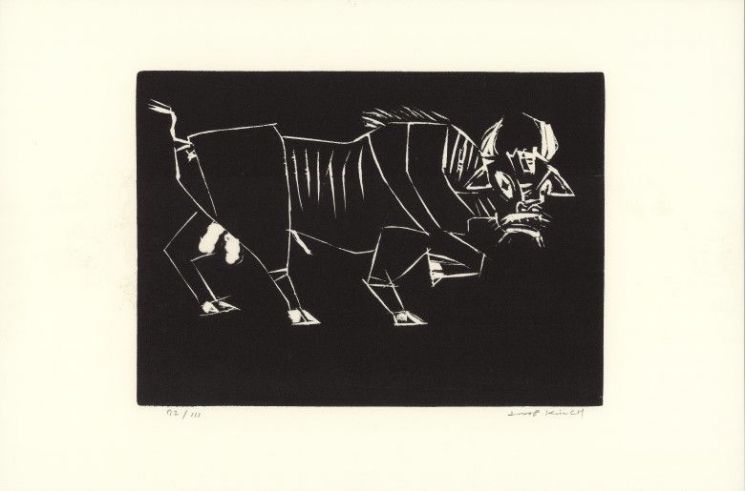 Kim Jonghak's "Untitled" (2008), a newly acquired item in the Art Research Center Archive of the National Museum of Modern and Contemporary Art. National Museum of Modern and Contemporary Art
Since its establishment in 2013, the Art Research Center at the National Museum of Modern and Contemporary Art has continuously collected, researched, and preserved key materials related to Korea's modern and contemporary art. The archive currently holds approximately 490,000 items. The newly acquired collection of about 30,000 items will be organized and cataloged, after which information will be made available to the public through the museum's website. The materials will also be actively utilized for exhibitions, publications, academic events, and original material viewing services.
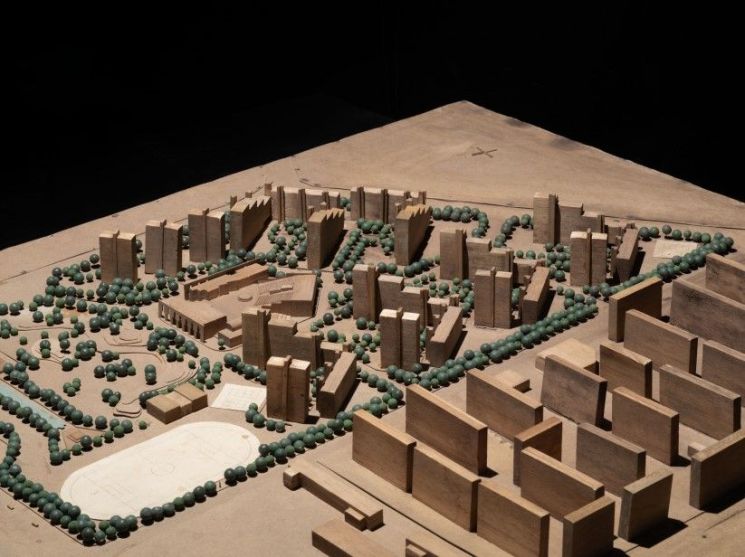 Joseongryong Chosungryong, newly acquired archive of the Art Research Center at the National Museum of Modern and Contemporary Art, "Model of Asia Athletes' Village Apartment" (1985). National Museum of Modern and Contemporary Art
Joseongryong Chosungryong (born 1944) is a leading Korean architect who founded Woo Won Architecture Research Institute in 1975 and gained recognition after winning the project for the "Seoul Asian Games Athletes' Village and Memorial Park" in 1983. His representative works include the Asia Athletes' Village Apartment (1986), Soma Museum of Art (1995), Uijae Museum of Korean Art (1999), Seonyudo Park (2001), and Goam Lee Ungno House Memorial Hall (2001). In 2024, the Art Research Center acquired more than 1,200 items, including architectural documents, photographs, slides, sketches, models, manuscripts produced by Chosungryong from 1965 through the 2020s, as well as photographs, articles, and scrapbooks related to his social activities.
Kim Jonghak (born 1937) began his artistic career in the early 1960s as part of the Art Informel movement, presenting works that expressed the social conflicts and absurd realities of Korean society at the time. After studying in Japan and the United States during the 1960s and 1970s, he returned to Korea and lived in Seoraksan for over 20 years, creating works that depicted mountains, flowers, butterflies, and other elements of nature with a unique formative sensibility that conveyed a sense of primal vitality. In 2025, the Art Research Center collected more than 1,200 items, including the artist's early drawings, portraits, prints, objects, exhibition prints, documents, scrapbooks, and photographs that provide insight into his artistic world.
Woo Kyuseung (born 1941) is a Korean-American architect who has developed the concept of architectural introversion and extroversion based on the cultural differences between the two countries, and has carried out a variety of projects. His representative works in Korea include Hoam Art Museum (1982), Olympic Athletes' Village Apartment (1984), Whanki Museum (1993), Kim Changyeol Residence (1994), and the National Asia Culture Center (2005). His international works include the Korean Gallery at the Metropolitan Museum of Art (1998), the Nerman Museum of Contemporary Art in Kansas City (2007), and Harvard University Dormitory (2008). In 2025, the Art Research Center acquired more than 20,000 architectural materials, including design drawings and models, artist notes, photographs, and slides.
Lee Eunju (born 1945) is a portrait photographer who has focused on photographing and publishing images of artists active in music, art, and dance since the 1980s. She developed a long-standing relationship with Nam June Paik, whom she met while studying in the United States in the 1980s, and documented his artistic activities in both Korea and the United States, as well as his later life. Her photographic collection includes candid images of Nam June Paik's everyday life at his New York studio, which had not been widely known, and photographs of his funerals held in the United States and Korea after his passing. Notably, she received direct permission from Nam June Paik to use his portrait rights during his lifetime, greatly increasing the value of her collection. In 2025, the Art Research Center acquired over 4,000 items, including Lee Eunju's portraits of Nam June Paik, records of exhibitions and seminars he participated in, and documentary photographs and films of his daily life.
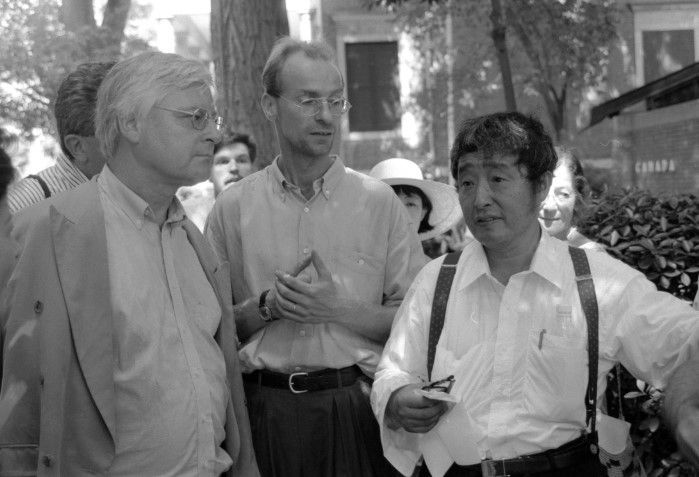 Newly acquired archive item at the National Museum of Modern and Contemporary Art Art Research Center, Nam June Paik installing artwork at the Venice Biennale (1993). Photo by Mark Patsfall/National Museum of Modern and Contemporary Art
Mark Patsfall (born 1949) is an American printmaker who worked as chief designer at Carl Solway Gallery, collaborating with artists such as John Cage and Yoko Ono. From 1984 to 2002, he served as the video art designer for Nam June Paik. Approximately 400 of Nam June Paik's video art works were realized through his designs: Nam June Paik would present an idea, Mark Patsfall would create the design, and Nam June Paik would sign the design drawings to complete the exterior of the work. In 2025, the Art Research Center collected 266 items, including design blueprints, drawings, documents, memos, and objects related to exhibition pieces such as "Video Time·Video Earth" (1992) and "Venice Biennale" (1993), as well as more than 5,900 photographs and videos documenting the installation process of the works.
Kim Sunghee, director of the National Museum of Modern and Contemporary Art, stated, "The Art Research Center at the National Museum of Modern and Contemporary Art is a core function and space of the museum, dedicated to recording the stories and history of contemporary art," and added, "The museum will continue to research and collect valuable Korean materials and contribute to documenting culture and the arts through their systematic preservation and utilization."
© The Asia Business Daily(www.asiae.co.kr). All rights reserved.
![Clutching a Stolen Dior Bag, Saying "I Hate Being Poor but Real"... The Grotesque Con of a "Human Knockoff" [Slate]](https://cwcontent.asiae.co.kr/asiaresize/183/2026021902243444107_1771435474.jpg)

















