Three Years of the 8th Popularly Elected Administration:
Yangpyeong's Leap Forward in the Western Region Becomes Tangible
From Hosting the Garden Culture Expo to Guksu Station Area Development
Regulatory Easing After 25 Years... Establishing a New Axis for Yangpyeong's Future
Semiwon Designated as a National Garden... Launching the Vision of a Global Garden City
Three years after Jeon Jinseon took office as Governor of Yangpyeong County, the vision of a "Leap Forward for Western Yangpyeong" is materializing into tangible achievements. Semiwon and Dumulmeori have been selected as the venues for the 2026 Gyeonggi Garden Culture Expo, and Yangpyeong's largest urban development project in the Guksu Station area has received approval from Gyeonggi Province, marking a series of groundbreaking successes.
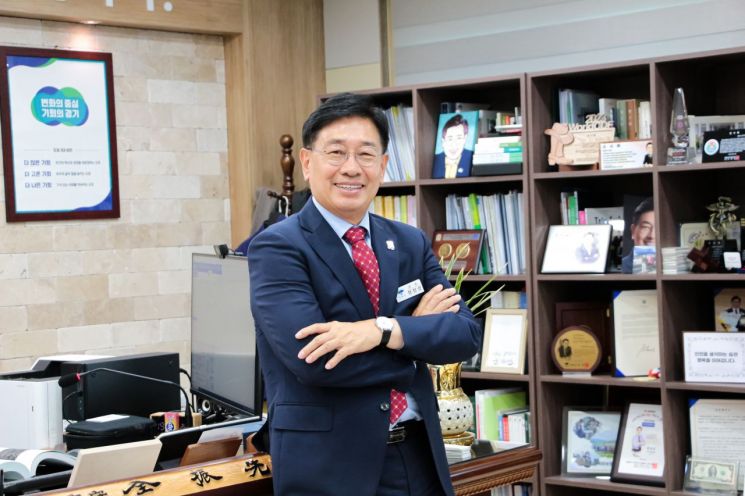
According to Yangpyeong County on June 30, the county plans to further solidify the position and value of the western region by continuously implementing region-specific strategies based on these achievements.
Semiwon, the first local garden in Gyeonggi Province, is preparing to be elevated to the status of a national garden, with related procedures underway. Yangpyeong County aims to transform itself into a global garden tourism city, using Semiwon and Dumulmeori as key hubs.
By September, Yangpyeong County will carry out a 14,000-square-meter improvement project at the front of Semiwon. The plan is to address residents' inconveniences caused by the aging parking lot and entrance, and to create an open-entry plaza and rest facilities, turning the area into a multifunctional green space.
Additionally, by 2027, the county plans to expand the garden area to about 600,000 square meters by incorporating the Dumulmeori ecological learning center site and the Gajeongcheon area, thus meeting the 300,000-square-meter size requirement for national garden designation.
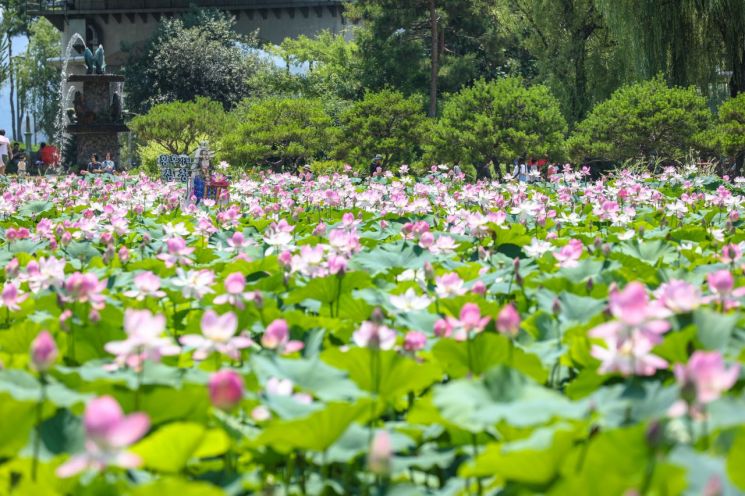
Semiwon is a 127,000-square-meter garden located in Yangsu-ri, Yangpyeong County. It was designated as Korea's first local garden in 2019 and is one of Yangpyeong's premier tourist attractions, featuring abundant aquatic, herbaceous, and woody plants, including lotuses.
Dumulmeori, where the Bukhan River flowing from Geumgangsan and the Namhan River originating from Geomnyongso in Gangwon Province merge, is renowned for its beautiful scenery throughout the four seasons. It has been selected for the Korea Tourism Top 100 for seven consecutive times, maintaining its reputation as a leading tourist destination in the metropolitan area.
Upon the launch of the 8th popularly elected administration, Yangpyeong County established a master plan for Semiwon's elevation to national garden status. The county commissioned a study for the "Strategy and Roadmap for Semiwon National Garden Designation" and formed a dedicated task force of around 20 members for this purpose. In addition, Yangpyeong signed a memorandum of understanding with the Korea Arboretum and Garden Institute for the exchange of plant resources and sharing of technical information to promote garden culture.
Furthermore, the county enacted ordinances regulating various aspects of Semiwon operations, establishing a clear legal basis and strengthening management. In May 2024, Yangpyeong County restored the nation's first and largest traditional Baedari (pontoon bridge), inspired by King Jeongjo's filial piety and Jeong Yak-yong's wisdom, and held a reopening ceremony for the Semiwon Baedari, connecting Semiwon and Dumulmeori. In September, the Dumulmeori Music Festival, which embodies the geographical and historical significance of the confluence of the Namhan and Bukhan Rivers and expresses hopes for unification and harmony, was successfully held with enthusiastic support from about 2,000 visitors. Through these efforts, Yangpyeong has promoted the appeal of Dumulmeori and Semiwon and laid the foundation for national garden designation.
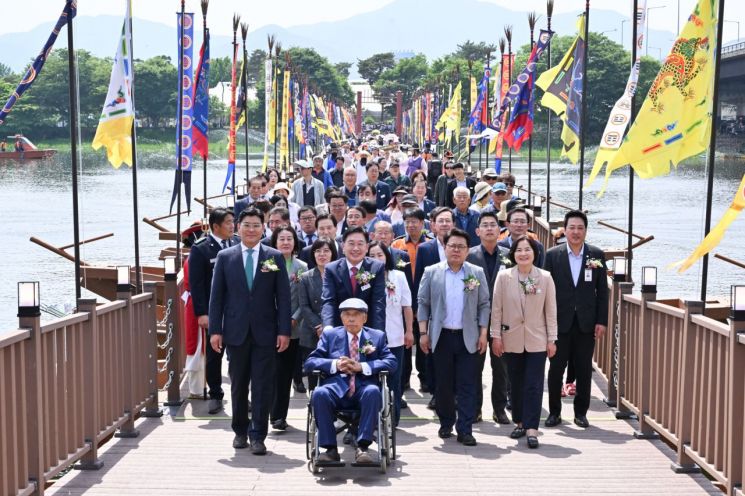
At the end of last year, Yangpyeong County achieved a milestone when Semiwon, along with 58 other garden sites, the training of 190 citizen gardeners, and the enactment of local ordinances for garden operation, received high marks from Gyeonggi Province. As a result, Semiwon was chosen as the venue for the 14th Gyeonggi Garden Culture Expo to be held in 2026.
According to a feasibility study on national garden designation, if Semiwon is elevated to national garden status, it is expected to have a regional economic impact of 1.2207 trillion won. Governor Jeon Jinseon stated that the 2026 Gyeonggi Garden Culture Expo, to be held at Semiwon and Dumulmeori, will feature a garden industry exhibition, a symposium on garden topics, and a variety of garden works, creating an event where nature and people harmonize. He emphasized that Yangpyeong will thoroughly and carefully prepare so that Semiwon becomes the first national garden in the metropolitan area and Yangpyeong rises as the nation's leading garden city.
Since the launch of the 8th popularly elected administration, Yangpyeong County has achieved a long-awaited breakthrough by leading the revision of the "Special Measures for Water Quality Preservation in the Paldang and Daecheongho Water Source Protection Areas" (Special Comprehensive Measures Notice) for the first time in 25 years, as a result of relentless efforts to ease regulations. This revision has enabled the operation of eco-friendly ecological learning boats on the Namhan River, providing momentum for related projects.
With the operation of ecological learning boats, Yangpyeong County is considering connecting these to the creation of a national ecological exploration trail, as access to Daehaseom and other islands becomes possible.
Since the construction of the Paldang Dam, Daehaseom, Geobukseom, Tteodeureongseom in Yanggeun-ri, and Yanggangseom have remained untouched for over 50 years, preserving their natural state. The county plans to create an ecological and cultural exploration trail linking these islands and the Daesim-ri forest, as well as the Galsan willow forest trail, allowing visitors to experience and explore the natural and cultural heritage along the Han River.
By creating a national exploration trail that links outstanding natural and cultural resources with high ecological value in the Namhan River, where use and conservation coexist, and by providing environmental education and experiential programs, Yangpyeong County aims to solidify its position as Korea's leading environmental education city. The county expects to showcase the charm of eco-friendly Yangpyeong, where people, nature, forests, and the city harmoniously coexist in a pristine natural environment.
With the conditional approval of the "Yangpyeong Guksu Station Area Urban Development Project District Designation and Development Plan" by the Gyeonggi Province Urban Planning Committee, the western region of Yangpyeong is expected to transform into a groundbreaking eco-friendly premium city.
The approved project covers approximately 310,000 square meters in the Guksu-ri and Bokpo-ri areas in front of Guksu Station, aiming to accommodate about 2,463 households and create an eco-friendly residential area. The goal is to form a new urban center in the western part of Yangpyeong County and the eastern part of Yangseo-myeon, centered around Guksu Station.
Of the residential land, 105,024 square meters are planned for multi-family housing, 26,265 square meters for single-family housing, and 14,122 square meters for quasi-residential use. Urban infrastructure land will include parks (39,295 square meters), cultural facilities (3,693 square meters), and public offices (4,148 square meters). Infrastructure will account for about 53% of the total area, and the new city will be equipped with four-lane roads, PM (bicycle) roads, and transfer parking lots, meeting the requirements for a new urban center.
Yangpyeong County determined that the Guksu Station area, among the county's nine train stations, is the closest to Seoul and the most suitable for large-scale development. Since the launch of the 8th popularly elected administration, the county has strategically promoted the station area development project. With the recent approval by the Gyeonggi Province Urban Planning Committee, the development plan is now on track.
After a resident briefing session in 2025, the county will proceed with the official announcement of the "District Designation and Development Plan." Following this, detailed design and land readjustment planning will take place over approximately two years of administrative procedures, after which full-scale construction of the complex will begin. Through this, the county aims to prevent haphazard development around Guksu Station, promote systematic urban management and appropriate development, contribute to population growth, and lay the foundation for a major transformation of western Yangpyeong.
On June 20, the long-awaited metropolitan bus service between Seojong and Jamsil held its opening ceremony and began operations. Yangpyeong County has focused its administrative efforts on improving the public transportation system and expanding infrastructure to alleviate residents' inconveniences and enhance transportation satisfaction. The launch of this metropolitan bus service is the result of persistent requests from residents and has finally come to fruition.
Residents of Seojong-myeon have long faced significant inconveniences, such as having to transfer multiple times between buses or trains to commute or attend school in Seoul, or driving through Yangsu-ri, which is notorious for heavy traffic congestion. With the opening of the new service, transportation burdens are reduced and accessibility for tourists is improved, creating a more convenient and comfortable transportation environment.
The Seojong-Jamsil metropolitan bus departs from Munho-ri Terminal in Seojong-myeon, stops at Seojong Middle School and Munho 4-ri (Soguni), and runs to Seoul's Jamsil Metropolitan Transfer Center. Travel from Munho-ri in Seojong to Jamsil now takes less than an hour, forming a new transportation corridor.
Yangpyeong County continues to implement transportation policies that reflect residents' needs, striving to realize transportation welfare that residents can truly experience through a safer and more convenient transportation system.
Yangpyeong, designated as a special bicycle leisure zone, is actively promoting the construction of a bicycle path along the Bukhan River, connecting Yangsu-ri in Yangseo-myeon to Munho-ri in Seojong-myeon.
The approximately 6-kilometer section from the Namhan River Bicycle Path to the Bukhan River is being redeveloped as a combined pedestrian and bicycle path, as the existing path was too narrow and posed safety issues. The new path will be separated from the road and widened for shared use.
This section, connecting the Yangsu-ri Commercial District Promotion Center to the area near the Munho-ri Paldang Lake Wetlands, is a popular route for cycling tourists and is expected to significantly improve road conditions and promote bicycle use.
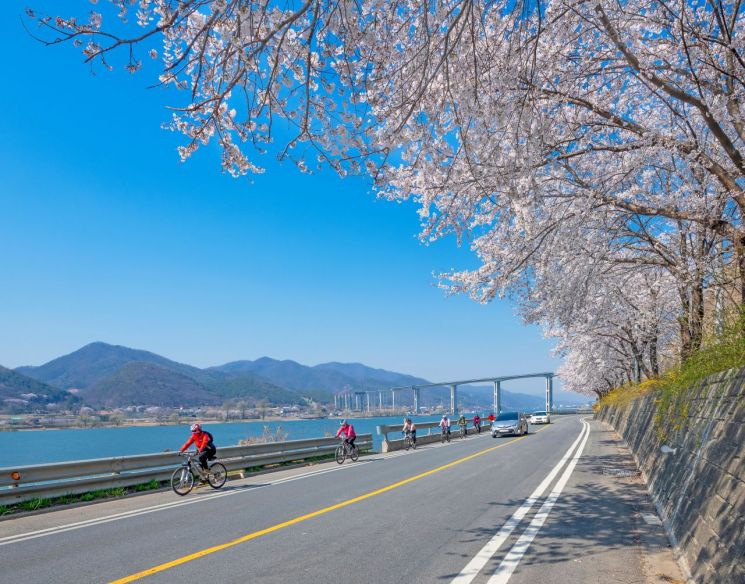
Yangpyeong County is gaining attention as an eco-friendly tourist destination centered on cycling, and the bicycle paths built amidst beautiful natural surroundings are popular as healing routes. The county plans to further expand bicycle infrastructure to attract more tourists and encourage resident use, continuing Yangpyeong's reputation as a cycling paradise.
Yangpyeong County is also developing a sports park on the riverside land in Munho-ri, which will be available for both residents and tourists. The park will feature tree plantings, benches, and a barefoot walking path, providing a space for health and relaxation. Funding has been secured through special adjustment grants, and the project is being carried out with input from residents. The park is expected to be completed within this year, establishing itself as a new landmark in Seojong.
Governor Jeon Jinseon stated, "Yangpyeong is a place that, like the Han River, flows ceaselessly and connects people and nature. Over the past three years of the 8th popularly elected administration, we have devoted ourselves wholeheartedly to county administration, and now it is time to reap the rewards." He added, "Together with the residents, I will continue to advance toward a vibrant Yangpyeong filled with hope and inspiration, a place where nature and people coexist and life flourishes, and a county where residents' happiness is fulfilled."
© The Asia Business Daily(www.asiae.co.kr). All rights reserved.
![Clutching a Stolen Dior Bag, Saying "I Hate Being Poor but Real"... The Grotesque Con of a "Human Knockoff" [Slate]](https://cwcontent.asiae.co.kr/asiaresize/183/2026021902243444107_1771435474.jpg)

















