Goyang Launches Citizen-Participatory Living Lab
Innovation Center to Open in Second Half of the Year with 40 Billion Won Investment
Introduction of Autonomous Buses and AI-Based Traffic Optimization
Strengthening Urban Safety Network with Drone Valley
Goyang Special City in Gyeonggi Province (Mayor Donghwan Lee) is accelerating the development of a smart city that incorporates advanced technologies such as artificial intelligence (AI), digital twin, and drones. The city is building smart infrastructure focused on areas that directly impact citizens, such as transportation, safety, and administration, while also expanding citizen participation and public-private collaboration to realize a 'Goyang-style smart city.'
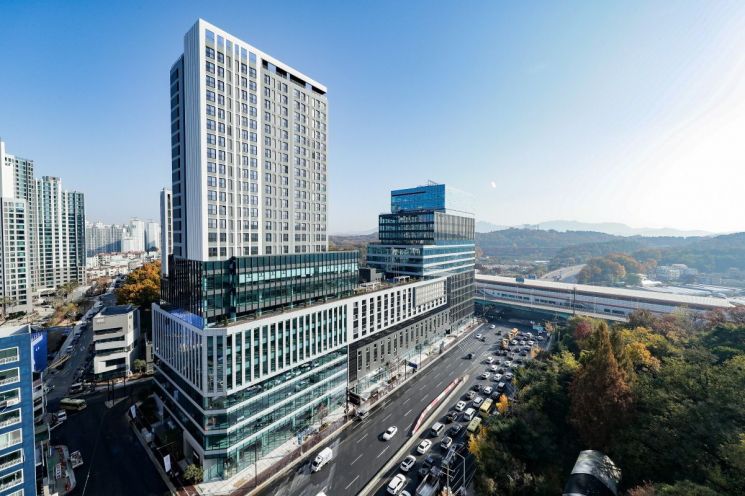
According to Goyang Special City on June 30, the city has officially launched a project worth a total of 40 billion won, based on the blueprint for the 'Hub-Type Smart City Development Project,' which was selected in a public contest by the Ministry of Land, Infrastructure and Transport in 2023. The city plans to gradually introduce smart services in eight areas, mainly centered around the key districts of Hwajeong and Ilsan.
Starting this month, a living lab (Citizen Solution Group) in which citizens directly participate in demonstrations has begun operation, and in the second half of this year, an Innovation Center that will lead the governance of industry, academia, research, and government will open.
In September, the 'Smart City Innovation Center,' which will serve as the hub for Goyang's smart city policy, will officially open in the Seongsa Innovation District.
This center is an expansion and reorganization of the 'Smart City Support Center,' which was first established in 2016 as the nation's first at the basic local government level. It will be reborn as a complex smart platform with a new name and enhanced functions, strengthening its roles in smart service demonstration, business support, and citizen experience.
Currently, the center is operating temporarily within the Seongsa Innovation District. Ahead of its official opening in September, it will be equipped with a multifunctional smart infrastructure in a 495-square-meter (approximately 150-pyeong) space, including an open lab for business support, a coworking lounge, a studio and other business support spaces, a smart talent development area, a smart service showcase, and a public data analysis center.
The Innovation Center will function as a practical hub for implementing smart city policies, going beyond a simple workspace to operate governance for industry-academia-research-government collaboration, foster a business support ecosystem, run citizen experience-oriented exhibitions, and provide digital competency training.
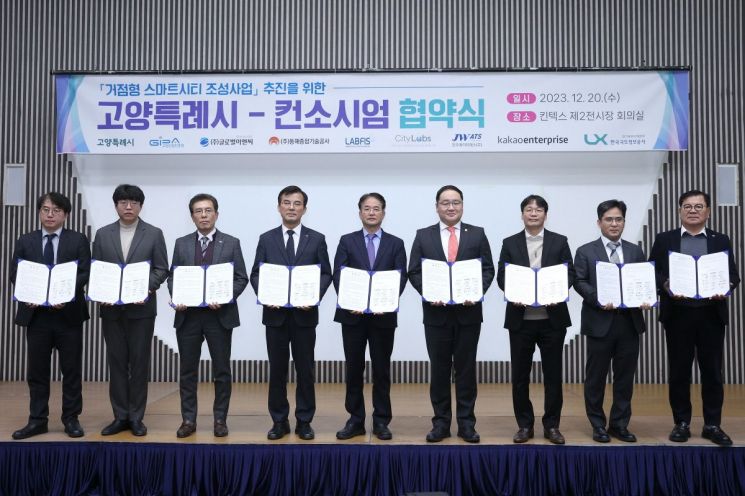 Lee Donghwan, mayor of Goyang Special City (center), at the Goyang Special City-Consortium agreement ceremony for the promotion of the hub-type smart city development project. Provided by Goyang Special City
Based on the demonstration foundation of this Innovation Center, the citizen-participatory living lab has also been fully launched. On June 5, an inauguration ceremony for the 'Citizen Solution Group Living Lab' was held, attended by about 30 citizens and eight implementing organizations, including Kakao Enterprise, Goyang Industry Promotion Agency, and Korea Land and Geospatial Informatix Corporation (LX).
Until November, the Citizen Solution Group will visit key areas where smart services are being established, experience the sites firsthand, and participate in demonstrations, thereby playing an important role in improving services and reflecting policies to meet citizens' expectations.
Goyang City plans to gradually implement smart services, using the Innovation Center as a hub to gather opinions from stakeholders and citizens for each service, design and develop solutions, conduct local demonstrations, and analyze service effectiveness.
First, in the transportation sector, two autonomous buses will be introduced and operated.
During the day, a circular route connecting Daehwa Station, GTX-A Kintex Station, Goyang Sports Complex, and KINTEX will be operated to improve accessibility for MICE visitors. At night, a route between Hwajeong Station and Daehwa Station will be operated to alleviate the inconvenience of public transportation for citizens.
Based on electric buses, the vehicles will be equipped with LiDAR and video recognition sensors to ensure a stable driving system. The city has applied for the designation of a pilot operation district for autonomous vehicles in the Jungang-ro and KINTEX areas.
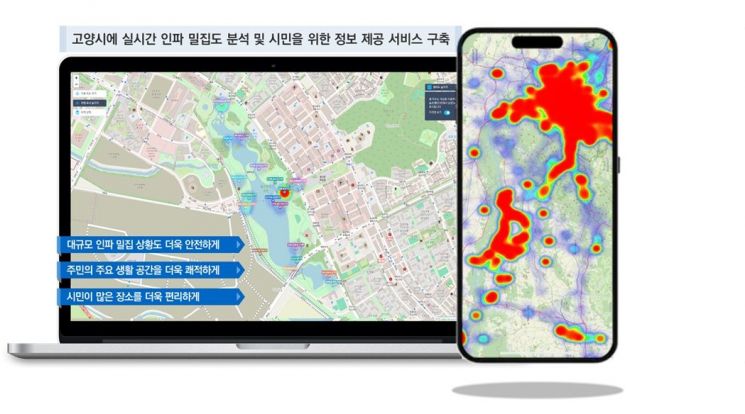
In addition, an AI-based real-time traffic analysis system will be introduced.
The city plans to collect traffic volume and floating population data in real time and use big data analysis and decision-making systems to optimize traffic flow, revitalize commercial districts, and improve safety in living spaces.
Furthermore, a drone integrated control center will be newly established in the Seongsa Innovation District, and seven drone stations will be installed throughout the city to strengthen the urban safety network. Patrol drones will be deployed in each district, enabling rapid dispatch and real-time control in emergencies such as fires, disasters, and missing person cases, significantly enhancing disaster response capabilities.
Smart technology will also be applied to overall city operations.
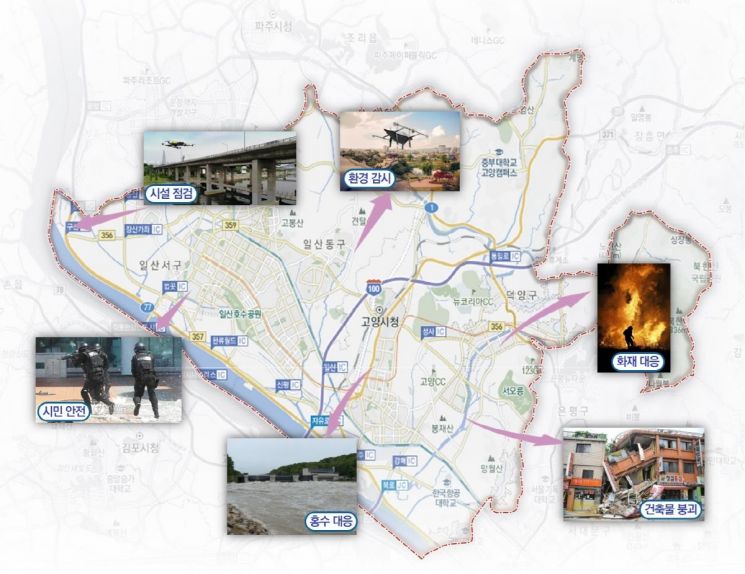
Through the digital twin platform, the city can simulate disasters, environmental issues, and buildings in virtual space, allowing for the prediction and management of risk factors in advance. Goyang plans to utilize this for monitoring aging buildings and ground conditions, as well as for site selection and route simulation of future urban air mobility (UAM) vertiports.
In addition, multifunctional urban facilities such as smart poles and media walls will be installed in areas with high floating populations. The city plans to simultaneously improve citizen convenience and urban landscape through multi-purpose composite poles equipped with CCTV, emergency bells, and Wi-Fi; busking poles specialized for sound and video; electric vehicle charging poles; and media poles and walls that provide real-time urban information.
In addition, the city will build a smart data platform that integrates and collects scattered urban data in real time. Utilizing this, the city plans to implement citizen-centered administrative services, such as providing 24/7 AI civil complaint services via KakaoTalk.
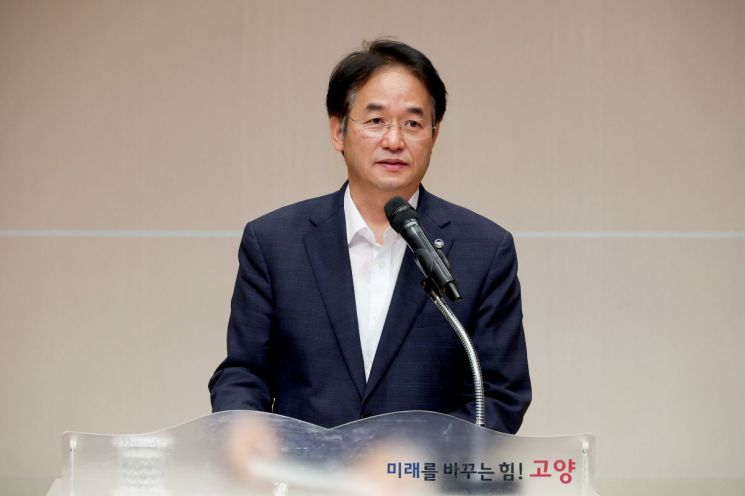
Mayor Donghwan Lee of Goyang stated, "We will realize a Goyang-style smart city that integrates data from across the city in real time and connects it with innovative technologies such as AI and digital twin," adding, "We will leap forward as an S-shaped smart hub city expanding into the metropolitan area and overseas."
© The Asia Business Daily(www.asiae.co.kr). All rights reserved.
![Clutching a Stolen Dior Bag, Saying "I Hate Being Poor but Real"... The Grotesque Con of a "Human Knockoff" [Slate]](https://cwcontent.asiae.co.kr/asiaresize/183/2026021902243444107_1771435474.jpg)

















