Tax Bill May Face Senate Vote Around the 30th... Aiming for Signature by July 4
Republican Divisions Signal Turbulence Ahead
Reciprocal Tariff Suspension Ends July 8
Extension Uncertain... Will Market Turmoil Reignite?
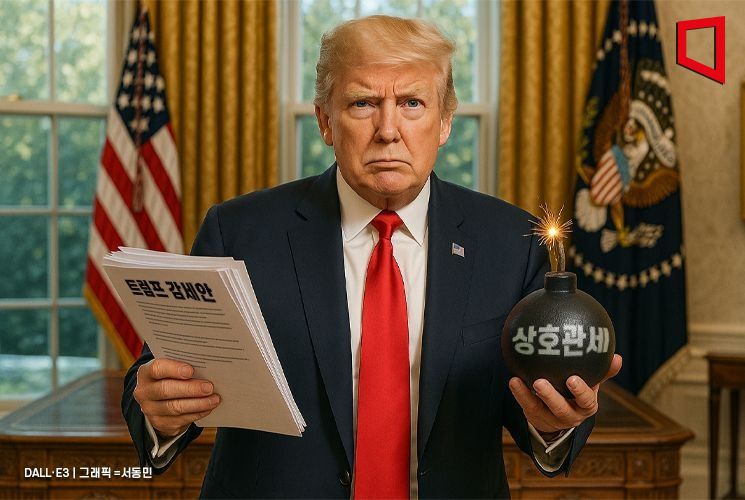
U.S. President Donald Trump's core policy initiatives?his tax cut plan and tariff policy?are expected to reach a critical turning point in July. President Trump is pressuring Republican leadership to accelerate the passage of the tax bill, aiming to sign it into law by Independence Day on July 4. Just four days later, on July 8, the deadline for the expiration of the reciprocal tariff suspension will arrive.
The tax cut plan represents a major domestic political gamble that encapsulates President Trump's key economic campaign promises. Reciprocal tariffs serve both as a bargaining chip in external negotiations to address trade imbalances and as a potential trigger for instability in global financial markets. President Trump's political abilities will be put to the test in early July as he faces the challenge of handling these crucial economic issues both domestically and internationally at the same time.
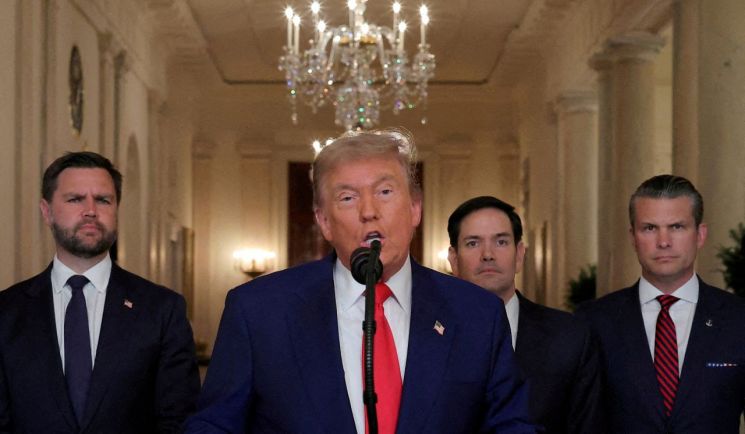
Tax Bill May Face Senate Vote as Early as the 30th... Republican Divisions Signal Turbulence Ahead
According to U.S. media reports on June 29 (local time), the Senate is expected to bring President Trump’s 940-page tax bill?which includes key pledges such as income and corporate tax cuts, and is being dubbed "one big, beautiful bill"?to a final vote on the floor as early as June 30 or July 1. After passing the House last month, the bill cleared a procedural vote in the Senate late on June 28 by a margin of 51 to 49. Even if the bill passes the Senate, some provisions are expected to be amended, requiring another vote in the House. President Trump has stated his intention to complete all procedures, including signing the bill, by July 4.
The problem is that there is considerable disagreement within the Republican Party itself regarding the tax bill. There are concerns that the tax cuts could widen the fiscal deficit, and there is also significant backlash against proposed Medicaid (health insurance for low-income individuals) budget cuts. Senator Thom Tillis of North Carolina, who voted against the bill in the Senate the previous day and then announced on this day that he would not seek re-election next year following public criticism from President Trump, raised concerns about the Medicaid spending cuts. The bill includes provisions to lower individual income and corporate tax rates, exempt tips from taxation, increase defense and border budgets, and reduce welfare spending such as Medicaid and food assistance programs. The Congressional Budget Office (CBO) estimates that the bill would increase the fiscal deficit by $2.4 trillion over the next 10 years.
The Wall Street Journal (WSJ) reported, "Efforts to quickly pass the bill are facing difficulties due to divisions among Senate Republicans over Medicaid and the deficit issue," and added, "President Trump is pressuring dissenters within the Republican Party, but the bill may also encounter obstacles in the House, where Republicans hold the majority."
According to the WSJ, the Senate amendment is expected to create a deficit $500 billion larger than the version passed by the House. Furthermore, last month, the House passed the tax bill by a single vote (215 in favor, 214 against) despite a Republican-Democrat split of 220 to 212, raising doubts about its prospects in a revote. Ultimately, the key variables for the bill’s passage will be defections within the Republican Party and the coordination of amendments. If the tax bill passes as planned, President Trump could gain momentum in policy implementation and rally his base. However, if the bill fails, his political leadership would suffer significant damage.
Reciprocal Tariff Suspension Ends July 8... Will Market Turmoil Reignite?
Another major turning point is the expiration of the reciprocal tariff suspension. After implementing reciprocal tariffs in April, President Trump imposed a 90-day suspension, which will expire on July 8. However, President Trump and his aides have issued conflicting messages regarding a possible extension of the suspension. In an interview with Fox News released on this day, President Trump responded to a question about extending the reciprocal tariff suspension by saying, "I don't think it's necessary. We could extend it, but it's not a big deal," and added, "What we need to do is send letters to every country before the 9th." Regarding tariff rates, he mentioned that they could be "25%, 35%, 50%, or 10%." In contrast, Treasury Secretary Scott Besant stated on June 27, "We hope to conclude tariff negotiations with major trading partners by Labor Day on September 1," suggesting the possibility of an extension.
Some observers predict that President Trump may extend the reciprocal tariff suspension for countries negotiating in good faith, but may reimpose or even raise tariffs on uncooperative nations. Recently, President Trump declared an immediate halt to negotiations with Canada, which is pushing for a digital tax, and warned that tariffs would be announced within a week.
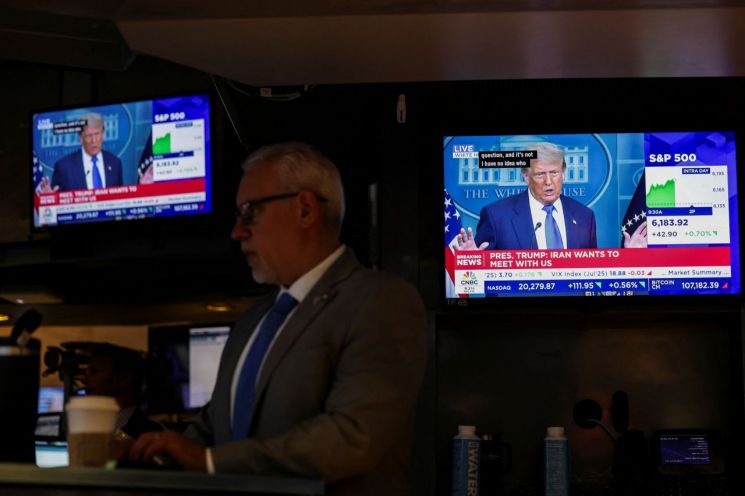
However, there are concerns that the expiration of the reciprocal tariff suspension could cause significant market volatility, which is also seen as a burden for President Trump. In fact, immediately after the reciprocal tariffs were announced in April, U.S. stock, dollar, and Treasury prices all plunged, causing major turmoil in financial markets. At that time, President Trump calmed the markets with the suspension measure, but there are growing fears that similar shocks could be repeated depending on whether the suspension is extended this time. The end of the reciprocal tariff suspension could become a "boomerang" for the U.S. economy, not only affecting trading partners but also triggering dollar asset sell-offs and inflationary pressures, making it inevitable for President Trump to take a cautious approach. If the tax bill, which is also raising concerns about the fiscal deficit, passes as well, it is expected that market anxiety will intensify even further.
Bloomberg News warned, "Trump's tariff and tax policies are shattering existing assumptions about the dollar, financial markets, bonds, and the sentiment and advantage of U.S. assets and the economy," highlighting rising market uncertainty and the potential for a sharp increase in long-term U.S. Treasury yields.
© The Asia Business Daily(www.asiae.co.kr). All rights reserved.
![Clutching a Stolen Dior Bag, Saying "I Hate Being Poor but Real"... The Grotesque Con of a "Human Knockoff" [Slate]](https://cwcontent.asiae.co.kr/asiaresize/183/2026021902243444107_1771435474.jpg)

















