Cumulative Market Share Reaches 11%... Defending Against Sales Slowdown
Price Pressure and Possible Tariff Hikes Loom in the Second Half
Hyundai Motor Group has raised its market share in the United States to 11% this year. Analysts say the company actively leveraged increased preemptive demand resulting from the U.S. government's tariff measures, thereby minimizing the slowdown in growth. However, there are concerns that business uncertainties will increase in the second half of the year due to upward pressure on prices and the possibility of higher auto tariffs.
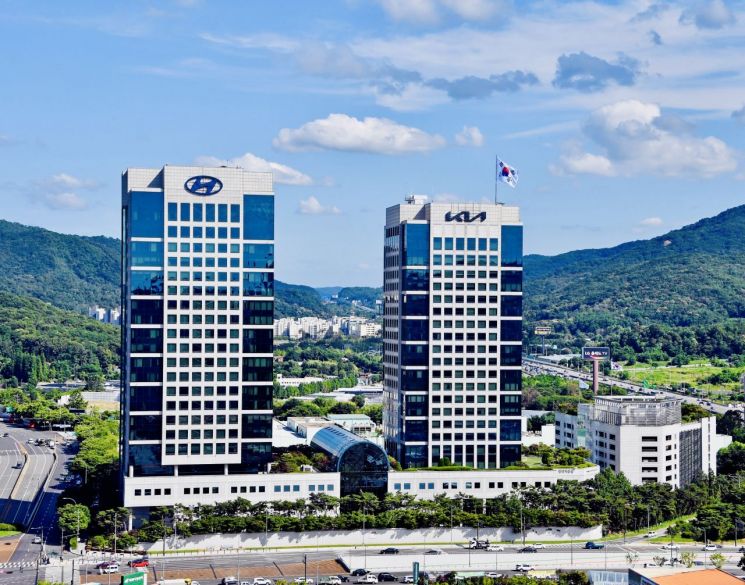
According to market research firm Wards Intelligence on June 29, Hyundai Motor and Kia sold a total of 752,778 vehicles in the United States from January to May this year, achieving a market share of 11.0%. This represents a 0.5 percentage point increase from 10.5% during the same period last year. Hyundai Motor accounted for 400,116 units and a 5.8% share, while Kia recorded 352,662 units and a 5.2% share.
The cumulative market share of Hyundai Motor and Kia started at 10.5% (116,362 units) in January this year, then steadily climbed to 10.6% (247,243 units) in February, 10.7% (419,909 units) in March, and 10.8% (582,527 units) in April.
Hyundai Motor and Kia's ability to increase their market share in the United States is attributed to their effective navigation of the situation before and after the imposition of tariffs. They capitalized on the "panic buying" by U.S. consumers who rushed to purchase vehicles in anticipation of higher auto prices during March and April.
In fact, Hyundai Motor and Kia's sales growth rate in April was 16.3%, surpassing the industry average of 11.1%. Notably, sales of hybrid electric vehicles (HEVs) surged by 65.8% to 26,134 units.
Even last month, when the overall U.S. auto market slowed, Hyundai Motor and Kia managed to minimize the extent of the slowdown. Their sales growth rate in May was 6.7%, which, although a single-digit figure, was more than double the overall U.S. market growth rate of 2.5%.
However, it is unlikely that this strong performance will continue into the second half of the year. As the "non-tariff inventory" stockpiled before the tariffs comes to an end, upward pressure on U.S. sales prices is increasing. Previously, Ford decided to raise prices on models produced in Mexico, and Toyota is reportedly planning to increase its average U.S. sales price by $270 starting next month.
There is also a possibility that U.S. President Donald Trump may further increase auto tariffs. On June 12 (local time), President Trump stated, "I could raise those tariffs (even) higher in the not-too-distant future," adding, "The higher the tariffs, the more likely it is that they (import car brands) will build factories here."
© The Asia Business Daily(www.asiae.co.kr). All rights reserved.

















