Korean Manufacturing Business Outlook Remains Below Baseline for 16 Consecutive Quarters Since Q4 2021
Despite expectations for the new government's economic policies, domestic manufacturing companies' business outlook for the third quarter of this year remains negative due to triple challenges: U.S. tariff pressure, instability in the Middle East, and sluggish domestic demand.
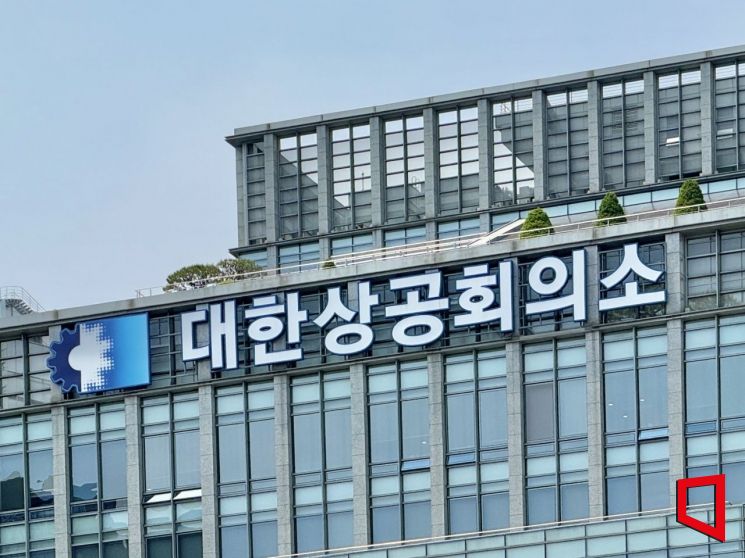
The Korea Chamber of Commerce and Industry announced on the 29th that its survey of 2,186 manufacturing companies nationwide showed the Business Survey Index (BSI) for the third quarter stood at 81, up two points from the previous quarter (79). A BSI of 100 or higher means that more companies view the business environment for the quarter more positively than the previous quarter, while a figure below 100 indicates the opposite. The index has remained below the baseline for 16 consecutive quarters since the fourth quarter of 2021 (91).
In the third quarter, both exports (87) and domestic demand (79) are expected to remain weak, with domestic demand companies showing a more negative outlook due to factors such as a slump in the construction sector and shrinking consumption. By company size, mid-sized companies (77) and small companies (81) reported lower outlooks compared to large companies (89).
The business outlook by industry varied depending on tariff burdens and export performance.
Industries exempt from tariffs, such as semiconductors (109) and pharmaceuticals (109), showed a predominantly positive outlook. In particular, the semiconductor sector rose by 22 points from the previous quarter, surpassing the baseline for the first time in a year. The cosmetics industry (113) recorded the highest outlook, as diversification of export markets to Europe and the Middle East offset tariff impacts.
On the other hand, industries affected by the U.S. administration's tariff policies, such as steel (67) and automobiles (76), saw their indices fall well below the baseline. In the case of the oil refining and petrochemical sector (72), the business outlook worsened due to both the structural downturn in the industry and increased uncertainty from oil price volatility.
Regional outlooks also clearly reflected the impact of tariffs. Jeju (100) recorded the highest index, as improvements in the semiconductor and food and beverage sectors, which account for more than half of the region's exports, lifted the outlook. In contrast, Incheon (63) showed a strongly negative outlook due to the slump in the machinery and equipment sector caused by the construction downturn, as well as the impact of tariffs on automobiles and parts. In Daegu (64) and North Gyeongsang (69), the index remained in the 60s due to the sluggish steel industry and the downturn in the textile sector.
Additionally, when the Korea Chamber of Commerce and Industry reviewed manufacturing companies' sales performance for the first half of the year, 54.1% responded that it would be difficult to achieve their sales targets. Among the companies surveyed, 16.4% expected their sales to fall short of the target by more than 10%, while 37.7% anticipated a slight shortfall of within 10%.
Regarding the main risks affecting business performance in the first half of the year, 64.7% cited sluggish domestic demand as the most significant internal factor. As for external factors, rising raw material prices (30.9%) were most frequently mentioned, followed by weak overseas demand (23.8%), exchange rate fluctuations (19.3%), and tariff measures (18.0%).
Kang Seokgu, head of the Survey Division at the Korea Chamber of Commerce and Industry, stated, "Expectations for the new government's economic policies are sending positive signals to domestic sentiment, so it is important for the government and the National Assembly to provide policy support to secure momentum for economic recovery in the second half of the year." He added, "Along with efforts to reduce trade uncertainty and improve regulations and business obstacles, bold measures to stimulate domestic demand?such as support for equipment replacement and investment incentives?are needed to help restore business sentiment."
© The Asia Business Daily(www.asiae.co.kr). All rights reserved.
![Clutching a Stolen Dior Bag, Saying "I Hate Being Poor but Real"... The Grotesque Con of a "Human Knockoff" [Slate]](https://cwcontent.asiae.co.kr/asiaresize/183/2026021902243444107_1771435474.jpg)















