Dual Pricing Spreads Across the Industry
Delivery Orders Now Cost More Than In-Store Dining
The price of chicken, the nation's most popular delivery food, is expected to rise further. This is due to the spread of dual pricing, where delivery orders are charged more than in-store orders, across the industry.
On June 29, Yonhap News reported, citing the food service industry, that more restaurants and franchise owners are charging higher prices for delivery orders than for in-store dining, due to the burden of delivery platform commissions and delivery fees. This practice is referred to as delivery pricing or dual pricing.
In the chicken sector, the adoption of delivery pricing has been spreading since the beginning of this year. Considering that 70-80% of chicken sales are made through delivery, the introduction of delivery pricing effectively amounts to a price increase.
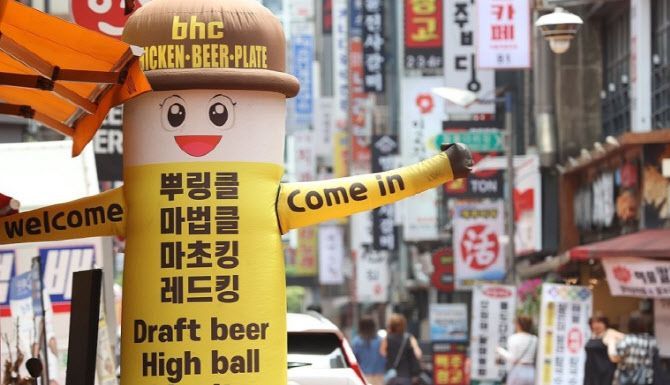
Since February, a significant number of Mom's Touch locations have raised their delivery menu prices by an average of 15%. The signature menu item, the Thigh Burger Set, costs 7,300 won in-store but 8,500 won for delivery, making the delivery price 1,200 won higher. Goobne Chicken also raised delivery menu prices earlier this year at some franchise locations in Seoul and Gyeonggi Province.
BHC Chicken, the top company by sales, stated that since the beginning of this month, more than half of its franchise locations have raised menu prices on delivery apps such as Baemin and Coupang Eats.
The adoption of delivery pricing at BHC Chicken was not a decision made at the headquarters level. Previously, franchise owners had to consult with headquarters to raise prices. Since the beginning of this month, franchisees have been allowed to set prices autonomously.
According to an analysis by the Ministry of Agriculture, Food and Rural Affairs, when a restaurant receives an order through a delivery app, the combined costs of platform commissions, payment processing fees, and delivery fees amount to 30% of the food price (6,116 won for a 20,000 won order), creating a heavy burden. In addition, restaurants spend extra on advertising fees.
BBQ and Kyochon Chicken do not yet have plans to implement delivery pricing, but they are monitoring the situation.
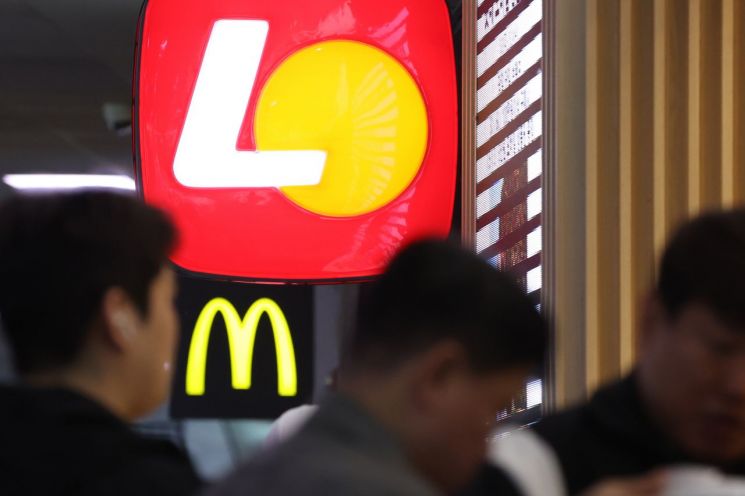
In the hamburger industry, most major brands already charge higher prices for delivery menu items. For example, Burger King's signature Whopper Set costs over 10,000 won when ordered for delivery. The delivery price for a Whopper Set is 10,600 won, which is 1,400 won higher than the in-store price of 9,200 won. For a family of four, this means paying an additional 5,600 won for delivery.
Lotteria added a 1,300 won surcharge to burger set delivery menu prices last year. KFC and Popeyes also introduced delivery pricing last year. McDonald's has been charging higher prices for delivery menu items for a long time.
Meanwhile, restaurant prices continued to soar last month, rising 3.2% year-on-year. According to Statistics Korea, between 2000 and the past five years, the overall consumer price index rose by 16%, while restaurant prices jumped by 25%.
Among 39 food service items, gimbap (38%), hamburgers (37%), tteokbokki (35%), and jjajangmyeon (33%) saw the largest increases. The price of chicken rose by 28%.
In addition, according to the "2024 Food Consumption Behavior Survey" recently released by the Korea Rural Economic Institute, family dining expenses have surged by more than 30% over the past three years. The average monthly dining-out expense per family increased from 114,000 won in 2021 to 143,800 won in 2024, an increase of about 6,500 won compared to the previous year.
© The Asia Business Daily(www.asiae.co.kr). All rights reserved.
![Clutching a Stolen Dior Bag, Saying "I Hate Being Poor but Real"... The Grotesque Con of a "Human Knockoff" [Slate]](https://cwcontent.asiae.co.kr/asiaresize/183/2026021902243444107_1771435474.jpg)












