Unusual Weather in Chile's Atacama Desert: First Snowfall in 10 Years
Seven Homeless People Die in Uruguay as Subzero Wind Chills Grip the Country
Southern Hemisphere Weather Extremes Attributed to Sea Surface Temperature Changes and Antarctic High Pressure
Unusual winter weather in the Southern Hemisphere is affecting countries across South America. Snow has fallen in Chile's Atacama Desert, known as the driest desert in the world, while reports of homeless people dying from the cold are increasing in Uruguay.
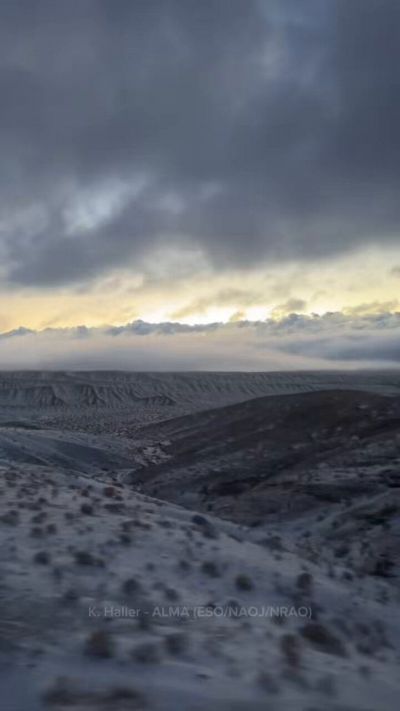 Snow-covered landscape of the Atacama Desert in Chile. Atacama Large Millimeter/submillimeter Array (ALMA) X.
On June 27 (local time), the Atacama Large Millimeter/submillimeter Array (ALMA), a radio telescope observatory located in the northern Atacama Desert of Chile, posted on its official X (formerly Twitter) account, "It's hard to believe. Snow has fallen in the driest desert in the world," and released photos of the snow-covered landscape. An online live camera also captured the unusual scene of snow and sand swirling together in a blizzard.
According to ALMA, it has been about 10 years since snow accumulated around the observatory, which is located at an altitude of 5,000 meters. The Chilean Meteorological Service had initially forecast rain for the Tarapaca and Antofagasta regions near Atacama, but in reality, falling temperatures led to observations of snow and ice. The local daily El Mercurio reported that 59 residents stranded by heavy snowfall in the San Pedro de Atacama area were rescued.
Meanwhile, the impact of abnormal weather is also severe in Uruguay. In the capital Montevideo and nationwide, seven homeless people have died from exposure to subzero wind chills just this month. According to the daily El Observador, the government is implementing emergency measures to forcibly transport vulnerable individuals to shelters amid sleet and freezing temperatures.
Experts analyze that changes in sea surface temperatures and the influence of the Antarctic cold high-pressure system are causing frequent episodes of unusual cold waves and weather phenomena in the Southern Hemisphere. As abnormal weather sweeps across South America, calls for urgent action to address climate change are growing louder.
© The Asia Business Daily(www.asiae.co.kr). All rights reserved.
![Clutching a Stolen Dior Bag, Saying "I Hate Being Poor but Real"... The Grotesque Con of a "Human Knockoff" [Slate]](https://cwcontent.asiae.co.kr/asiaresize/183/2026021902243444107_1771435474.jpg)















