Marine Tourism Consumption Falls to Approximately 38.92 Trillion Won Year-on-Year
Busan Leads in Marine Tourism Spending... Jeju, Incheon, and Jeonnam See Sharp Declines
"Potential for Year-Round Tourism Market, Need to Expand Customized Content by Generation"
The aftermath of the economic downturn has also impacted the marine tourism market. For the first time last year, marine tourism consumption in South Korea, which had continued to grow steadily even during the COVID-19 pandemic, declined.
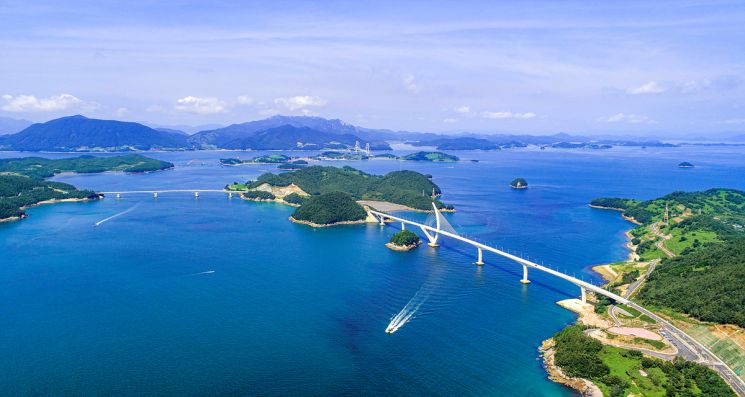
The Korea Maritime Institute (KMI) announced on June 28, citing an analysis of credit card and telecommunications big data, that the total consumption in South Korea’s marine tourism market in 2024 amounted to approximately 38.9208 trillion won, a decrease of 4.95% compared to the previous year’s 40.9430 trillion won. This marks the end of three consecutive years of growth since 2020.
By region, all 11 coastal areas experienced a decline in consumption. In particular, the Jeju coast recorded the largest decrease, falling by 9.4% compared to the previous year. The Incheon and Jeonnam coasts also showed significant contractions, each decreasing by 6.4%. On the other hand, Busan had the largest marine tourism consumption at 6.3796 trillion won, followed by Jeonnam (5.1945 trillion won) and Gyeongnam (5.1633 trillion won).
By season, summer recorded the highest consumption at 10.2922 trillion won, followed by autumn (9.7866 trillion won), spring (9.7271 trillion won), and winter (9.1147 trillion won). While marine tourism was previously concentrated in summer and autumn, the distribution of consumption into spring and winter suggests the potential for a shift toward a year-round tourism market.
By industry, the food sector continued to account for an overwhelming share, making up 58.3% of total marine tourism consumption.
KMI emphasized that "the marine tourism market shows a structure vulnerable to external variables," and stressed the need to shift from short-term consumption driven by visitors from outside the region to a structure based on residential demand within local communities. KMI added that a comprehensive strategy is required, including the expansion of customized content for different generations such as seniors and youth, the dispersion of peak season demand, and the promotion of stay-type tourism.
© The Asia Business Daily(www.asiae.co.kr). All rights reserved.
![Clutching a Stolen Dior Bag, Saying "I Hate Being Poor but Real"... The Grotesque Con of a "Human Knockoff" [Slate]](https://cwcontent.asiae.co.kr/asiaresize/183/2026021902243444107_1771435474.jpg)















