Jung Sangjin, Head of Equity Management at Korea Investment Management, Interview
Environment Allows for Hundreds of Trillions of Won to Flow into the Domestic Stock Market
The KOSPI has risen by 28.3% this year as of June 26. During the same period, the Dow Jones Industrial Average increased by only 1.9%. There is a strong movement for a re-rating of the domestic stock market. Some forecasts suggest that by the end of this year, the KOSPI will surpass its all-time high of 3,316.08, recorded on June 25, 2021.
Jung Sangjin, Head of Equity Management at Korea Investment Management, recently told Asia Economy, "Clients who were unable to redeem their funds during the unprecedented liquidity rally of 2021, caused by the COVID-19 pandemic, are now requesting redemptions." He added, "I expect the KOSPI to rise to at least 3,500 by the end of this year," and advised, "Now is definitely not the time to redeem."
Since joining Daehan Investment Trust's equity investment division in 1996, Jung has managed funds at CJ Asset Management, Infinity Investment Advisory, and Dongbu Asset Management. He joined Korea Investment Management as team leader of the equity management division in October 2015 and has served as head of the division since 2018. The equity management division manages the ACE Shareholder Return Value Active ETF, Korea Investment Navigator Fund, Korea Investment Small Value, and Korea Investment Korea's Power, among others.
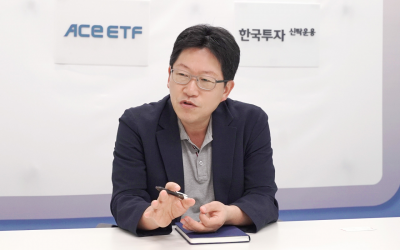
With nearly 30 years of experience observing the domestic stock market in the asset management industry, Jung commented, "Within the equity management division, we half-jokingly, half-seriously say that we might see the era of KOSPI 10,000," and added, "Even if the profits of domestic listed companies do not increase, it is still possible for the KOSPI to break through 4,000."
He cited the German stock market as an example. The German DAX index reached an all-time high on June 5. Compared to the sharp drop in global stock markets in March 2020 due to the COVID-19 pandemic, it has risen by 180% in five years and three months. This is not much different from the 184% increase in the Nasdaq Composite Index. Jung pointed out, "Germany's economic growth rate was -0.3% in 2023 and -0.2% in 2024, marking two consecutive years of negative growth for the first time in 21 years," and added, "This year's growth forecast also remains in the 0% range."
He continued, "It is difficult to explain the rally in the German stock market from the perspective of economic fundamentals," and explained, "Since the global financial crisis, investors have expected that governments will lower benchmark interest rates and inject liquidity during economic downturns, and they act accordingly."
He said, "As the value of money falls, asset prices rise," and expressed his expectation that "the liquidity rally will continue in the domestic stock market as well."
According to the Bank of Korea, in April, the average balance of broad money (M2) on a seasonally adjusted basis was 4,235.8 trillion won, an increase of 8.1 trillion won (0.2%) from the previous month. M2 is a broad measure of money supply that includes cash, demand deposits, and passbook savings (M1), as well as money market funds (MMF), time deposits and installment savings with maturities of less than two years, beneficiary certificates, and repurchase agreements (RP).
Jung said, "I believe there is potential for at least several hundred trillion won to flow into the stock market from both domestic and overseas sources, which is sufficient to sustain the rally." He added, "As of the end of March this year, Korea's overseas stock and bond investments exceeded $1 trillion, and I expect that some of these overseas investment funds will return to the domestic stock market."
Jung also expects that, in addition to the currently rising sectors such as defense, cosmetics, and content, buying momentum will expand across the entire domestic demand sector. He predicted that semiconductor stocks and other stocks that have experienced excessive declines will join the rally. He said, "Industries that grow in the domestic market and then expand overseas are promising," and added, "Since the new administration took office, expectations for improved relations with China have been rising." He also emphasized, "The number of foreign tourists visiting Korea has recovered to pre-COVID-19 levels, and if Chinese tourists return, the recovery of the domestic market will accelerate."
He said, "As the government implements full-scale policies to revitalize the stock market, this will support rising stock prices," and advised, "It is better to focus on and invest in shareholder return-related stocks." He added, "When the KOSPI surpasses 4,000 and shareholder return-related stocks seem to have risen too much, the market theme will rotate."
He continued, "If you are an investor considering investing in the domestic stock market, you should not wait for a correction, but should immediately invest about 30% of your capital." He advised, "Invest 30% of your available funds first, and then increase your stock allocation when a correction phase arrives."
He also said, "Among various investment methods, it is important to find the one that suits your own style," but advised, "You should consistently pay attention to the outlook for the US economy." He cited the US economy as the biggest variable for the rise of the domestic stock market. He predicted that as long as the US economy does not enter a severe recession, the domestic stock market will continue its upward trend.
© The Asia Business Daily(www.asiae.co.kr). All rights reserved.

















