Retirement Pension Providers Also Choose Principal-Guaranteed Products
Financial Supervisory Service Deputy Governor Urges Proactive Leadership
Amid ongoing criticism over the low returns of retirement pensions, an event was organized to improve the defined benefit (DB) plan, which is heavily concentrated in principal-guaranteed products. It was revealed at this event that even retirement pension providers operating DB plans are managing their own DB reserves primarily through principal-guaranteed products, rather than performance-based products.
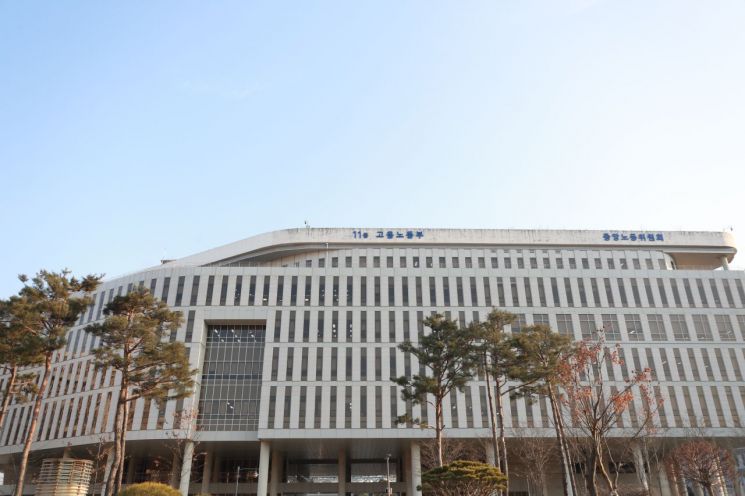
The Ministry of Employment and Labor and the Financial Supervisory Service held a meeting on June 27 at the Korea Financial Investment Association in Yeongdeungpo-gu, Seoul, aimed at improving the returns of DB-type retirement pensions for retirement pension providers. The event was attended not only by executives from the retirement pension business division, but also by executives from the management division responsible for operating the providers' own DB reserves, in order to share the current status of DB management and best practices among providers.
The DB-type retirement pension is structured so that employees receive a predetermined benefit upon retirement. While fluctuations in returns do not directly affect the employees' benefit levels, lower returns increase the funding burden on companies. This is why improving returns has emerged as an important task, both to ease the financial burden on companies and to enhance the sustainability of the system.
However, last year, the DB-type retirement pension, which accounted for nearly half of the total retirement pension reserves (KRW 431.7 trillion), had a return of 4.04%. This was lower than the 5.18% return for defined contribution (DC) plans and the 5.86% return for individual retirement pensions (IRP).
The reason for the low returns of DB-type retirement pensions is that the company personnel responsible for managing the DB reserves are often non-experts lacking specialized knowledge or experience in asset management. In addition, management tends to adopt a conservative approach, preferring to avoid loss risks rather than pursue higher returns through active investment, leading most reserves to be placed in principal-guaranteed products such as deposits. The passive response of retirement pension providers has also contributed to this situation.
The Financial Supervisory Service analyzed the management status of the own DB reserves of all 42 retirement pension providers operating DB plans and found that 88.1% (37 companies) managed more than 90% of their own DB reserves in principal-guaranteed products. As a result, the return (4.37%) was only at the average level for all DB plans. The Financial Supervisory Service assessed this as "disappointing for retirement pension providers who are also financial experts."
Seo Jaewan, Deputy Governor of the Financial Supervisory Service, on this day called on retirement pension providers to take the lead in managing their own DB reserves in a reasonable manner. He also requested that they establish asset allocation plans to actively invest in performance-based products, and consider introducing long-term performance-based incentives for responsible employees. In addition, he emphasized the fulfillment of the "duty of care" as retirement pension trustees.
The Ministry of Employment and Labor and the Financial Supervisory Service announced that, starting with this event, they plan to hold additional meetings in the second half of the year with listed companies on the management of DB-type retirement pensions. They also stated their commitment to continue efforts to improve the returns of DB-type retirement pensions in the future.
© The Asia Business Daily(www.asiae.co.kr). All rights reserved.
![Clutching a Stolen Dior Bag, Saying "I Hate Being Poor but Real"... The Grotesque Con of a "Human Knockoff" [Slate]](https://cwcontent.asiae.co.kr/asiaresize/183/2026021902243444107_1771435474.jpg)















