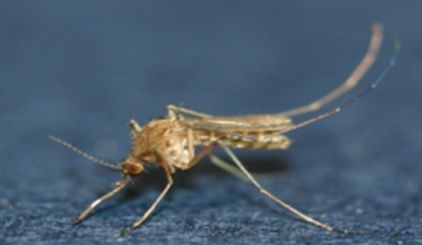
The Incheon Institute of Health and Environment announced on June 26 that the Jageunbbalganjipmogi, a mosquito species known to transmit Japanese encephalitis, was collected for the first time this year in Yonghyeon-dong, Michuhol-gu.
The first detection of Jageunbbalganjipmogi occurred in the third week of June, which is about one month earlier than last year, when it was first found in the third week of July. According to the institute, testing of the collected mosquitoes revealed no presence of the Japanese encephalitis virus, confirming that there is currently no risk of disease transmission.
Previously, the Korea Disease Control and Prevention Agency issued a nationwide Japanese encephalitis advisory on March 27 after Jageunbbalganjipmogi was first detected in Jeju Special Self-Governing Province and Jeollanam-do. However, a Japanese encephalitis alert has not yet been issued.
According to the infectious disease website of the Korea Disease Control and Prevention Agency, the number of Japanese encephalitis cases in Korea has remained around 20 per year, with 23 cases in 2021, 11 cases in 2022, 17 cases in 2023, and 21 cases last year. In Incheon, two cases were confirmed last year, and no cases have been reported so far this year.
Most people infected with the Japanese encephalitis virus experience only mild symptoms. However, in rare cases, the infection can progress to encephalitis, resulting in severe symptoms such as high fever, convulsions, and decreased consciousness. Among these severe cases, 20 to 30 percent can be fatal.
The institute is actively working to prevent mosquito-borne infectious diseases by monitoring mosquito density in the Incheon area, including Japanese encephalitis vectors, and conducting surveillance for mosquitoes entering the country through airports.
Kwak Wansoon, Director of the Incheon Institute of Health and Environment, stated, "Jageunbbalganjipmogi was detected earlier than usual this year, and mosquito populations are expected to increase before and after the monsoon season. We urge the public to follow basic mosquito bite prevention measures, such as wearing long sleeves and using mosquito repellent when engaging in outdoor activities."
© The Asia Business Daily(www.asiae.co.kr). All rights reserved.
![Clutching a Stolen Dior Bag, Saying "I Hate Being Poor but Real"... The Grotesque Con of a "Human Knockoff" [Slate]](https://cwcontent.asiae.co.kr/asiaresize/183/2026021902243444107_1771435474.jpg)















