Even a One-Year Delay in Eligibility Raises Instability by 16.9%
Instability Soars to 64.3% with a Four-Year Increase
There are concerns that raising the eligibility age for the Basic Pension could worsen the economic vulnerability of the elderly and push low-income seniors into unstable labor markets.
According to the National Pension Service on June 26, Kim Sungwook, Associate Professor in the Department of Social Welfare at Hoseo University, presented these findings at the 10th National Aging Security Panel Academic Conference through his study titled "The Relationship Between Raising the Basic Pension Eligibility Age and Economic Instability in Elderly Households."
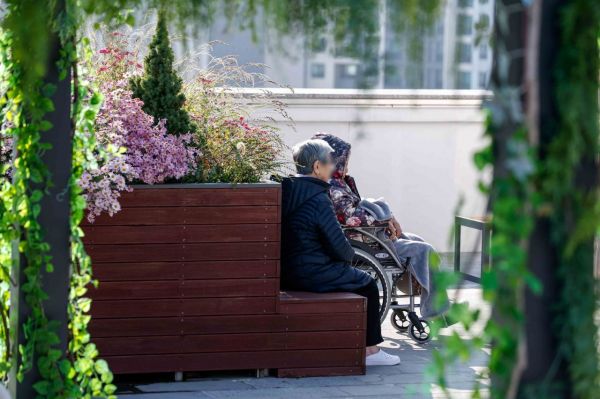 Elderly people using the rooftop garden at Eunpyeong-gu Municipal Eunpyeong Silver Care Center. Photo to aid understanding of the article. Photo by Asia Economy DB.
This study comprehensively analyzed the impact on the economic stability of elderly households by using data from the National Aging Security Panel and assuming scenarios in which the current Basic Pension eligibility age of 65 is delayed by one to four years.
The study found that even a one-year delay in the eligibility age led to a 16.9% surge in economic instability (based on regular income) among 66-year-old households directly affected by the policy. When the eligibility age was raised by four years, instability soared to 64.3%. This suggests that delaying pension benefits is a direct cause that seriously threatens the income base of the elderly.
In particular, the policy change was found to concentrate its impact on low-income groups. Households in the lowest 20% income bracket saw their economic instability increase by about 46% if the eligibility age was raised by four years. In contrast, households in the highest 20% experienced no change. This indicates that low-income groups, for whom the Basic Pension accounts for a large share of income as stable public transfer income, are hit hardest by such institutional reforms.
The study also analyzed that raising the eligibility age acts as a structural mechanism that drives seniors into "involuntary labor." Seniors facing financial difficulties due to reduced pension benefits are forced to re-enter the labor market. Most of these jobs are likely to be limited to the secondary labor market, characterized by low wages, low skills, and instability. Ultimately, there are concerns that such Basic Pension reforms may not guarantee the "right to work" for the elderly, but rather force them to endure an unstable old age through precarious labor.
This study also challenged the common belief that "families will provide support." The analysis found that while private transfers from children and others did lower the employment rate of seniors, there was no compensatory increase in family support when Basic Pension benefits were reduced.
On the contrary, the average reduction in pension benefits due to the raised eligibility age was 1.3 to 1.5 times larger than the average private transfer income received by seniors. It became clear that family support alone cannot fill the gap left by reduced public assistance.
Kim Sungwook, Associate Professor, emphasized, "Raising the Basic Pension eligibility age is not simply a means of fiscal efficiency, but a policy intervention that fundamentally restructures the livelihood base of the elderly. When discussing reforms, it is essential to consider not only the fiscal aspects but also the resulting intensification of economic instability and inequality among elderly households, and to develop sophisticated complementary measures accordingly."
© The Asia Business Daily(www.asiae.co.kr). All rights reserved.
![Clutching a Stolen Dior Bag, Saying "I Hate Being Poor but Real"... The Grotesque Con of a "Human Knockoff" [Slate]](https://cwcontent.asiae.co.kr/asiaresize/183/2026021902243444107_1771435474.jpg)















