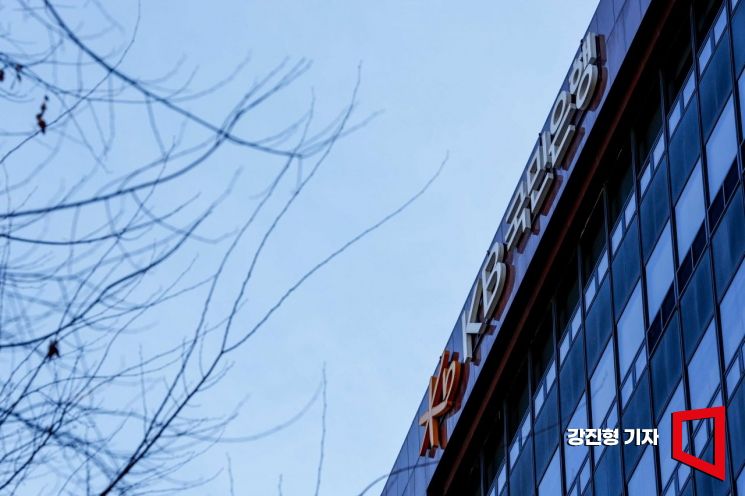
Victims who suffered losses from investments in 'Hong Kong H Index ELS (Equity-Linked Securities)' have launched a large-scale lawsuit against major commercial banks. On June 25, law firm Jungse announced that it had filed a damages claim lawsuit totaling 3.6 billion won with the Seoul Central District Court on behalf of 17 victims against Hana Bank, KB Kookmin Bank, Shinhan Bank, and NongHyup Bank.
The plaintiffs in this first round of lawsuits are mainly financial consumers with relatively conservative investment tendencies, such as elderly individuals and retirees. They claim that they intended to invest their lifelong retirement savings, medical expenses, or living expenses in safe assets such as deposits or savings accounts, but ended up subscribing to the high-risk derivative product, Hong Kong ELS, at the recommendation of bank employees. As additional second and third lawsuits are expected, the impact is anticipated to be significant.
The problematic product is a structured financial product based on the Hong Kong Hang Seng China Enterprises Index (HSCEI) as the underlying asset. It is a high-risk ELS in which the entire principal can be lost if the stock price falls below a certain level. The victims claim that the banks downplayed the risks of the product by providing definitive and potentially misleading explanations, such as "It is safe unless the country collapses," or "Even our staff have invested."
Jungse, the law firm representing the plaintiffs, considers this incident not a matter of simple lack of explanation or negligence by sales staff, but a problem stemming from performance-oriented sales practices and insufficient post-sale supervision by regulatory authorities. Jungse cites findings from the Financial Supervisory Service, which revealed that some banks failed to properly inform investors of previous loss cases involving similar products in their explanatory materials, and stated, "Omitting information constitutes a deceptive act that hinders investors' judgment."
The defendant banks are reportedly offering voluntary compensation plans depending on the individual circumstances of the victims. However, there is criticism that these compensation plans are applied differentially based on criteria such as investment experience, investment amount, and age, thereby shifting responsibility onto the victims rather than acknowledging the banks' responsibility at the time of sale.
Jungse emphasizes that this lawsuit should not be limited to simple compensation for damages, but should serve as an opportunity to raise issues with the overall sales practices of high-risk financial products and to improve the relevant systems. Choi Jaeyoung (age 55, 30th class of the Judicial Research and Training Institute), the Jungse attorney in charge of the case, stated, "It must be clearly established that greater responsibility follows the profits gained from sales, and a structure must be created in which profits cannot be made from incomplete sales, so that this case becomes a milestone for restoring trust in the financial market."
An Jaemyung, Law Times Reporter
※This article is based on content supplied by Law Times.
© The Asia Business Daily(www.asiae.co.kr). All rights reserved.

















